

Qiraat Africa
عربي  |  Fr
Advertisement
  • News
    • All
    • Climate Change
    • Economy
    • Education
    • Energy
    • Health
    • Migration
    • Mining
    • Politics
    • Security
    • Society
    • Sport
    Is Ethiopia’s Tigray barreling towards another war?

    Ethiopian Airlines cancels flights to Tigray region after clashes

    African governments look to Islamic finance after Benin sukuk success

    African governments look to Islamic finance after Benin sukuk success

    Ukraine says Niger’s move to cut relations is ‘regrettable’

    Gunfire, blasts rock Niger airport overnight before calm restored

    DR Congo Military Court Issues Arrest Warrant for Corneille Nangaa

    Rebel leader denounces US-DRC minerals deal one year after Goma’s fall

    Zambia groups say freedom of expression under threat

    Zambia is hopeful of agreement on debt restructuring terms with Afreximbank

    Rwanda’s presidential election set for July 15, 2024

    Rwanda says UK owes $130 million over scrapped asylum scheme

    Giant Dangote oil refinery to begin production in third quarter

    Shipping data shows Indian diesel exports to West Africa at record high

    Ex-Nigerian minister, Alison-Madueke faces bribery charges in London court

    Nigeria lowers entry barriers to attract investors for latest oil round

    Uganda’s constitutional court to hear challenges against anti-homosexuality law

    Uganda court releases prominent rights activist on bail

  • Analysis
    • All
    • Climate Change
    • Digital & Tech
    • Economy
    • Energy & Power
    • Health
    • Politics
    • Security
    • Society
    BRICS Plus and the Shifting Global Power Balance: Implications of South Africa’s Role

    BRICS Plus and the Shifting Global Power Balance: Implications of South Africa’s Role

    African Union suspends Niger over coup, prepares sanctions; France denies report it asked Algeria to use airspace for a Niger operation

    Leaders in Africa’s human rights institutions are being elected. Why it matters

    Sahel Alliance leaders meet in Bamako to deepen break with ECOWAS

    The AES and the Reconfiguration of Regional Security Architecture: A Look at the 2025 Bamako Summit

    US airstrikes in northern Nigeria: potential windfalls and dangers

    US airstrikes in northern Nigeria: potential windfalls and dangers

    Why France’s Focus is Shifting to Anglophone Africa

    Why France’s Focus is Shifting to Anglophone Africa

    UN believes hundreds were killed in Tanzania election protests

    Cameroon and Tanzania’s rulers clung to power in 2025—but look more vulnerable than ever

    General sworn in as Guinea-Bissau leader in swift coup after disputed vote

    Military and Politics in Guinea-Bissau

    Global power shifts are playing out in the Red Sea region: why this is where the rules are changing

    Global power shifts are playing out in the Red Sea region: why this is where the rules are changing

    Understanding Trump’s Christian Genocide Claim and Military Threat: What It Means for Nigeria-U.S. Relations

    Understanding Trump’s Christian Genocide Claim and Military Threat: What It Means for Nigeria-U.S. Relations

  • Studies
    Benin government says armed forces foil coup attempt

    Coup contagion? A rash of African power grabs suggests copycats are taking note of others’ success

    One in three South Africans have never heard of AI: what this means for policy

    One in three South Africans have never heard of AI: what this means for policy

    Social Media as a Catalyst for the Spread of Dangerous Wealth Ritual Myths

    Social Media as a Catalyst for the Spread of Dangerous Wealth Ritual Myths

    Overcoming Education Barriers for Young Mothers in Sub-Saharan Africa

    Overcoming Education Barriers for Young Mothers in Sub-Saharan Africa

    Youth Empowerment Through Vocational Training in Rural Sub-Saharan Africa

    Youth Empowerment Through Vocational Training in Rural Sub-Saharan Africa

    Manufacturers in Ghana and Nigeria claim that although corruption damages businesses, digital technologies provide a chance to combat it

    Manufacturers in Ghana and Nigeria claim that although corruption damages businesses, digital technologies provide a chance to combat it

    Environmental Threats and Conservation Efforts in Namibia

    Environmental Threats and Conservation Efforts in Namibia

    Your teachers’ level of knowledge affects how well you perform in class: perspectives from 14 French-speaking African nations

    Your teachers’ level of knowledge affects how well you perform in class: perspectives from 14 French-speaking African nations

    Islamic Finance in Nigeria: Between Islamization and Shariah Non-Compliance Polemics

    Islamic Finance in Nigeria: Between Islamization and Shariah Non-Compliance Polemics

  • Infographics
  • Figures
    What does a diary entry reveal about the West African origins of Apongo, a rebel leader in Jamaica?

    What does a diary entry reveal about the West African origins of Apongo, a rebel leader in Jamaica?

    Obafemi Awolowo (1909 – 1987): Nigerian statesman and influential advocate of independence

    Obafemi Awolowo (1909 – 1987): Nigerian statesman and influential advocate of independence

    Tunka Manin (c. 1010–1078), the last ruler of the Ghana Empire

    Tunka Manin (c. 1010–1078), the last ruler of the Ghana Empire

    Samuel Ajayi Crowther (1809-1891): First African Anglican Bishop

    Samuel Ajayi Crowther (1809-1891): First African Anglican Bishop

    Osei Tutu (c. 1660—c. 1717) , founder of the Asante nation

    Osei Tutu (c. 1660—c. 1717) , founder of the Asante nation

    Walter Sisulu (1912 – 2003): South African activist

    Walter Sisulu (1912 – 2003): South African activist

    Modibo Keïta (1915-1977): First President of Mali

    Modibo Keïta (1915-1977): First President of Mali

    Robert Mugabe (1924 – 2019): Revolutionary and former President of Zimbabwe

    Robert Mugabe (1924 – 2019): Revolutionary and former President of Zimbabwe

    Idi Amin Dada (1928 – 2003): Military officer and former President of Uganda

    Idi Amin Dada (1928 – 2003): Military officer and former President of Uganda

  • History
    The battles of Isandlwana and Rorke’s Drift

    The battles of Isandlwana and Rorke’s Drift

    Kimberley’s Big Hole, Northern Cape, South Africa

    Kimberley’s Big Hole, Northern Cape, South Africa

    Ogbunike Caves, Southeastern Nigeria

    Ogbunike Caves, Southeastern Nigeria

    Historic Town of Grand-Bassam

    Historic Town of Grand-Bassam

    Mandara Mountains, Northern Cameroon and Nigeria

    Mandara Mountains, Northern Cameroon and Nigeria

    Zong Massacre

    Zong Massacre

    Abomey, southern Benin

    Abomey, southern Benin

    Ifẹ̀, an ancient city in south-western Nigeria

    Ifẹ̀, an ancient city in south-western Nigeria

    Robben Island, South Africa

    Robben Island, South Africa

  • Others
    • Culture / Literature
    • Follow-ups
    • Interview
    • Opinion
  • Countries
    • Country profiles
    • Regions
      • Central Africa
      • East Africa
      • Southern Africa
      • West Africa
No Result
View All Result
  • News
    • All
    • Climate Change
    • Economy
    • Education
    • Energy
    • Health
    • Migration
    • Mining
    • Politics
    • Security
    • Society
    • Sport
    Is Ethiopia’s Tigray barreling towards another war?

    Ethiopian Airlines cancels flights to Tigray region after clashes

    African governments look to Islamic finance after Benin sukuk success

    African governments look to Islamic finance after Benin sukuk success

    Ukraine says Niger’s move to cut relations is ‘regrettable’

    Gunfire, blasts rock Niger airport overnight before calm restored

    DR Congo Military Court Issues Arrest Warrant for Corneille Nangaa

    Rebel leader denounces US-DRC minerals deal one year after Goma’s fall

    Zambia groups say freedom of expression under threat

    Zambia is hopeful of agreement on debt restructuring terms with Afreximbank

    Rwanda’s presidential election set for July 15, 2024

    Rwanda says UK owes $130 million over scrapped asylum scheme

    Giant Dangote oil refinery to begin production in third quarter

    Shipping data shows Indian diesel exports to West Africa at record high

    Ex-Nigerian minister, Alison-Madueke faces bribery charges in London court

    Nigeria lowers entry barriers to attract investors for latest oil round

    Uganda’s constitutional court to hear challenges against anti-homosexuality law

    Uganda court releases prominent rights activist on bail

  • Analysis
    • All
    • Climate Change
    • Digital & Tech
    • Economy
    • Energy & Power
    • Health
    • Politics
    • Security
    • Society
    BRICS Plus and the Shifting Global Power Balance: Implications of South Africa’s Role

    BRICS Plus and the Shifting Global Power Balance: Implications of South Africa’s Role

    African Union suspends Niger over coup, prepares sanctions; France denies report it asked Algeria to use airspace for a Niger operation

    Leaders in Africa’s human rights institutions are being elected. Why it matters

    Sahel Alliance leaders meet in Bamako to deepen break with ECOWAS

    The AES and the Reconfiguration of Regional Security Architecture: A Look at the 2025 Bamako Summit

    US airstrikes in northern Nigeria: potential windfalls and dangers

    US airstrikes in northern Nigeria: potential windfalls and dangers

    Why France’s Focus is Shifting to Anglophone Africa

    Why France’s Focus is Shifting to Anglophone Africa

    UN believes hundreds were killed in Tanzania election protests

    Cameroon and Tanzania’s rulers clung to power in 2025—but look more vulnerable than ever

    General sworn in as Guinea-Bissau leader in swift coup after disputed vote

    Military and Politics in Guinea-Bissau

    Global power shifts are playing out in the Red Sea region: why this is where the rules are changing

    Global power shifts are playing out in the Red Sea region: why this is where the rules are changing

    Understanding Trump’s Christian Genocide Claim and Military Threat: What It Means for Nigeria-U.S. Relations

    Understanding Trump’s Christian Genocide Claim and Military Threat: What It Means for Nigeria-U.S. Relations

  • Studies
    Benin government says armed forces foil coup attempt

    Coup contagion? A rash of African power grabs suggests copycats are taking note of others’ success

    One in three South Africans have never heard of AI: what this means for policy

    One in three South Africans have never heard of AI: what this means for policy

    Social Media as a Catalyst for the Spread of Dangerous Wealth Ritual Myths

    Social Media as a Catalyst for the Spread of Dangerous Wealth Ritual Myths

    Overcoming Education Barriers for Young Mothers in Sub-Saharan Africa

    Overcoming Education Barriers for Young Mothers in Sub-Saharan Africa

    Youth Empowerment Through Vocational Training in Rural Sub-Saharan Africa

    Youth Empowerment Through Vocational Training in Rural Sub-Saharan Africa

    Manufacturers in Ghana and Nigeria claim that although corruption damages businesses, digital technologies provide a chance to combat it

    Manufacturers in Ghana and Nigeria claim that although corruption damages businesses, digital technologies provide a chance to combat it

    Environmental Threats and Conservation Efforts in Namibia

    Environmental Threats and Conservation Efforts in Namibia

    Your teachers’ level of knowledge affects how well you perform in class: perspectives from 14 French-speaking African nations

    Your teachers’ level of knowledge affects how well you perform in class: perspectives from 14 French-speaking African nations

    Islamic Finance in Nigeria: Between Islamization and Shariah Non-Compliance Polemics

    Islamic Finance in Nigeria: Between Islamization and Shariah Non-Compliance Polemics

  • Infographics
  • Figures
    What does a diary entry reveal about the West African origins of Apongo, a rebel leader in Jamaica?

    What does a diary entry reveal about the West African origins of Apongo, a rebel leader in Jamaica?

    Obafemi Awolowo (1909 – 1987): Nigerian statesman and influential advocate of independence

    Obafemi Awolowo (1909 – 1987): Nigerian statesman and influential advocate of independence

    Tunka Manin (c. 1010–1078), the last ruler of the Ghana Empire

    Tunka Manin (c. 1010–1078), the last ruler of the Ghana Empire

    Samuel Ajayi Crowther (1809-1891): First African Anglican Bishop

    Samuel Ajayi Crowther (1809-1891): First African Anglican Bishop

    Osei Tutu (c. 1660—c. 1717) , founder of the Asante nation

    Osei Tutu (c. 1660—c. 1717) , founder of the Asante nation

    Walter Sisulu (1912 – 2003): South African activist

    Walter Sisulu (1912 – 2003): South African activist

    Modibo Keïta (1915-1977): First President of Mali

    Modibo Keïta (1915-1977): First President of Mali

    Robert Mugabe (1924 – 2019): Revolutionary and former President of Zimbabwe

    Robert Mugabe (1924 – 2019): Revolutionary and former President of Zimbabwe

    Idi Amin Dada (1928 – 2003): Military officer and former President of Uganda

    Idi Amin Dada (1928 – 2003): Military officer and former President of Uganda

  • History
    The battles of Isandlwana and Rorke’s Drift

    The battles of Isandlwana and Rorke’s Drift

    Kimberley’s Big Hole, Northern Cape, South Africa

    Kimberley’s Big Hole, Northern Cape, South Africa

    Ogbunike Caves, Southeastern Nigeria

    Ogbunike Caves, Southeastern Nigeria

    Historic Town of Grand-Bassam

    Historic Town of Grand-Bassam

    Mandara Mountains, Northern Cameroon and Nigeria

    Mandara Mountains, Northern Cameroon and Nigeria

    Zong Massacre

    Zong Massacre

    Abomey, southern Benin

    Abomey, southern Benin

    Ifẹ̀, an ancient city in south-western Nigeria

    Ifẹ̀, an ancient city in south-western Nigeria

    Robben Island, South Africa

    Robben Island, South Africa

  • Others
    • Culture / Literature
    • Follow-ups
    • Interview
    • Opinion
  • Countries
    • Country profiles
    • Regions
      • Central Africa
      • East Africa
      • Southern Africa
      • West Africa
No Result
View All Result
Qiraat Africa
عربي  |  Fr
No Result
View All Result
Home Analysis & Report

Niger’s return to democracy in light of global geopolitical competition

Oyebamiji Usman Adesoji by Oyebamiji Usman Adesoji
January 15, 2024
What led to the Niger coup? An expert lists three driving factors

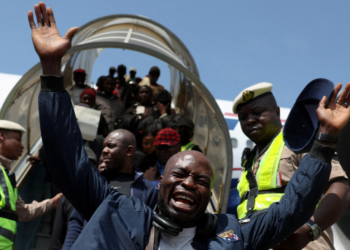
The demonstrations in favour of Niger's military takeover have often featured Russian flags. Credit: AFP

Share on FacebookShare on Twitter

Niger is a country with over 25 million inhabitants. The name Niger derives in turn from the phrase gher n-gheren, meaning “river among rivers,” in the Tamashek language. The country ranks 189th out of 191 countries in the 2022 UN Human Development Index. Despite being the 7th largest supplier of uranium in the world, Niger also ranks 7th among the world’s poorest countries. More than 40 percent of people in the population make less than $1 a day, and two out of every three live below the poverty line set by the government. Analysts say the record of fifty years of uranium mining in Niger by subsidiaries of the French nuclear company Areva, the world’s leading civil nuclear group, until its dismantlement is illustrative. Areva’s sales have consistently far exceeded Niger’s GDP, and Niger’s mines have always been considered strategic by the company, even after the diversification of supply countries. Niger’s uranium has contributed to a third of the electricity produced by French nuclear power plants, playing a significant role in keeping it among the world’s leading economic powers. Until the present, France remains 100% dependent on Niger’s uranium for its military nuclear power.

Mohamed Bazoum, a candidate of the ruling party, was elected president in the December 2020 and February 2021 elections. He succeeded his predecessor in a democratic manner, making history. Bazoum’s government has been a partner with European countries trying to stop the flow of migrants across the Mediterranean Sea, agreeing to take back hundreds of migrants from detention centers in Libya. He has also cracked down on human traffickers in what had been a key transit point between other countries in West Africa and those further north. A State Department official in March also praised Bazoum for speaking out against Russia’s private Wagner group of mercenaries, which has been hired by Mali’s junta to help fight insurgents there. Mali describes the Wagner personnel on its territory as trainers.

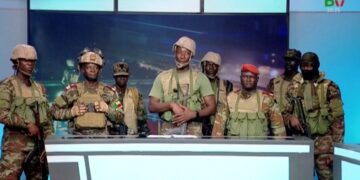
Surprisingly, his presidential guard, however, fired him on July 26, 2023, citing a desire to prevent more security and economic issues as their reasons. An expert noted that “if you know anything about Niger’s troubled political history, a putsch in that country was not out of the question. There was even a serious warning just before President Bazoum came to power, because just two days before he was sworn in, a coup d’état had been foiled.” This comes as the leaders of the coup in Niger have appointed a 21-member cabinet as they forge ahead with building a new government.

Growing frustration with France’s presence

France had cordial relations with overthrown President Mohamed Bazoum. Anti-French sentiment has risen in Niger since the coup. Although anti-French sentiment has long existed in France’s former African colonies, it has in recent years become an increasingly powerful factor in the Sahel region, which cuts across the continent below the Sahara and includes Niger. West Africans have grown frustrated that France’s military presence has not stopped violent attacks by Islamist extremist groups and have been exposed to widespread criticism and disinformation about France on social media. In 2023, Niger’s military government, which seized power on July 26, has accused French President Emmanuel Macron of using divisive rhetoric in his comments about the coup and seeking to impose a neocolonial relationship with its former colony.

Meanwhile, the July coup—one of eight in West and Central Africa since 2020—has sucked in global powers concerned about a shift to military rule across the region. Most affected is France, whose influence over its former colonies has waned in West Africa in recent years as popular vitriol has grown. Its forces have been kicked out of neighboring Mali and Burkina Faso since coups in those countries, reducing its role in a region-wide fight against armed groups, according to a report. Last year, tens of thousands of protesters gathered outside a French military base in Niger’s capital, Niamey, demanding that its troops leave in the wake of a military coup that has widespread popular support but which Paris refuses to recognize.

Furthermore, on December 22, the Nigerien army took control of French military bases in the country as the last of France’s forces took their leave. The move sealed previous withdrawals from Mali in 2022 as well as from Burkina Faso early last year and dealt further blows to France’s marred military reputation. Analysts say France may not leave Niger without a scene, especially since its forced departure from neighboring Mali and Burkina Faso in the wake of military coups there.

Nevertheless, the Macron administration has encountered numerous setbacks on the African continent since 2017, yet none have prompted a reevaluation of strategy, thinking, or personnel, analysts say. But a November report by France’s National Assembly calls for bigger changes: from creating more Africa specialists within the foreign ministry and appointing ambassadors with roots in the African diaspora to rehauling French development aid and adopting a more transparent and pragmatic Africa policy.

Why is Niger significant to the US?

With good reason, the coup has caused a great deal of worry in Western capitals. Niger, situated in the Sahel region, occupies a pivotal position not only in terms of terrorism and violent extremism within West Africa but also within a continent that has emerged as a global focal point for terrorist activities and Islamic extremist violence. The latest coup clarifies Russia’s instruments of power, tactics, and goals for nations in Africa, if not other developing states in other regions. It also may explain why Putin did not disband Wagner after the June mutiny because of its centrality to Russia’s global strategy. Clearly, the West, despite its superior aggregate power in all dimensions, still lacks any idea of how to coordinate them on behalf of a comprehensive strategy. Nor does it yet fully appreciate the rising importance of African countries to the global contest now underway.

Yet while France and the EU are cold-shouldered, with Paris blamed for problems and crises of almost any kind and even accused of supporting a 2007 rebellion by Tuareg separatists, the US retains a significant presence, sending a new ambassador to Niamey in August 2023. Moreover, the United States obviously wants to keep its military bases in Niger and continue its intelligence gathering and offensive operations against terrorist groups, which can only be achieved by maintaining privileged diplomatic and military relations with the country’s political authorities. On August 3, Biden called for Bazoum and his family to be immediately released and for “the preservation of Niger’s hard-earned democracy.” On August 10, Blinken said that “the United States appreciates the determination of ECOWAS to explore all options for the peaceful resolution of the crisis.” In the absence of an immediate restoration of constitutional order, which is now highly unlikely, it is reasonable to assume that the United States would like to see a transition that would ensure a rapid return to constitutional order.

Wishes for a democratic future?

President Bazoum was the first elected leader to succeed another in Niger since independence in 1960. Now his captors have suspended the country’s constitution and installed Gen. Abdourahmane Tchiani as head of state. Also, the junta has opted to rely on a new defense alliance with neighboring Burkina Faso and Mali. They are also both under military rule and resisting demands, including from the West African regional bloc ECOWAS, for a rapid restoration of civilian-led democracy. The bloc’s 2001 democracy and good governance protocol is the foundation for its uncompromising stance towards the coup leaders and its efforts to pressure them into taking steps towards the re-establishment of elected government, with Niger in particular targeted by a trade blockade and the threat of military intervention. According to the report, people in close contact with Bazoum say he has not given up on returning to power.

Similarly, this is the first time in recent years that ECOWAS has considered the use of force to intervene and restore democracies in countries where the military took over. After the ousting of President Bazoum, the Niger junta hastened to send a delegation to Mali and Burkina Faso for talks with their juntas, which declared (in addition to Guinea) that they would not implement any of ECOWAS’ sanctions against Niger. In a joint statement, they indicated that, if necessary, they would fight alongside Niger against ECOWAS troops. This, combined with strong popular support, makes military intervention in Niger more complicated than it appears at first glance. The risk of failure and a protracted conflict is very real and must be considered. Moreover, an intervention could have a destabilizing effect on the region as a whole. Military intervention would inevitably change the priorities of Niger’s army, which, given its limited resources, would likely find itself in a severe imbalance vis-à-vis the jihadist groups. This would be a godsend for the latter, who could take advantage of the situation and increase their territorial gains.

An analyst argues that setting norms is one thing; enforcing them consistently is another. At times, the community’s mediations and interventions helped resolve situations, but overall, ECOWAS’ substantial arsenal of tools was no match for the immense task of consolidating democratic governance across the region. By the time ECOWAS’ ultimatum to Niger expired quietly, other military regimes from the region had announced that they would support Niger militarily should it come to war, and some member states expressed reservations. Hence, the prospect of an intervention under the aegis of ECOWAS soon appeared unrealistic, adding to the many criticisms of its double standards and inability to stop coups. Clearly, each successful coup provides some bit of encouragement for others, but we shouldn’t oversimplify the pattern as a “contagion.” Coups, like insurgencies or extremist movements, are rooted in failings of governance to meet the needs of their people, and each of the Sahel countries has its own patterns: needs or conflicts in the populace that need to be resolved to have stability, patterns of civilian-military relations, and so on.

Although the leader claims the junta will reinstate civilian authority, there is still hope for a democratic comeback in Niger. As reported, Niger’s self-declared military leader, General Abdourahamane Tchiani, proposed a return to democracy within three years and warned a regional bloc against using military force. Tchiani said in his televised address that the junta’s ambition was “not to confiscate power.” “I also reaffirm our readiness to engage in any dialogue, as long as it takes into account the orientations desired by the proud and resilient people of Niger,” he continued.

Read also

African governments look to Islamic finance after Benin sukuk success

Gunfire, blasts rock Niger airport overnight before calm restored

Shipping data shows Indian diesel exports to West Africa at record high

The Junta of Niger has been exhorted by African experts to embrace democracy and work together with neighboring countries, such as Nigeria, in order to support the nation’s socioeconomic development. Observers indicate that this overall disorder and the deep mistrust towards France that comes with it are a godsend for Russia, which has taken on the role of an opportunistic player. Moscow can offer the states concerned another form of security and thus put itself in France’s place, as it was able to do in Mali with the deployment of the private military company Wagner. Jibrin Ibrahim, a professor of political science and development consultant/expert and Senior Fellow of the Centre for Democracy and Development, a think tank in Nigeria, said: France has been the most malevolent of colonial powers that is not ready to give up control of its former colonies, even after seventy years of “independence. Its Francafrique policy has been known for its exploitative systems designed to profit from African resources, using pressure, capital, and frequently outright force to maintain control over its former empire. As a result, many African states, including Niger, continue to face poverty and underdevelopment.” He said the time for revolt has come. France has blatantly refused to allow its colonies to establish their own currencies, and as such, its tactics are not even hidden. Francophone Africa should, however, realize that it would be regressing if it sacrificed democracy to the fight against neo-colonialism. “We require both freedom and democracy.”

ـــــــــــــــــــــــــــــــــــ

This article expresses the views and opinions of the author, and does not necessarily reflect the views of Qiraat Africa and its editors.
Source: Qiraat Africa
Tags: FranceMohamed BazoumNigerUSA
Oyebamiji Usman Adesoji

Oyebamiji Usman Adesoji

Writer and researcher on business, entrepreneurship and geopolitical affairs.

Related Posts

Ex-Nigerian minister, Alison-Madueke faces bribery charges in London court
Economy

Nigeria lowers entry barriers to attract investors for latest oil round

January 28, 2026
Nigeria’s Niger State to work with Islamic Development Bank on $163 million solar project
Featured

Nigeria’s Niger State to work with Islamic Development Bank on $163 million solar project

January 27, 2026
Can the recent bilateral relationship between China and Angola lead to genuine economic and social progress this time?
Central Africa

African nations now send more money to China than they receive in new loans

January 27, 2026
Mali takes 51% stake in China-backed local explosives venture
Economy

Mali takes 51% stake in China-backed local explosives venture

January 26, 2026
Guinea cancels 129 exploration permits, further tightening control
Featured

Guinea’s bauxite exports jump 25% to 183 million tons in 2025 on Chinese demand

January 26, 2026
Mali’s junta creates a new ministerial-level post to oversee the mining sector
Economy

Mali’s junta creates a new ministerial-level post to oversee the mining sector

January 25, 2026

Search Qiraat Africa

No Result
View All Result

Follow on Twitter

Follow @africanqiraat

Trending

At least six killed in border clashes between South Sudan and Uganda

South Sudan government says rebel advance poses ‘serious threat to peace’

January 27, 2026
Brief History and Culture of the City of Lagos, Nigeria

Brief History and Culture of the City of Lagos, Nigeria

July 24, 2024
Republic of Congo to pass new gas code soon as it seeks to lure investment

Norway police file charges over suspected oil bribery in Congo Republic

January 26, 2026
Osei Tutu (c. 1660—c. 1717) , founder of the Asante nation

Osei Tutu (c. 1660—c. 1717) , founder of the Asante nation

December 6, 2025
More than 640,000 people affected by catastrophic Mozambique floods

More than 640,000 people affected by catastrophic Mozambique floods

January 25, 2026
Sir Abubakar Tafawa Balewa (1912 – 1966)

Sir Abubakar Tafawa Balewa (1912 – 1966)

July 16, 2024

Facebook

Sections

  • About Us
  • Privacy Policy
  • Opinion
  • Infographics
  • News
  • Analysis
  • Figures
  • Culture & Literature
  • Follow Ups
  • Historical Readings
  • Interview
  • Studies


© Copyright Qiraat Africa. Developed by Bunnaj Media .

No Result
View All Result
  • News
  • Analysis & Report
  • Studies
  • Opinion
  • Interview
  • Culture & Literature
  • Figures
  • Follow-ups
  • Historical Readings
  • Regions

© 2021 Copyright Qiraat Africa.