
















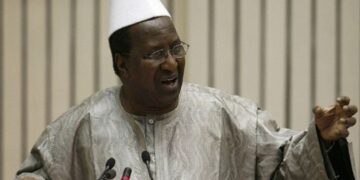



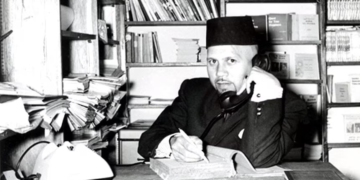






Modibo Keita is considered a pivotal figure in the history of modern Mali as the first president of the republic after independence and a political theorist who adopted a socialist-nationalist approach that helped shape the modern Malian state and its international relations during the Cold War era. His career was characterized by a blend of struggle against French colonialism and the ambition to build a comprehensive African unity.
Keita was born on June 4, 1915, in the Bamako-Koura district of Bamako, which was then part of French Sudan. He descended from a family whose lineage traced back to the founders of the ancient Mali Empire, a historical fact later used to bolster his political legitimacy.
He received his education in Bamako and then at the prestigious École William Ponty in Dakar, Senegal, where he graduated with distinction and worked as a teacher. During this period, he began to take an interest in trade union and political work and participated in the founding of several cultural and political associations that represented the nucleus of national consciousness against the French colonial administration.
In 1946, Keita participated in founding the African Democratic Rally (Rassemblement Démocratique Africain = RDA) and its local branch, the Union of Sudanese (US-RDA). He emerged as a leader with exceptional oratorical and organizational skills, which qualified him for political positions within the French system itself. He was elected to the French National Assembly and served as its vice-president. He also held ministerial positions in French governments in the late 1950s.
Keita’s ambitions extended beyond the borders of French Sudan (present-day Mali); he was a staunch believer in African unity. In 1959, he succeeded in establishing the Mali Federation, which included French Sudan and Senegal. However, this union was short-lived, collapsing in August 1960 due to deep political and ideological differences between Keita, who leaned towards radical socialism, and Léopold Sédar Senghor, who advocated a more conciliatory approach towards France.
On September 22, 1960, Modibo Keita declared the independence of the Republic of Mali and became its first president. His administration adopted a “socialist option” for development, an approach based on several key pillars.
Keita’s government sought to sever economic ties with France. He nationalized vital sectors and established state-owned enterprises to manage trade, transport, and mining. He also took a major sovereign step in 1962 by withdrawing Mali from the CFA franc zone and issuing the Malian franc, a move intended to achieve monetary independence but which led to inflationary pressures and difficulties in trade with neighboring countries.
As Mali was an agrarian country, Keita attempted to organize the countryside through collective farms and a cooperative system. The goal was to achieve self-sufficiency and reduce dependence on imports. However, these policies faced resistance from traditional farmers and sometimes led to decreased productivity due to government bureaucracy.
Also, Keita was a prominent figure in the Non-Aligned Movement and maintained close relationships with leaders such as Gamal Abdel Nasser, Kwame Nkrumah, and Ahmed Sékou Touré. His policy was characterized by open hostility to colonialism and subservience to the West, and he demanded the departure of French forces from military bases in Mali, which was done in 1961.
Beginning in the mid-1960s, Keita’s experiment faced serious obstacles. The deteriorating economic situation, shortages of basic goods, and the failure of the new national currency to stabilize the country led to growing popular discontent.
In 1967, in an attempt to contain the opposition and correct the course of the revolution as he saw it, Keita launched what became known as the “Cultural Revolution.” He dissolved the National Assembly, suspended the constitution, and formed the “National Committee for the Defense of the Revolution” (Comité National de Défense de la Révolution, or CNDR). This move granted broad powers to the party’s popular militias, which harassed opponents, merchants, and the army, further exacerbating internal tensions.
On November 19, 1968, a bloodless military coup was led by then-Lieutenant Moussa Traoré. The army exploited the widespread popular and economic discontent to overthrow Keita. Many people were not defending his regime at that time due to the economic hardship the population was enduring. Modibo Keita was arrested and taken to prison in the remote desert town of Kidal and later transferred to Bamako. He spent the rest of his life in prison without trial, in conditions later described by human rights organizations as harsh.
Modibo Keita died on May 16, 1977, in prison under mysterious circumstances. The government initially claimed his death was due to “food poisoning,” but subsequent popular and political accounts pointed the finger at Moussa Traoré’s regime for his assassination. His death sparked widespread protests during his funeral, revealing the continued appeal of his ideas to segments of the Malian population despite the failure of his economic policies.
A neutral analysis of Modibo Keita’s career reveals several key points about his impact on African history. He succeeded in building a strong Malian national identity and laying the educational and cultural foundations for the nascent state.
However, his insistence on extreme economic centralization and the inflexibility of his monetary policies led to Mali’s economic isolation and burdened ordinary citizens. He was also accused in his later years of having his regime transform into a one-party system intolerant of opposition, paving the way for military intervention in politics—a legacy from which Mali suffered for decades to come.
He is also credited with being one of the founding fathers of the Organization of African Unity and remained committed to the idea of a unified continent independent from foreign domination.