

Qiraat Africa
عربي  |  Fr
Advertisement
  • News
    • All
    • Climate Change
    • Economy
    • Education
    • Energy
    • Health
    • Migration
    • Mining
    • Politics
    • Security
    • Society
    • Sport
    Burkina Faso assembly votes to send troops to Niger

    Burkina Faso starts building first expressway in push to modernize

    Egypt’s el-Sissi urges UN Security Council reforms for Africa’s larger role

    Egypt’s el-Sissi urges UN Security Council reforms for Africa’s larger role

    Burkina Faso, Mali and Niger launch Sahel regional force

    Burkina Faso, Mali and Niger launch Sahel regional force

    US deports eight migrants from Djibouti to South Sudan, Homeland Security says

    US drops Uganda deportation order against Chinese dissident, lawyer says

    Guinea’s Doumbouya looks to complete journey from coup leader to president

    Guinea’s Doumbouya looks to complete journey from coup leader to president

    Nigeria’s Lagos gets $1.35 billion deal with Afrexim, Access on investments

    Lagos eyes $250bn revenue from waste-to-wealth projects

    Ethiopia, Somalia entering new thaw in relations

    Ethiopia, Somalia entering new thaw in relations

    Nigeria at 65: President Tinubu says “worst is over” on independence day amid worsening hardship

    Nigeria budgets N58.18tn for 2026, allocates over N5tn for security

    Gabon plans new housing tax to help tackle rising debt

    Fitch pushes Gabon’s rating deeper into junk on soaring debt, tightening liquidity

  • Analysis
    • All
    • Climate Change
    • Digital & Tech
    • Economy
    • Energy & Power
    • Health
    • Politics
    • Security
    • Society
    UN believes hundreds were killed in Tanzania election protests

    Cameroon and Tanzania’s rulers clung to power in 2025—but look more vulnerable than ever

    General sworn in as Guinea-Bissau leader in swift coup after disputed vote

    Military and Politics in Guinea-Bissau

    Global power shifts are playing out in the Red Sea region: why this is where the rules are changing

    Global power shifts are playing out in the Red Sea region: why this is where the rules are changing

    Understanding Trump’s Christian Genocide Claim and Military Threat: What It Means for Nigeria-U.S. Relations

    Understanding Trump’s Christian Genocide Claim and Military Threat: What It Means for Nigeria-U.S. Relations

    South Africa needs to rethink its community media policy – 4 ways to close the gaps

    South Africa needs to rethink its community media policy – 4 ways to close the gaps

    Cameroon’s Biya declared vote winner, opposition reports gunfire

    What do the recent 2025 elections in Cameroon and Ivory Coast reveal about their state of democracy?

    Ivory Coast president Ouattara’s party pushes him to run again

    Ivory Coast elections: Ouattara’s final rule or forever rule?

    Charting New Waters: Maritime Advancements and West Africa’s Development

    Charting New Waters: Maritime Advancements and West Africa’s Development

    The Critical Role of Gold in Tanzania’s Economic Growth

    The Critical Role of Gold in Tanzania’s Economic Growth

  • Studies
    Benin government says armed forces foil coup attempt

    Coup contagion? A rash of African power grabs suggests copycats are taking note of others’ success

    One in three South Africans have never heard of AI: what this means for policy

    One in three South Africans have never heard of AI: what this means for policy

    Social Media as a Catalyst for the Spread of Dangerous Wealth Ritual Myths

    Social Media as a Catalyst for the Spread of Dangerous Wealth Ritual Myths

    Overcoming Education Barriers for Young Mothers in Sub-Saharan Africa

    Overcoming Education Barriers for Young Mothers in Sub-Saharan Africa

    Youth Empowerment Through Vocational Training in Rural Sub-Saharan Africa

    Youth Empowerment Through Vocational Training in Rural Sub-Saharan Africa

    Manufacturers in Ghana and Nigeria claim that although corruption damages businesses, digital technologies provide a chance to combat it

    Manufacturers in Ghana and Nigeria claim that although corruption damages businesses, digital technologies provide a chance to combat it

    Environmental Threats and Conservation Efforts in Namibia

    Environmental Threats and Conservation Efforts in Namibia

    Your teachers’ level of knowledge affects how well you perform in class: perspectives from 14 French-speaking African nations

    Your teachers’ level of knowledge affects how well you perform in class: perspectives from 14 French-speaking African nations

    Islamic Finance in Nigeria: Between Islamization and Shariah Non-Compliance Polemics

    Islamic Finance in Nigeria: Between Islamization and Shariah Non-Compliance Polemics

  • Infographics
  • Figures
    Robert Mugabe (1924 – 2019): Revolutionary and former President of Zimbabwe

    Robert Mugabe (1924 – 2019): Revolutionary and former President of Zimbabwe

    Idi Amin Dada (1928 – 2003): Military officer and former President of Uganda

    Idi Amin Dada (1928 – 2003): Military officer and former President of Uganda

    Albert John Luthuli (1898–1967): South African politician and first African Nobel Laureate

    Albert John Luthuli (1898–1967): South African politician and first African Nobel Laureate

    Shaka Zulu (1787-1828), founder of the Zulu empire in Southern Africa

    Shaka Zulu (1787-1828), founder of the Zulu empire in Southern Africa

    Chimamanda Ngozi Adichie, Nigerian writer

    Chimamanda Ngozi Adichie, Nigerian writer

    Olaudah Equiano (1745-1797), writer and abolitionist

    Olaudah Equiano (1745-1797), writer and abolitionist

    Ex-Credit Suisse chief executive Tidjane Thiam eyeing Ivory Coast 2025 presidential contest

    Tidjane Thiam, Ivorian businessman and politician

    François (Ngarta) Tombalbaye (1918-1975): First President of Chad

    François (Ngarta) Tombalbaye (1918-1975): First President of Chad

    Apollo Milton Obote (1925-2005): Former President of Uganda

    Apollo Milton Obote (1925-2005): Former President of Uganda

  • History
    Zong Massacre

    Zong Massacre

    Abomey, southern Benin

    Abomey, southern Benin

    Ifẹ̀, an ancient city in south-western Nigeria

    Ifẹ̀, an ancient city in south-western Nigeria

    Robben Island, South Africa

    Robben Island, South Africa

    Mount Kilimanjaro, Tanzania

    Mount Kilimanjaro, Tanzania

    Kumbi Saleh, the capital of the ancient Ghana Empire

    Kumbi Saleh, the capital of the ancient Ghana Empire

    Kano, an ancient city in northern Nigeria

    Kano, an ancient city in northern Nigeria

    Agadez, historic city in Niger

    Agadez, historic city in Niger

    Olduvai Gorge, a significant paleoanthropological site in Tanzania

    Olduvai Gorge, a significant paleoanthropological site in Tanzania

  • Others
    • Culture / Literature
    • Follow-ups
    • Interview
    • Opinion
  • Countries
    • Country profiles
    • Regions
      • Central Africa
      • East Africa
      • Southern Africa
      • West Africa
No Result
View All Result
  • News
    • All
    • Climate Change
    • Economy
    • Education
    • Energy
    • Health
    • Migration
    • Mining
    • Politics
    • Security
    • Society
    • Sport
    Burkina Faso assembly votes to send troops to Niger

    Burkina Faso starts building first expressway in push to modernize

    Egypt’s el-Sissi urges UN Security Council reforms for Africa’s larger role

    Egypt’s el-Sissi urges UN Security Council reforms for Africa’s larger role

    Burkina Faso, Mali and Niger launch Sahel regional force

    Burkina Faso, Mali and Niger launch Sahel regional force

    US deports eight migrants from Djibouti to South Sudan, Homeland Security says

    US drops Uganda deportation order against Chinese dissident, lawyer says

    Guinea’s Doumbouya looks to complete journey from coup leader to president

    Guinea’s Doumbouya looks to complete journey from coup leader to president

    Nigeria’s Lagos gets $1.35 billion deal with Afrexim, Access on investments

    Lagos eyes $250bn revenue from waste-to-wealth projects

    Ethiopia, Somalia entering new thaw in relations

    Ethiopia, Somalia entering new thaw in relations

    Nigeria at 65: President Tinubu says “worst is over” on independence day amid worsening hardship

    Nigeria budgets N58.18tn for 2026, allocates over N5tn for security

    Gabon plans new housing tax to help tackle rising debt

    Fitch pushes Gabon’s rating deeper into junk on soaring debt, tightening liquidity

  • Analysis
    • All
    • Climate Change
    • Digital & Tech
    • Economy
    • Energy & Power
    • Health
    • Politics
    • Security
    • Society
    UN believes hundreds were killed in Tanzania election protests

    Cameroon and Tanzania’s rulers clung to power in 2025—but look more vulnerable than ever

    General sworn in as Guinea-Bissau leader in swift coup after disputed vote

    Military and Politics in Guinea-Bissau

    Global power shifts are playing out in the Red Sea region: why this is where the rules are changing

    Global power shifts are playing out in the Red Sea region: why this is where the rules are changing

    Understanding Trump’s Christian Genocide Claim and Military Threat: What It Means for Nigeria-U.S. Relations

    Understanding Trump’s Christian Genocide Claim and Military Threat: What It Means for Nigeria-U.S. Relations

    South Africa needs to rethink its community media policy – 4 ways to close the gaps

    South Africa needs to rethink its community media policy – 4 ways to close the gaps

    Cameroon’s Biya declared vote winner, opposition reports gunfire

    What do the recent 2025 elections in Cameroon and Ivory Coast reveal about their state of democracy?

    Ivory Coast president Ouattara’s party pushes him to run again

    Ivory Coast elections: Ouattara’s final rule or forever rule?

    Charting New Waters: Maritime Advancements and West Africa’s Development

    Charting New Waters: Maritime Advancements and West Africa’s Development

    The Critical Role of Gold in Tanzania’s Economic Growth

    The Critical Role of Gold in Tanzania’s Economic Growth

  • Studies
    Benin government says armed forces foil coup attempt

    Coup contagion? A rash of African power grabs suggests copycats are taking note of others’ success

    One in three South Africans have never heard of AI: what this means for policy

    One in three South Africans have never heard of AI: what this means for policy

    Social Media as a Catalyst for the Spread of Dangerous Wealth Ritual Myths

    Social Media as a Catalyst for the Spread of Dangerous Wealth Ritual Myths

    Overcoming Education Barriers for Young Mothers in Sub-Saharan Africa

    Overcoming Education Barriers for Young Mothers in Sub-Saharan Africa

    Youth Empowerment Through Vocational Training in Rural Sub-Saharan Africa

    Youth Empowerment Through Vocational Training in Rural Sub-Saharan Africa

    Manufacturers in Ghana and Nigeria claim that although corruption damages businesses, digital technologies provide a chance to combat it

    Manufacturers in Ghana and Nigeria claim that although corruption damages businesses, digital technologies provide a chance to combat it

    Environmental Threats and Conservation Efforts in Namibia

    Environmental Threats and Conservation Efforts in Namibia

    Your teachers’ level of knowledge affects how well you perform in class: perspectives from 14 French-speaking African nations

    Your teachers’ level of knowledge affects how well you perform in class: perspectives from 14 French-speaking African nations

    Islamic Finance in Nigeria: Between Islamization and Shariah Non-Compliance Polemics

    Islamic Finance in Nigeria: Between Islamization and Shariah Non-Compliance Polemics

  • Infographics
  • Figures
    Robert Mugabe (1924 – 2019): Revolutionary and former President of Zimbabwe

    Robert Mugabe (1924 – 2019): Revolutionary and former President of Zimbabwe

    Idi Amin Dada (1928 – 2003): Military officer and former President of Uganda

    Idi Amin Dada (1928 – 2003): Military officer and former President of Uganda

    Albert John Luthuli (1898–1967): South African politician and first African Nobel Laureate

    Albert John Luthuli (1898–1967): South African politician and first African Nobel Laureate

    Shaka Zulu (1787-1828), founder of the Zulu empire in Southern Africa

    Shaka Zulu (1787-1828), founder of the Zulu empire in Southern Africa

    Chimamanda Ngozi Adichie, Nigerian writer

    Chimamanda Ngozi Adichie, Nigerian writer

    Olaudah Equiano (1745-1797), writer and abolitionist

    Olaudah Equiano (1745-1797), writer and abolitionist

    Ex-Credit Suisse chief executive Tidjane Thiam eyeing Ivory Coast 2025 presidential contest

    Tidjane Thiam, Ivorian businessman and politician

    François (Ngarta) Tombalbaye (1918-1975): First President of Chad

    François (Ngarta) Tombalbaye (1918-1975): First President of Chad

    Apollo Milton Obote (1925-2005): Former President of Uganda

    Apollo Milton Obote (1925-2005): Former President of Uganda

  • History
    Zong Massacre

    Zong Massacre

    Abomey, southern Benin

    Abomey, southern Benin

    Ifẹ̀, an ancient city in south-western Nigeria

    Ifẹ̀, an ancient city in south-western Nigeria

    Robben Island, South Africa

    Robben Island, South Africa

    Mount Kilimanjaro, Tanzania

    Mount Kilimanjaro, Tanzania

    Kumbi Saleh, the capital of the ancient Ghana Empire

    Kumbi Saleh, the capital of the ancient Ghana Empire

    Kano, an ancient city in northern Nigeria

    Kano, an ancient city in northern Nigeria

    Agadez, historic city in Niger

    Agadez, historic city in Niger

    Olduvai Gorge, a significant paleoanthropological site in Tanzania

    Olduvai Gorge, a significant paleoanthropological site in Tanzania

  • Others
    • Culture / Literature
    • Follow-ups
    • Interview
    • Opinion
  • Countries
    • Country profiles
    • Regions
      • Central Africa
      • East Africa
      • Southern Africa
      • West Africa
No Result
View All Result
Qiraat Africa
عربي  |  Fr
No Result
View All Result
Home Regions Central Africa

Will USAID Cutbacks Threaten Africa’s Development and Stability?

Oyebamiji Usman Adesoji by Oyebamiji Usman Adesoji
February 18, 2025
Will USAID Cutbacks Threaten Africa’s Development and Stability?

Credit: Nigeria Health Watch

Share on FacebookShare on Twitter

Globalization as one of the most important new global agenda vigorously pursued by the west under the leadership of the USA refers to economic, social, political, and cultural integration of the whole world into a universal or global village through instantaneous communication enabled by emerging high information technology such as computer (internet). It is also the compression of time and space aspects of social relations across which shields all the NGA (New Global Agenda), but, as a barometer for measuring their hybridization of ideas, techniques and civilizations across all countries of the world. Bailey, Saleh. “New Global Agenda and the Role of United States of America in World Politics, Mar. 2006, pp. 111. Nevertheless, beyond the unsettled rivalries of states, and the decaying foundations of regional stability, new global challenges are straining the capacities of governments to create workable international rules of the road. Looking back over the past seven decades of American primacy, we can see certain patterns in the role of soft power, ethics and foreign policy. All presidents expressed formal goals and values that were attractive to Americans. After all, that is how they got elected. All proclaimed a goal of preserving American primacy. While that goal was attractive to the American public, its morality depended on how it was implemented. Imperial swagger and hubris did not pass the test, but provision of global public goods by the largest state had important moral consequences as well as generating soft power.

The intention that U.S. Agency for International Development (USAID) is to serve as the ‘frontline’ in the US interventionist projects has been a persistent trope throughout the course of the agency’s existence. Even though the nature of threats has changed—communism during the Cold War, poverty, and instability in the 1990s, to terrorism and ‘fragile states’ in the post-September 11th era—the agency has, over time, remained responsible for neutralizing and dispelling perceived threats in their place of origin. Historically, U.S. foreign aid has been driven by realist theories of its own national interests, with the starting point and ultimate goal being the maximization of national interests. During the cold war, the main goal of U.S. foreign aid was to stop the spread of communism and to consolidate U.S. hegemony. After the 9/11 attack, the goal of U.S. foreign aid shifted to global anti-terrorism to ensure the national security.

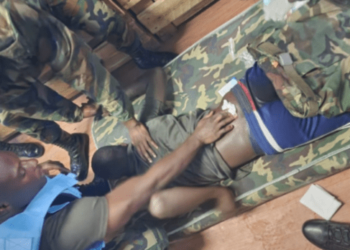
The George W. Bush Administration, for instance, oversaw the establishment of a new foreign aid agency and a global HIV/AIDS (Human immunodeficiency /Acquired immunodeficiency syndrome) assistance program, and the Obama Administration launched global programs to address climate change, food insecurity, and global health. Furthermore, in the case of USAID., money has gone toward humanitarian aid, development assistance and direct budget support in Ukraine, peace-building in Somalia, disease surveillance in Cambodia, vaccination programs in Nigeria, HIV prevention in Uganda and maternal health assistance in Zambia. The agency has also helped to contain major outbreaks of Ebola and funded conservation and environmental programs. Unfortunately,  USAID’s funding has been frozen for 90 days by the Trump administration. The US President Donald Trump ordered the closure of USAID, leaving many countries, especially in Africa in limbo and thousands who benefit from the humanitarian agency’s work shocked. What are the impacts of USAID in Africa; it’s inefficiencies on the continent and how are Africa countries using this gap as a catalyst for development and stability? This article examines these change in detail.

USAID’s African Endeavors: Triumphs and Trials Revealed

In sub-Saharan Africa (SSA), USAID works with its partners to improve access to and delivery of health services, to support more accountable and democratic institutions, to start businesses and foster an environment attractive to private investment, and to stave off conflict and strengthen communities. In Fiscal Year 2019, USAID and the U.S. Department of State provided $8.3 billion of assistance to 47 countries and 8 regional programs in sub-Saharan Africa. Last year, Ethiopia is the largest USAID beneficiary in Africa, receiving $1.20 billion in aid. The Democratic Republic of Congo follows closely with the same amount of $1.20 billion. Meanwhile, South Sudan ranks third, benefiting from $795.41 million in assistance.

  • What is USAID? Explaining the US foreign aid agency in Africa:

The United States Agency for International Development (USAID) was set up in the early 1960s to administer humanitarian aid programmes on behalf of the US government. According to BBC report, it employs around 10,000 people, two-thirds of whom work overseas, according to the Congressional Research Service. It has bases in more than 60 countries and works with dozens of others. Monde Muyangwa, the assistant Administrator, Bureau for Africa, USAID noted that: USAID’s Feed the Future Accelerator recognizes that southern Africa has the potential to be a breadbasket, both feeding the region and exporting beyond it. Providing short-term food assistance to those in need while developing resilient food systems will ensure a more sustainable food security outlook for the entire continent. USAID is supporting the historic rollout of the world’s first malaria vaccines and played a pivotal role in expanding access to vaccines for the mpox response while increasing access to diagnostics. Critically, USAID is investing in risk communication and information integrity campaigns to enable people to access accurate outbreak information for the Marburg and mpox outbreaks.

Most U.S. aid for Africa is implemented by nongovernment or multilateral actors—such as humanitarian organizations, non-profit groups, private contractors, and U.N. agencies—rather than by African governments, according to a Congressional Research Service paper styled, ‘‘U.S. Assistance for Sub-Saharan Africa: An Overview,’’  authored by  Husted, Blanchard, et. al in November, 2023. According to one observer, for example, PEPFAR (U.S. President’s Emergency Plan for AIDS Relief) spending in countries with autocratic governments “reduces pressure on the recipient states to deliver services, thereby creating opportunities for them to shift funds to projects that serve elite interests.” In a response to this critique, former U.S. health officials argued that PEPFAR has had positive impacts on governance  in Africa, in addition to the success it has achieved in the fight against HIV/AIDS.

In the case of  HIV/AIDS, Dr. Bailey Saleh who is also a lecturer at the University of Maiduguri, Department of Political Science noted that, there is strong  co-relation between the pervalence of HIV/AIDS in Sub-Saharan Africa (SSA) with poverty and the adverse effect of solar (UV) rediation which suppresses the human immune system. It is not as if those who live in the temperate regions are not afflicted by the scourge of HIV/AIDS. The truth is that they are not exposed to the vagaries of the UV radiation and their icome per-capital is very high. As such, those infected and affected by HIV/AIDS could live longer life span because they can afford and access high dietary rations and ART. Even then, abstinence must be observed in the 3WCs. Thus, the massive food assistance programes of the USA to Heavily Indebted Poor Countries (HIPC) of the world and the boosting of agricultural production worldwide through the IFAD (International Fund for Agricultural Development), FAO Food and Agriculture Organization, WFP (World Food Programme) and AGOA (African Growth and Opportunity Act) is to help HIV victimes in particular to live a longer life span than they ought to under malnaourished conditiones (Bailey 138).

  • Millions at Stake: The Real Impact of USAID’s Suspension on Africa:

In a few short weeks, President Trump and the South African-born billionaire Elon Musk have burned much of that work to the ground, vowing to completely gut the U.S. Agency for International Development. Before now, foreign assistance has been the target of ire from Republicans in Congress and Trump administration officials, but the funding accounts for very little of the overall US budget. The scope of the executive order and subsequent cable has left humanitarian and State Department officials reeling. According to the White House, the United States foreign aid industry and bureaucracy are not aligned with American interests and in many cases antithetical to American values.  They serve to destabilize world peace by promoting ideas in foreign countries that are directly inverse to harmonious and stable relations internal to and among countries. Critics say the impact of the freeze on assistance will be immense because the US is consistently the world’s largest humanitarian donor.

All the same, this abrupt halt places millions of people around the world at risk, compounds existing humanitarian emergencies, and creates major implications for the millions of recipients of $20 billion in aid in 150 countries and life-saving programs in the U.S. President’s Emergency Plan for AIDS Relief (PEPFAR) and the Bureau of Humanitarian Assistance (BHA). Since it was established by Congress in 1961, USAID “has brought lifesaving medicines, food, clean water, assistance for farmers, kept women and girls safe, promoted peace, and so much more over decades, all for less than one percent of our federal budget,” Oxfam America President Abby Maxman said in a statement. “Ending USAID as we know it would undo hard-earned gains in the fight against poverty and humanitarian crisis, and cause long-term, irreparable harm.” For instance, Sub-Saharan Africa could suffer more than any other region during the aid pause. The U.S. gave the region more than $6.5 billion in humanitarian assistance last year. HIV patients in Africa arriving at clinics funded by an acclaimed U.S. program that helped rein in the global AIDS epidemic of the 1980s found locked doors.

At the United Nations, deputy spokesman Farhan Haq said: “These are bilateral decisions but nonetheless we expect those nations who have the capability to generously fund development assistance.” “The world is baffled,” said Aaron Motsoaledi, the health minister of South Africa, the country with the largest number of people living with HIV, after the U.S. freeze on aid. Motsoaledi says the U.S. funds nearly 20% of the $2.3 billion needed each year to run South Africa’s HIV/AIDS program through PEPFAR, and now the biggest response to a single disease in history is under threat. Halting U.S. aid also could have a dire impact on the humanitarian situation in eastern Congo, where American aid funds access to food, water, electricity and basic health care for 4.6 million people displaced by years of conflict. European nations are discussing increasing aid, but a European diplomat told the AP that will not make up for the loss of the U.S., the country’s largest donor. In Ghana, the Chemonics International development group said it’s pulling logistics for programs in maternal and child health, malaria response and HIV. Education programs have been halted in Mali, a conflict-battered West African nation where USAID has become the country’s main humanitarian partner after others left following a 2021 coup. In Malawi, a country of 20m in southern Africa that is the world’s seventh-poorest by GDP per person, most local charities have stopped working and about 5,000 people—many of them health workers—have lost their jobs, says Mazisayko Matemba of the Health and Rights Education Programme, an NGO. “We expect more people to get infections and start dying.”

African Development and Stability: Bold Steps in Uncertain Times

Alexander Kude, deputy director for the Commonwealth Students Association, told VOA (Voice of America) that the US foreign aid suspension should be a wake-up call for developing countries to start investing more in education and reduce overdependence on foreign aid. Borja Santos Porras, Vice Dean and Professor of Practice – IE School of politics, economics and global affairs, IE Universit noted that, beyond the debate over how effective foreign aid is, USAID’s withdrawal reflects significant changes in global politics. The US appears to be turning its back on its legacy of leadership in development and humanitarian assistance, and this new reality demands a coordinated response. If the international community does not act quickly, the setbacks in health, education, food security and human rights in developing countries will be devastating

Read also

Coup contagion? A rash of African power grabs suggests copycats are taking note of others’ success

Cameroon and Tanzania’s rulers clung to power in 2025—but look more vulnerable than ever

Burkina Faso starts building first expressway in push to modernize

In 2024, USAID committed $2.3 million to procure 4.8 million doses of life-saving malaria tablets from Swiss Pharma (Swipha) in a landmark partnership that will expand access to essential medicines in Nigeria and West Africa, according to the US Embassy in Nigeria.  Lately, Nigerian lawmakers approved an additional $200 million for the health sector as part of its 2025 spending plan to offset the shortfall from U.S. aid cuts. Nigeria, Africa’s most populous country with more than 200 million people, was among the top ten recipients of aid from the U.S. Agency for International Development in 2023. Also, the government has announced plans to retain 28,000 health workers whose salaries were previously covered by the USAID,  Premium Times, local media reports. Authorities argue that about 70 per cent of the country’s total health expenditure comes from private sources, including out-of-pocket payments by citizens, while only 30 percent is publicly financed. Government says, while external assistance has played a role in supporting healthcare programmes, it is not the primary source of Nigeria’s health funding.

South Africa plays a critical role in achieving global HIV targets. The country alone contributes to 50% of PEPFAR’s global HIV treatment goals. Despite its significant contributions, the country is now left to navigate this funding gap on its own. Recently, minister of health Dr Aaron Motsoaledi met to discuss bilateral health cooperation and new US policy for assistance with US charge d’affaires for South Africa, Dana Brown. For the country, the fallout has heightened civil society’s calls for a prompt, implementable plan to fill the gaps in care and services. Also needed, they say, is clarity on longer-term strategies for greater self-sufficiency in the country’s HIV responses as donor-funded models look increasingly precarious.   South Africa may need to explore alternative financing options. One possibility is to strengthen ties with its BRICS allies — Brazil, Russia, India and China — which have been expanding their economic and political influence in the region, Sabrina Walter, founder of Women For Change, an NGO advocating against gender-based violence and femicide,  told OkayAfrica. In the long run, Malawi’s economic independence will depend on its ability to diversify its economy, increase its domestic revenue, and reduce its reliance on foreign aid. The government’s decision to implement responsive measures is a step in the right direction, but it will require sustained effort and commitment to achieve true economic independence.

Africa countries should stop overreliance on foreign aid. They should start decolonising the global health sector and roll out policies that will promote private investment. Governments should also try to accelerate innovative financing mechanism such as tax. While more funding should be dedicated to critical areas such as health and education. There must be increased in political commitment and enabling environment to support government policies. Finally, authorities should start the promotion of improved governance systems and accountability on the continent.
Source: Qiraat Africa
Tags: George W. BushNew Global AgendaU.S. Agency for International Development (USAID)USAID
Oyebamiji Usman Adesoji

Oyebamiji Usman Adesoji

Writer and researcher on business, entrepreneurship and geopolitical affairs.

Related Posts

Egypt’s el-Sissi urges UN Security Council reforms for Africa’s larger role
Featured

Egypt’s el-Sissi urges UN Security Council reforms for Africa’s larger role

December 22, 2025
Burkina Faso, Mali and Niger launch Sahel regional force
Featured

Burkina Faso, Mali and Niger launch Sahel regional force

December 22, 2025
US deports eight migrants from Djibouti to South Sudan, Homeland Security says
East Africa

US drops Uganda deportation order against Chinese dissident, lawyer says

December 22, 2025
Guinea’s Doumbouya looks to complete journey from coup leader to president
Featured

Guinea’s Doumbouya looks to complete journey from coup leader to president

December 22, 2025
General sworn in as Guinea-Bissau leader in swift coup after disputed vote
Featured

Military and Politics in Guinea-Bissau

December 21, 2025
Nigeria’s Lagos gets $1.35 billion deal with Afrexim, Access on investments
Economy

Lagos eyes $250bn revenue from waste-to-wealth projects

December 21, 2025

Search Qiraat Africa

No Result
View All Result

Follow on Twitter

Follow @africanqiraat

Trending

Ethiopia, Somalia entering new thaw in relations

Ethiopia, Somalia entering new thaw in relations

December 21, 2025
Brief History and Culture of the City of Lagos, Nigeria

Brief History and Culture of the City of Lagos, Nigeria

July 24, 2024
Meja Mwangi: The Literary Genius with a Mighty pen

Meja Mwangi: The Literary Genius with a Mighty pen

May 24, 2025
Cheikh Anta Diop (1923-1986), an African Historian and Anthropologist

Cheikh Anta Diop (1923-1986), an African Historian and Anthropologist

December 10, 2024
Mass layoffs overshadow Guinea’s Simandou mega mine as output accelerates

Mass layoffs overshadow Guinea’s Simandou mega mine as output accelerates

December 18, 2025
Kumbi Saleh, the capital of the ancient Ghana Empire

Kumbi Saleh, the capital of the ancient Ghana Empire

October 13, 2025

Facebook

Sections

  • About Us
  • Privacy Policy
  • Opinion
  • Infographics
  • News
  • Analysis
  • Figures
  • Culture & Literature
  • Follow Ups
  • Historical Readings
  • Interview
  • Studies


© Copyright Qiraat Africa. Developed by Bunnaj Media .

No Result
View All Result
  • News
  • Analysis & Report
  • Studies
  • Opinion
  • Interview
  • Culture & Literature
  • Figures
  • Follow-ups
  • Historical Readings
  • Regions

© 2021 Copyright Qiraat Africa.