




Qiraat Africa
عربي  |  Fr
Advertisement
  • News
    • All
    • Climate Change
    • Economy
    • Education
    • Energy
    • Health
    • Migration
    • Mining
    • Politics
    • Security
    • Society
    • Sport
    Is Ethiopia’s Tigray barreling towards another war?

    Ethiopian Airlines cancels flights to Tigray region after clashes

    African governments look to Islamic finance after Benin sukuk success

    African governments look to Islamic finance after Benin sukuk success

    Ukraine says Niger’s move to cut relations is ‘regrettable’

    Gunfire, blasts rock Niger airport overnight before calm restored

    DR Congo Military Court Issues Arrest Warrant for Corneille Nangaa

    Rebel leader denounces US-DRC minerals deal one year after Goma’s fall

    Zambia groups say freedom of expression under threat

    Zambia is hopeful of agreement on debt restructuring terms with Afreximbank

    Rwanda’s presidential election set for July 15, 2024

    Rwanda says UK owes $130 million over scrapped asylum scheme

    Giant Dangote oil refinery to begin production in third quarter

    Shipping data shows Indian diesel exports to West Africa at record high

    Ex-Nigerian minister, Alison-Madueke faces bribery charges in London court

    Nigeria lowers entry barriers to attract investors for latest oil round

    Uganda’s constitutional court to hear challenges against anti-homosexuality law

    Uganda court releases prominent rights activist on bail

  • Analysis
    • All
    • Climate Change
    • Digital & Tech
    • Economy
    • Energy & Power
    • Health
    • Politics
    • Security
    • Society
    BRICS Plus and the Shifting Global Power Balance: Implications of South Africa’s Role

    BRICS Plus and the Shifting Global Power Balance: Implications of South Africa’s Role

    African Union suspends Niger over coup, prepares sanctions; France denies report it asked Algeria to use airspace for a Niger operation

    Leaders in Africa’s human rights institutions are being elected. Why it matters

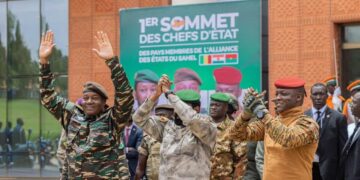
    Sahel Alliance leaders meet in Bamako to deepen break with ECOWAS

    The AES and the Reconfiguration of Regional Security Architecture: A Look at the 2025 Bamako Summit

    US airstrikes in northern Nigeria: potential windfalls and dangers

    US airstrikes in northern Nigeria: potential windfalls and dangers

    Why France’s Focus is Shifting to Anglophone Africa

    Why France’s Focus is Shifting to Anglophone Africa

    UN believes hundreds were killed in Tanzania election protests

    Cameroon and Tanzania’s rulers clung to power in 2025—but look more vulnerable than ever

    General sworn in as Guinea-Bissau leader in swift coup after disputed vote

    Military and Politics in Guinea-Bissau

    Global power shifts are playing out in the Red Sea region: why this is where the rules are changing

    Global power shifts are playing out in the Red Sea region: why this is where the rules are changing

    Understanding Trump’s Christian Genocide Claim and Military Threat: What It Means for Nigeria-U.S. Relations

    Understanding Trump’s Christian Genocide Claim and Military Threat: What It Means for Nigeria-U.S. Relations

  • Studies
    Benin government says armed forces foil coup attempt

    Coup contagion? A rash of African power grabs suggests copycats are taking note of others’ success

    One in three South Africans have never heard of AI: what this means for policy

    One in three South Africans have never heard of AI: what this means for policy

    Social Media as a Catalyst for the Spread of Dangerous Wealth Ritual Myths

    Social Media as a Catalyst for the Spread of Dangerous Wealth Ritual Myths

    Overcoming Education Barriers for Young Mothers in Sub-Saharan Africa

    Overcoming Education Barriers for Young Mothers in Sub-Saharan Africa

    Youth Empowerment Through Vocational Training in Rural Sub-Saharan Africa

    Youth Empowerment Through Vocational Training in Rural Sub-Saharan Africa

    Manufacturers in Ghana and Nigeria claim that although corruption damages businesses, digital technologies provide a chance to combat it

    Manufacturers in Ghana and Nigeria claim that although corruption damages businesses, digital technologies provide a chance to combat it

    Environmental Threats and Conservation Efforts in Namibia

    Environmental Threats and Conservation Efforts in Namibia

    Your teachers’ level of knowledge affects how well you perform in class: perspectives from 14 French-speaking African nations

    Your teachers’ level of knowledge affects how well you perform in class: perspectives from 14 French-speaking African nations

    Islamic Finance in Nigeria: Between Islamization and Shariah Non-Compliance Polemics

    Islamic Finance in Nigeria: Between Islamization and Shariah Non-Compliance Polemics

  • Infographics
  • Figures
    What does a diary entry reveal about the West African origins of Apongo, a rebel leader in Jamaica?

    What does a diary entry reveal about the West African origins of Apongo, a rebel leader in Jamaica?

    Obafemi Awolowo (1909 – 1987): Nigerian statesman and influential advocate of independence

    Obafemi Awolowo (1909 – 1987): Nigerian statesman and influential advocate of independence

    Tunka Manin (c. 1010–1078), the last ruler of the Ghana Empire

    Tunka Manin (c. 1010–1078), the last ruler of the Ghana Empire

    Samuel Ajayi Crowther (1809-1891): First African Anglican Bishop

    Samuel Ajayi Crowther (1809-1891): First African Anglican Bishop

    Osei Tutu (c. 1660—c. 1717) , founder of the Asante nation

    Osei Tutu (c. 1660—c. 1717) , founder of the Asante nation

    Walter Sisulu (1912 – 2003): South African activist

    Walter Sisulu (1912 – 2003): South African activist

    Modibo Keïta (1915-1977): First President of Mali

    Modibo Keïta (1915-1977): First President of Mali

    Robert Mugabe (1924 – 2019): Revolutionary and former President of Zimbabwe

    Robert Mugabe (1924 – 2019): Revolutionary and former President of Zimbabwe

    Idi Amin Dada (1928 – 2003): Military officer and former President of Uganda

    Idi Amin Dada (1928 – 2003): Military officer and former President of Uganda

  • History
    The battles of Isandlwana and Rorke’s Drift

    The battles of Isandlwana and Rorke’s Drift

    Kimberley’s Big Hole, Northern Cape, South Africa

    Kimberley’s Big Hole, Northern Cape, South Africa

    Ogbunike Caves, Southeastern Nigeria

    Ogbunike Caves, Southeastern Nigeria

    Historic Town of Grand-Bassam

    Historic Town of Grand-Bassam

    Mandara Mountains, Northern Cameroon and Nigeria

    Mandara Mountains, Northern Cameroon and Nigeria

    Zong Massacre

    Zong Massacre

    Abomey, southern Benin

    Abomey, southern Benin

    Ifẹ̀, an ancient city in south-western Nigeria

    Ifẹ̀, an ancient city in south-western Nigeria

    Robben Island, South Africa

    Robben Island, South Africa

  • Others
    • Culture / Literature
    • Follow-ups
    • Interview
    • Opinion
  • Countries
    • Country profiles
    • Regions
      • Central Africa
      • East Africa
      • Southern Africa
      • West Africa
No Result
View All Result
  • News
    • All
    • Climate Change
    • Economy
    • Education
    • Energy
    • Health
    • Migration
    • Mining
    • Politics
    • Security
    • Society
    • Sport
    Is Ethiopia’s Tigray barreling towards another war?

    Ethiopian Airlines cancels flights to Tigray region after clashes

    African governments look to Islamic finance after Benin sukuk success

    African governments look to Islamic finance after Benin sukuk success

    Ukraine says Niger’s move to cut relations is ‘regrettable’

    Gunfire, blasts rock Niger airport overnight before calm restored

    DR Congo Military Court Issues Arrest Warrant for Corneille Nangaa

    Rebel leader denounces US-DRC minerals deal one year after Goma’s fall

    Zambia groups say freedom of expression under threat

    Zambia is hopeful of agreement on debt restructuring terms with Afreximbank

    Rwanda’s presidential election set for July 15, 2024

    Rwanda says UK owes $130 million over scrapped asylum scheme

    Giant Dangote oil refinery to begin production in third quarter

    Shipping data shows Indian diesel exports to West Africa at record high

    Ex-Nigerian minister, Alison-Madueke faces bribery charges in London court

    Nigeria lowers entry barriers to attract investors for latest oil round

    Uganda’s constitutional court to hear challenges against anti-homosexuality law

    Uganda court releases prominent rights activist on bail

  • Analysis
    • All
    • Climate Change
    • Digital & Tech
    • Economy
    • Energy & Power
    • Health
    • Politics
    • Security
    • Society
    BRICS Plus and the Shifting Global Power Balance: Implications of South Africa’s Role

    BRICS Plus and the Shifting Global Power Balance: Implications of South Africa’s Role

    African Union suspends Niger over coup, prepares sanctions; France denies report it asked Algeria to use airspace for a Niger operation

    Leaders in Africa’s human rights institutions are being elected. Why it matters

    Sahel Alliance leaders meet in Bamako to deepen break with ECOWAS

    The AES and the Reconfiguration of Regional Security Architecture: A Look at the 2025 Bamako Summit

    US airstrikes in northern Nigeria: potential windfalls and dangers

    US airstrikes in northern Nigeria: potential windfalls and dangers

    Why France’s Focus is Shifting to Anglophone Africa

    Why France’s Focus is Shifting to Anglophone Africa

    UN believes hundreds were killed in Tanzania election protests

    Cameroon and Tanzania’s rulers clung to power in 2025—but look more vulnerable than ever

    General sworn in as Guinea-Bissau leader in swift coup after disputed vote

    Military and Politics in Guinea-Bissau

    Global power shifts are playing out in the Red Sea region: why this is where the rules are changing

    Global power shifts are playing out in the Red Sea region: why this is where the rules are changing

    Understanding Trump’s Christian Genocide Claim and Military Threat: What It Means for Nigeria-U.S. Relations

    Understanding Trump’s Christian Genocide Claim and Military Threat: What It Means for Nigeria-U.S. Relations

  • Studies
    Benin government says armed forces foil coup attempt

    Coup contagion? A rash of African power grabs suggests copycats are taking note of others’ success

    One in three South Africans have never heard of AI: what this means for policy

    One in three South Africans have never heard of AI: what this means for policy

    Social Media as a Catalyst for the Spread of Dangerous Wealth Ritual Myths

    Social Media as a Catalyst for the Spread of Dangerous Wealth Ritual Myths

    Overcoming Education Barriers for Young Mothers in Sub-Saharan Africa

    Overcoming Education Barriers for Young Mothers in Sub-Saharan Africa

    Youth Empowerment Through Vocational Training in Rural Sub-Saharan Africa

    Youth Empowerment Through Vocational Training in Rural Sub-Saharan Africa

    Manufacturers in Ghana and Nigeria claim that although corruption damages businesses, digital technologies provide a chance to combat it

    Manufacturers in Ghana and Nigeria claim that although corruption damages businesses, digital technologies provide a chance to combat it

    Environmental Threats and Conservation Efforts in Namibia

    Environmental Threats and Conservation Efforts in Namibia

    Your teachers’ level of knowledge affects how well you perform in class: perspectives from 14 French-speaking African nations

    Your teachers’ level of knowledge affects how well you perform in class: perspectives from 14 French-speaking African nations

    Islamic Finance in Nigeria: Between Islamization and Shariah Non-Compliance Polemics

    Islamic Finance in Nigeria: Between Islamization and Shariah Non-Compliance Polemics

  • Infographics
  • Figures
    What does a diary entry reveal about the West African origins of Apongo, a rebel leader in Jamaica?

    What does a diary entry reveal about the West African origins of Apongo, a rebel leader in Jamaica?

    Obafemi Awolowo (1909 – 1987): Nigerian statesman and influential advocate of independence

    Obafemi Awolowo (1909 – 1987): Nigerian statesman and influential advocate of independence

    Tunka Manin (c. 1010–1078), the last ruler of the Ghana Empire

    Tunka Manin (c. 1010–1078), the last ruler of the Ghana Empire

    Samuel Ajayi Crowther (1809-1891): First African Anglican Bishop

    Samuel Ajayi Crowther (1809-1891): First African Anglican Bishop

    Osei Tutu (c. 1660—c. 1717) , founder of the Asante nation

    Osei Tutu (c. 1660—c. 1717) , founder of the Asante nation

    Walter Sisulu (1912 – 2003): South African activist

    Walter Sisulu (1912 – 2003): South African activist

    Modibo Keïta (1915-1977): First President of Mali

    Modibo Keïta (1915-1977): First President of Mali

    Robert Mugabe (1924 – 2019): Revolutionary and former President of Zimbabwe

    Robert Mugabe (1924 – 2019): Revolutionary and former President of Zimbabwe

    Idi Amin Dada (1928 – 2003): Military officer and former President of Uganda

    Idi Amin Dada (1928 – 2003): Military officer and former President of Uganda

  • History
    The battles of Isandlwana and Rorke’s Drift

    The battles of Isandlwana and Rorke’s Drift

    Kimberley’s Big Hole, Northern Cape, South Africa

    Kimberley’s Big Hole, Northern Cape, South Africa

    Ogbunike Caves, Southeastern Nigeria

    Ogbunike Caves, Southeastern Nigeria

    Historic Town of Grand-Bassam

    Historic Town of Grand-Bassam

    Mandara Mountains, Northern Cameroon and Nigeria

    Mandara Mountains, Northern Cameroon and Nigeria

    Zong Massacre

    Zong Massacre

    Abomey, southern Benin

    Abomey, southern Benin

    Ifẹ̀, an ancient city in south-western Nigeria

    Ifẹ̀, an ancient city in south-western Nigeria

    Robben Island, South Africa

    Robben Island, South Africa

  • Others
    • Culture / Literature
    • Follow-ups
    • Interview
    • Opinion
  • Countries
    • Country profiles
    • Regions
      • Central Africa
      • East Africa
      • Southern Africa
      • West Africa
No Result
View All Result
Qiraat Africa
عربي  |  Fr
No Result
View All Result
Home Regions Central Africa

Infographic: Instability and Autocracy in Sub-Saharan Africa

Share on FacebookShare on Twitter

Sub-Saharan Africa faces several other development challenges. According to the region’s most recent economic update, growth in sub-Saharan Africa is projected to slow to 2.5% in 2023, from 3.6% in 2022. Rising conflict and violence across the region exerts a dampening effect on economic activity, with climate shocks poised to exacerbate this fragility. The region continues to face serious problems of poverty. The majority of sub-Saharan African countries (34 out of 49 countries) are Least Developed Countries (LDCs), where approximately half of the population lives below the poverty line of “$1.25 per day”. About 462 million people in the region are still living in extreme poverty in 2023.

The recent poly-crisis – climate-related issues, the COVID-19 pandemic, and mounting conflicts – has expedited this debt surge. Sub-Saharan Africa, region continues to grapple with high debt distress risks, with 21 countries identified as either at high risk of external debt distress or already ensnared in it as of June 2023. Several countries, including Chad, Zambia, and Ghana, have initiated debt restructuring efforts to restore sustainability and rebuild fiscal space. In addition, South Sudan, CAR, Somalia and Burundi face the highest current and future risk for instability associated with poor development. Southern Africa will remain the region least vulnerable to this type of pressure, while West Africa faces the greatest risk.

Read also

Ethiopian Airlines cancels flights to Tigray region after clashes

African governments look to Islamic finance after Benin sukuk success

Gunfire, blasts rock Niger airport overnight before calm restored

Furthermore, sub-Saharan Africa remains a region of stark political and socio-economic contrasts and many longstanding challenges. The recent trends of democratic recession have not left sub-Saharan Africa untouched, but they have affected individual countries differently. Some unexpected democratic transitions have taken place at the same time as overall democratic decline has set in. However, there are two sets of reasons account for the fragility of democracies in sub-Saharan Africa – those that are extrinsic and those that are intrinsic to political and institutional settings. The first include low socio-economic development, conflict and insecurity; the second include weak institutions, lack of judicial independence, manipulation of electoral laws and constitutional norms, as well as serious limitations of civil and political rights. In practice, authoritarian regimes have become skilled at using a façade of legality to legitimise their grip on power.

While a large number of countries have adopted democratic principles of governance, several are still governed by authoritarian and semi-authoritarian leaders. Autocratic regimes, civil strife, weak institutions and unresponsive political systems continue to undermine anti-corruption efforts. On the other hand, inequalities and state-led discrimination across groups are likely to continue to fuel grievances and instability. This is connected to the greatest challenge to future stability across sub-Saharan Africa – regimes that are neither fully autocratic nor fully democratic, but somewhere in between. Most countries in sub-Saharan Africa fall into this category of mixed regime type. While the lack of legitimacy and accountability are at the root of many of Africa’s armed conflicts, reflecting an inability of these political systems to accommodate participation, contestation, and power-sharing.

Facts and Figures

There were at least 18 states (out of a total of 49) in sub-Saharan Africa with active armed conflicts in 2021. High-intensity armed conflicts occurred in 12 states: Burkina Faso, Cameroon, the Central African Republic (CAR), the Democratic Republic of the Congo (DRC), Ethiopia, Mali, Mozambique, Niger, Nigeria, Somalia, South Sudan and Sudan. Low-intensity, subnational armed conflicts occurred in 6 states: Benin, Burundi, Chad, Kenya, Madagascar and Uganda. Eleven of these 18 states suffered higher estimated conflict-related fatalities in 2021 than in 2020, with the total increase for the region standing at about 19 per cent.

Almost all the armed conflicts were internationalized due to the involvement of external state actors and/or the trans-national activities of armed groups and criminal networks. Conflict dynamics and ethnic and religious tensions were often rooted in a combination of state weakness, corruption, ineffective delivery of basic services, competition over natural resources, inequality and a sense of marginalization. Security dilemmas in sub-Saharan Africa in 2021 were also shaped by the presence of armed groups and criminal networks, election-related violence, and water insecurity and the growing impact of climate change. There were four successful military coups (in Chad, Guinea, Mali and Sudan) and three failed coups (in CAR, Niger and Sudan), compared with just one coup in the region in 2020 (in Mali). There was no substantive progress in any of the region’s peace processes in 2021, although sub-Saharan African states continued to host more multilateral peace operations (22) than any other region of the world.

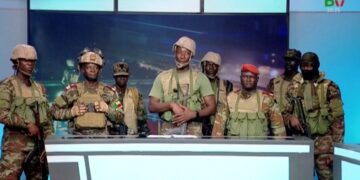
The July 26, 2023, military coup drew global attention to the human rights situation in Niger, including restrictions on freedom of expression and the erosion of civic space. On that day, army officers of the self-proclaimed National Council for the Safeguard of the Homeland (Conseil national pour la sauvegarde de la patrie, CNSP) announced on national television the overthrow of the government of President Mohamed Bazoum. They dissolved the constitution, suspended all institutions, and closed the country’s borders. They arrested Bazoum, his wife and son, and several other state officials, arguing that they were taking action because of Niger’s deteriorating security situation. On July 27, Gen. Abdourahamane “Omar” Tiani, head of Niger’s presidential guard, appointed himself head of the country’s new military government.

  • West Africa

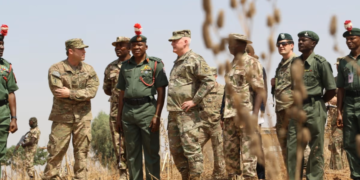
Burkina Faso, Mali, Niger and Nigeria were West Africa’s hotspots of insecurity in 2021, mainly due to attacks by armed groups, with some operating across national borders. Security forces countering these armed groups included national, regional and international forces, as well as local self-defence groups. In June 2021 France announced a drawdown of the 5000 Operation Barkhane troops in Mali, to be replaced by the European multinational Task Force Takuba, which was established in 2020. The security situation in Nigeria worsened in 2021, with a 27 per cent increase in conflict-related fatalities compared with 2020, due largely to the high number of conflicts between farmers and herders in central areas of the country, a sharp rise in banditry in the north-west, and intensifying uprisings by separatists in the south-east.

In 2022, Benin and Togo witnessed a number of attacks from armed groups, heightening fears about violence spilling from the Sahel into coastal West Africa. Ghana’s President Nana Akufo-Addo, who alleged that Burkina Faso is paying Russian mercenaries with mining rights, has warned that violence could “engulf” West Africa.

In each decade between 1958 and 2008, according to one researcher, West Africa had the highest number of coups on the continent, accounting for 44.4%. Since 2010, there have been over 40 coups and attempted coups in Africa; some 20 occurred in West Africa and the Sahel (including Chad). Since 2019 there have been 7 (five successful and two failed). Between 1958 and 2008, most coups in Africa occurred in former French colonies, as did six of the 7 since 2019. Similarly, 12 of the 20 coups in the sub-region since 2010 happened there. The latest successful putsch in Burkina Faso came on the heels of two attempted ones, in 2015 and 2016.

While the juntas justify their coups—and continued strongman rule—based on the claim that they are uniquely able to restore security, episodes of violence linked to militant Islamist groups have doubled since these militaries have seized power. Fatalities have tripled. The security vacuum created when UN, regional, and international forces were forced to withdraw has been predictably filled by violent militant groups. In Niger, fatalities linked to extremist groups are projected to reach more than 1,600 in 2024—a 60-percent increase from 2023. Journalists have experienced violence, surveillance, and intimidation since the coup—and have subsequently engaged in self-censorship for fear of arrest and harassment. Since the July 2023 coup, Niger’s digital media platforms have been flooded by Russian-linked networks using coordinated inauthentic techniques to distort the information space about Niger and the junta. In February 2024, the junta revoked oversight laws that require transparent accounting of the defense sector.

The Sahelian juntas’ decision to leave Economic Community of West African States (ECOWAS) has raised numerous questions about the bloc’s future, as well as the future of other West African regional organizations, such as the West African Monetary Union (a group of Francophone countries with a common currency); so far, Mali, Niger, and Burkina Faso have not left the latter organization. Meanwhile, the effect of climate change on conflict is a threat multiplier that affects socio-economic outcomes with dwindling agricultural incomes, increasing food insecurity, water scarcity and droughts, weakening human health and residential mobility. It is no coincidence that the countries situated in Africa’s Sahel region, such as those mentioned above, are plagued by internal conflict and the effects of a rapidly changing climate driving extreme droughts and other hazard conditions. These effects are even more pronounced in low- and middle-income settings, where the economy is generally closely linked to agricultural production.

  • South Africa

In Southern Africa, the high level of inequality in countries such as Namibia, Botswana and South Africa present a potential threat to stability, because the informal sectors in these countries are relatively small compared with those in other countries at similar levels of development. The extent of autocratic repression in countries such as Equatorial Guinea and Eswatini also present problems if left unattended. Eswatini has already recently experienced recurring bouts of violence. Efforts by certain African leaders to extend their terms in office or effect dynastic succession present obvious problems without the prospects for either democratic change or generational succession.

  • Central Africa

Large-scale violence continued in the eastern DRC as external and Congolese armed groups engaged in multiple armed conflicts with the government, alongside a resurgence of intercommunal violence. In Cameroon the anglophone separatist insurgency in the south-west and north-west of the country, as well as the insurgency in the north, continued. In CAR the security situation became even more volatile as government forces, backed by Russian private military companies (PMCs) and Rwandan troops, fought to recapture territory from armed groups. Due to the growing influence of the Russian PMCs, France suspended aid and military cooperation to CAR in June 2021, and the European Union suspended its military training activities in December. In 2022 and 2023 improved security in certain areas allowed for voluntary repatriation and, although some tension and conflict are expected to persist in 2024, returns to stabilized areas are expected to increase.

After several decades of conflict, one in five Central African is displaced either within the country or abroad, particularly in neighbouring countries. Some of the 6.1 million Central Africans have been forced to move from one town or commune to another, often several times. In this context, humanitarian and development actors are working in support of the government to enable Internally Displaced Persons (IDPs) and some refugees in the Central African Republic (CAR) to resume a normal life where circumstances permit. In 2023, a new constitution was approved by referendum in July and adopted in August, strengthening the powers of the executive and paving the way for President Faustin-Archange Touadéra to seek a third term. In May, the National Elections Authority (ANE) announced another postponement of long-delayed local elections, which had been scheduled for July. In September, the Special Criminal Court (CPS) charged rebel leader Abdoulaye Hissène with war crimes and crimes against humanity; the same month, the Bangui Court of Appeal sentenced 23 people in absentia, including exiled former president François Bozizé and several prominent rebel leaders, to prison for life with hard labour; they had been convicted of conspiracy and rebellion related to a 2020-armed offensive.

  • East Africa

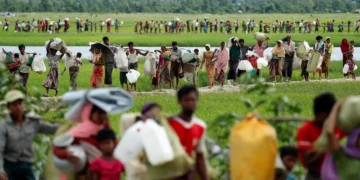
In East Africa 9 of the 22 states or territories were involved in active armed conflict in 2021, with 5 in particular—Ethiopia, Mozambique, Somalia, South Sudan and Sudan—experiencing ongoing or sharp escalations in large-scale armed violence. This violence has led to more than 9.6 million people being internally displaced and more than 4.7 million people becoming refugees. Grave human rights violations against civilians continued to be committed in the region, while at least 33.8 million people were severely food insecure.

The insurgency in Cabo Delgado province in the north of Mozambique continued in 2021, leading to a regional military intervention in July 2021. However, the conflict’s root causes, including the need for a more equitable distribution of the province’s mineral and hydrocarbon resources, remained unaddressed. In Somalia al-Shabab continued to be a major threat despite the presence of an African Union-led peace operation. There was some progress in South Sudan towards implementation of the 2018 peace agreement, but violence continued to affect communities across the country. In Sudan, despite the October 2020 Juba Peace Agreement, the situation deteriorated in 2021: there was a military coup in October and a near doubling of the estimated conflict-related fatalities during the year.

After various conflicts, including a civil war from 2020 through 2022, Ethiopia’s gross domestic product grew 5.3% in 2022 and is estimated to grow by 6.0% in 2023. In the medium term, the country—East Africa’s largest economy—is expected to average 7.1% GDP growth from 2024 through 2027, partly as it recovers from recent instability and partly due to the temporary debt-repayment suspension effected by its bilateral lenders, higher energy exports, and reform programs expected to attract foreign direct investment. Prime Minister Abiy Ahmed’s call for a seaport for landlocked Ethiopia last October prompted fears of a new conflict with neighbouring Eritrea, with which it has a long and complicated history. An unexpected agreement with the self-declared republic of Somaliland in the new year has instead driven a wedge between Ethiopia and Somalia and reignited the question of Somaliland’s pursuit of independence.

ــــــــــــــــــــ

*Sources: European Parliament; UN Office for the Coordination of Humanitarian Affairs; UNHCR; World Bank; Africa Center for Strategic Studies; Human Rights Watch (HRW); Al Jazeera; Freedom House; ISS African Futures and Innovation platform; Deloitte; The Conversation Africa; Japan’s Official Development Assistance White Paper 2014; Stockholm International Peace Research Institute (SIPRI) Year book 2022; Institute for Security Studies; Transparency International; House of Commons Library, Responsible Statecraft.
Source: Qiraat Africa
Tags: COVID-19 pandemicInstability and Autocracy

Related Posts

DR Congo Military Court Issues Arrest Warrant for Corneille Nangaa
Central Africa

Rebel leader denounces US-DRC minerals deal one year after Goma’s fall

January 29, 2026
Zambia groups say freedom of expression under threat
Economy

Zambia is hopeful of agreement on debt restructuring terms with Afreximbank

January 29, 2026
Rwanda’s presidential election set for July 15, 2024
East Africa

Rwanda says UK owes $130 million over scrapped asylum scheme

January 28, 2026
Giant Dangote oil refinery to begin production in third quarter
Energy

Shipping data shows Indian diesel exports to West Africa at record high

January 28, 2026
Ex-Nigerian minister, Alison-Madueke faces bribery charges in London court
Economy

Nigeria lowers entry barriers to attract investors for latest oil round

January 28, 2026
Uganda’s constitutional court to hear challenges against anti-homosexuality law
East Africa

Uganda court releases prominent rights activist on bail

January 28, 2026

Search Qiraat Africa

No Result
View All Result

Follow on Twitter

Follow @africanqiraat

Trending

At least six killed in border clashes between South Sudan and Uganda

South Sudan government says rebel advance poses ‘serious threat to peace’

January 27, 2026
Brief History and Culture of the City of Lagos, Nigeria

Brief History and Culture of the City of Lagos, Nigeria

July 24, 2024
Republic of Congo to pass new gas code soon as it seeks to lure investment

Norway police file charges over suspected oil bribery in Congo Republic

January 26, 2026
Osei Tutu (c. 1660—c. 1717) , founder of the Asante nation

Osei Tutu (c. 1660—c. 1717) , founder of the Asante nation

December 6, 2025
More than 640,000 people affected by catastrophic Mozambique floods

More than 640,000 people affected by catastrophic Mozambique floods

January 25, 2026
Sir Abubakar Tafawa Balewa (1912 – 1966)

Sir Abubakar Tafawa Balewa (1912 – 1966)

July 16, 2024

Facebook

Sections

  • About Us
  • Privacy Policy
  • Opinion
  • Infographics
  • News
  • Analysis
  • Figures
  • Culture & Literature
  • Follow Ups
  • Historical Readings
  • Interview
  • Studies


© Copyright Qiraat Africa. Developed by Bunnaj Media .

No Result
View All Result
  • News
  • Analysis & Report
  • Studies
  • Opinion
  • Interview
  • Culture & Literature
  • Figures
  • Follow-ups
  • Historical Readings
  • Regions

© 2021 Copyright Qiraat Africa.