



Qiraat Africa
عربي  |  Fr
Advertisement
  • News
    • All
    • Climate Change
    • Economy
    • Education
    • Energy
    • Health
    • Migration
    • Mining
    • Politics
    • Security
    • Society
    • Sport
    SA President Ramaphosa launches Nelson Mandela Rules Academy at prison

    SA President Ramaphosa launches Nelson Mandela Rules Academy at prison

    Students turn on Senegalese government over Dakar university violence

    Students turn on Senegalese government over Dakar university violence

    Zimbabwe’s President Mnangagwa sworn in after a contested election

    Uproar in Zimbabwe over cabinet plan to extend president’s rule to 2030

    Ethiopia says Ghebreyesus, WHO chief has links to rebellious Tigrayan forces

    WHO urges US to share Covid origins findings

    Madagascan President Randrianirina visits city devastated by Cyclone Gezani

    Madagascan President Randrianirina visits city devastated by Cyclone Gezani

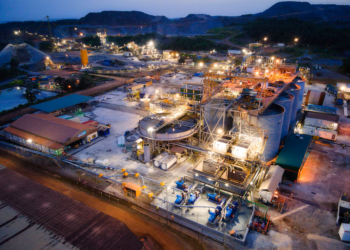
    India pulls out of Russian-backed Mali lithium project over security risks, sources say

    India pulls out of Russian-backed Mali lithium project over security risks, sources say

    Nigeria’s state-owned NNPC records $4.2 billion after-tax profit in 2025

    Nigeria’s state-owned NNPC records $4.2 billion after-tax profit in 2025

    DR Congo president calls for swift withdrawal of UN peacekeepers

    UN to launch reconnaissance flights to support eastern Congo ceasefire

    Cameroon President Paul Biya marks 41 years in power

    Cameroon President Biya delays elections once again

  • Analysis
    • All
    • Climate Change
    • Digital & Tech
    • Economy
    • Energy & Power
    • Health
    • Politics
    • Security
    • Society
    Security expert explains why the US can destroy terrorist bases in Nigeria but not terrorism

    Security expert explains why the US can destroy terrorist bases in Nigeria but not terrorism

    Africa’s informal economy taxation: the potential and drawbacks of technology

    Africa’s informal economy taxation: the potential and drawbacks of technology

    Ethiopia expects preliminary deal on IMF review within days, finance minister says

    Key events in Ethiopia’s journey towards debt restructuring

    BRICS Plus and the Shifting Global Power Balance: Implications of South Africa’s Role

    BRICS Plus and the Shifting Global Power Balance: Implications of South Africa’s Role

    African Union suspends Niger over coup, prepares sanctions; France denies report it asked Algeria to use airspace for a Niger operation

    Leaders in Africa’s human rights institutions are being elected. Why it matters

    Sahel Alliance leaders meet in Bamako to deepen break with ECOWAS

    The AES and the Reconfiguration of Regional Security Architecture: A Look at the 2025 Bamako Summit

    Somaliland rejects visas issued by Somalia and tightens control over its airpsace

    Why is Somaliland strategically important?

    US airstrikes in northern Nigeria: potential windfalls and dangers

    US airstrikes in northern Nigeria: potential windfalls and dangers

    Why France’s Focus is Shifting to Anglophone Africa

    Why France’s Focus is Shifting to Anglophone Africa

  • Studies
    Benin government says armed forces foil coup attempt

    Coup contagion? A rash of African power grabs suggests copycats are taking note of others’ success

    One in three South Africans have never heard of AI: what this means for policy

    One in three South Africans have never heard of AI: what this means for policy

    Social Media as a Catalyst for the Spread of Dangerous Wealth Ritual Myths

    Social Media as a Catalyst for the Spread of Dangerous Wealth Ritual Myths

    Overcoming Education Barriers for Young Mothers in Sub-Saharan Africa

    Overcoming Education Barriers for Young Mothers in Sub-Saharan Africa

    Youth Empowerment Through Vocational Training in Rural Sub-Saharan Africa

    Youth Empowerment Through Vocational Training in Rural Sub-Saharan Africa

    Manufacturers in Ghana and Nigeria claim that although corruption damages businesses, digital technologies provide a chance to combat it

    Manufacturers in Ghana and Nigeria claim that although corruption damages businesses, digital technologies provide a chance to combat it

    Environmental Threats and Conservation Efforts in Namibia

    Environmental Threats and Conservation Efforts in Namibia

    Your teachers’ level of knowledge affects how well you perform in class: perspectives from 14 French-speaking African nations

    Your teachers’ level of knowledge affects how well you perform in class: perspectives from 14 French-speaking African nations

    Islamic Finance in Nigeria: Between Islamization and Shariah Non-Compliance Polemics

    Islamic Finance in Nigeria: Between Islamization and Shariah Non-Compliance Polemics

  • Infographics
  • Figures
    Abubakar Gumi (1924–1992): Nigerian Islamic scholar and Grand Khadi of the Northern Region of Nigeria

    Abubakar Gumi (1924–1992): Nigerian Islamic scholar and Grand Khadi of the Northern Region of Nigeria

    Haile Selassie (1892-1975): Former Emperor of Ethiopia

    Haile Selassie (1892-1975): Former Emperor of Ethiopia

    Bennet Omalu: Nigerian-American physician and forensic pathologist

    Bennet Omalu: Nigerian-American physician and forensic pathologist

    Samori Touré (1830-1900): Military leader and founder of Wassoulou Empire

    Samori Touré (1830-1900): Military leader and founder of Wassoulou Empire

    Mohammed Abdulle Hassan (1856-1920): Somali religious and nationalist leader

    Mohammed Abdulle Hassan (1856-1920): Somali religious and nationalist leader

    Imam Abdullah Haron (1924-1969): South African Muslim cleric and anti-apartheid activist

    Imam Abdullah Haron (1924-1969): South African Muslim cleric and anti-apartheid activist

    Joyce Banda, educator and former president of Malawi

    Joyce Banda, educator and former president of Malawi

    Jomo Kenyatta (1894-1978): First prime minister and first president of Kenya

    Jomo Kenyatta (1894-1978): First prime minister and first president of Kenya

    What does a diary entry reveal about the West African origins of Apongo, a rebel leader in Jamaica?

    What does a diary entry reveal about the West African origins of Apongo, a rebel leader in Jamaica?

  • History
    Royal Palace, Porto-Novo, Republic of Benin

    Royal Palace, Porto-Novo, Republic of Benin

    W-Arly-Pendjari Complex, the West African wildlife sanctuary

    W-Arly-Pendjari Complex, the West African wildlife sanctuary

    Royal Court of Tiébélé, Burkina Faso

    Royal Court of Tiébélé, Burkina Faso

    Lake Tanganyika, the world’s longest freshwater lake

    Lake Tanganyika, the world’s longest freshwater lake

    The Bafut Chiefdom, Cameroon

    The Bafut Chiefdom, Cameroon

    The battles of Isandlwana and Rorke’s Drift

    The battles of Isandlwana and Rorke’s Drift

    Kimberley’s Big Hole, Northern Cape, South Africa

    Kimberley’s Big Hole, Northern Cape, South Africa

    Ogbunike Caves, Southeastern Nigeria

    Ogbunike Caves, Southeastern Nigeria

    Historic Town of Grand-Bassam

    Historic Town of Grand-Bassam

  • Others
    • Culture / Literature
    • Interview
    • Opinion
  • Countries
    • Country profiles
    • Regions
      • Central Africa
      • East Africa
      • Southern Africa
      • West Africa
No Result
View All Result
  • News
    • All
    • Climate Change
    • Economy
    • Education
    • Energy
    • Health
    • Migration
    • Mining
    • Politics
    • Security
    • Society
    • Sport
    SA President Ramaphosa launches Nelson Mandela Rules Academy at prison

    SA President Ramaphosa launches Nelson Mandela Rules Academy at prison

    Students turn on Senegalese government over Dakar university violence

    Students turn on Senegalese government over Dakar university violence

    Zimbabwe’s President Mnangagwa sworn in after a contested election

    Uproar in Zimbabwe over cabinet plan to extend president’s rule to 2030

    Ethiopia says Ghebreyesus, WHO chief has links to rebellious Tigrayan forces

    WHO urges US to share Covid origins findings

    Madagascan President Randrianirina visits city devastated by Cyclone Gezani

    Madagascan President Randrianirina visits city devastated by Cyclone Gezani

    India pulls out of Russian-backed Mali lithium project over security risks, sources say

    India pulls out of Russian-backed Mali lithium project over security risks, sources say

    Nigeria’s state-owned NNPC records $4.2 billion after-tax profit in 2025

    Nigeria’s state-owned NNPC records $4.2 billion after-tax profit in 2025

    DR Congo president calls for swift withdrawal of UN peacekeepers

    UN to launch reconnaissance flights to support eastern Congo ceasefire

    Cameroon President Paul Biya marks 41 years in power

    Cameroon President Biya delays elections once again

  • Analysis
    • All
    • Climate Change
    • Digital & Tech
    • Economy
    • Energy & Power
    • Health
    • Politics
    • Security
    • Society
    Security expert explains why the US can destroy terrorist bases in Nigeria but not terrorism

    Security expert explains why the US can destroy terrorist bases in Nigeria but not terrorism

    Africa’s informal economy taxation: the potential and drawbacks of technology

    Africa’s informal economy taxation: the potential and drawbacks of technology

    Ethiopia expects preliminary deal on IMF review within days, finance minister says

    Key events in Ethiopia’s journey towards debt restructuring

    BRICS Plus and the Shifting Global Power Balance: Implications of South Africa’s Role

    BRICS Plus and the Shifting Global Power Balance: Implications of South Africa’s Role

    African Union suspends Niger over coup, prepares sanctions; France denies report it asked Algeria to use airspace for a Niger operation

    Leaders in Africa’s human rights institutions are being elected. Why it matters

    Sahel Alliance leaders meet in Bamako to deepen break with ECOWAS

    The AES and the Reconfiguration of Regional Security Architecture: A Look at the 2025 Bamako Summit

    Somaliland rejects visas issued by Somalia and tightens control over its airpsace

    Why is Somaliland strategically important?

    US airstrikes in northern Nigeria: potential windfalls and dangers

    US airstrikes in northern Nigeria: potential windfalls and dangers

    Why France’s Focus is Shifting to Anglophone Africa

    Why France’s Focus is Shifting to Anglophone Africa

  • Studies
    Benin government says armed forces foil coup attempt

    Coup contagion? A rash of African power grabs suggests copycats are taking note of others’ success

    One in three South Africans have never heard of AI: what this means for policy

    One in three South Africans have never heard of AI: what this means for policy

    Social Media as a Catalyst for the Spread of Dangerous Wealth Ritual Myths

    Social Media as a Catalyst for the Spread of Dangerous Wealth Ritual Myths

    Overcoming Education Barriers for Young Mothers in Sub-Saharan Africa

    Overcoming Education Barriers for Young Mothers in Sub-Saharan Africa

    Youth Empowerment Through Vocational Training in Rural Sub-Saharan Africa

    Youth Empowerment Through Vocational Training in Rural Sub-Saharan Africa

    Manufacturers in Ghana and Nigeria claim that although corruption damages businesses, digital technologies provide a chance to combat it

    Manufacturers in Ghana and Nigeria claim that although corruption damages businesses, digital technologies provide a chance to combat it

    Environmental Threats and Conservation Efforts in Namibia

    Environmental Threats and Conservation Efforts in Namibia

    Your teachers’ level of knowledge affects how well you perform in class: perspectives from 14 French-speaking African nations

    Your teachers’ level of knowledge affects how well you perform in class: perspectives from 14 French-speaking African nations

    Islamic Finance in Nigeria: Between Islamization and Shariah Non-Compliance Polemics

    Islamic Finance in Nigeria: Between Islamization and Shariah Non-Compliance Polemics

  • Infographics
  • Figures
    Abubakar Gumi (1924–1992): Nigerian Islamic scholar and Grand Khadi of the Northern Region of Nigeria

    Abubakar Gumi (1924–1992): Nigerian Islamic scholar and Grand Khadi of the Northern Region of Nigeria

    Haile Selassie (1892-1975): Former Emperor of Ethiopia

    Haile Selassie (1892-1975): Former Emperor of Ethiopia

    Bennet Omalu: Nigerian-American physician and forensic pathologist

    Bennet Omalu: Nigerian-American physician and forensic pathologist

    Samori Touré (1830-1900): Military leader and founder of Wassoulou Empire

    Samori Touré (1830-1900): Military leader and founder of Wassoulou Empire

    Mohammed Abdulle Hassan (1856-1920): Somali religious and nationalist leader

    Mohammed Abdulle Hassan (1856-1920): Somali religious and nationalist leader

    Imam Abdullah Haron (1924-1969): South African Muslim cleric and anti-apartheid activist

    Imam Abdullah Haron (1924-1969): South African Muslim cleric and anti-apartheid activist

    Joyce Banda, educator and former president of Malawi

    Joyce Banda, educator and former president of Malawi

    Jomo Kenyatta (1894-1978): First prime minister and first president of Kenya

    Jomo Kenyatta (1894-1978): First prime minister and first president of Kenya

    What does a diary entry reveal about the West African origins of Apongo, a rebel leader in Jamaica?

    What does a diary entry reveal about the West African origins of Apongo, a rebel leader in Jamaica?

  • History
    Royal Palace, Porto-Novo, Republic of Benin

    Royal Palace, Porto-Novo, Republic of Benin

    W-Arly-Pendjari Complex, the West African wildlife sanctuary

    W-Arly-Pendjari Complex, the West African wildlife sanctuary

    Royal Court of Tiébélé, Burkina Faso

    Royal Court of Tiébélé, Burkina Faso

    Lake Tanganyika, the world’s longest freshwater lake

    Lake Tanganyika, the world’s longest freshwater lake

    The Bafut Chiefdom, Cameroon

    The Bafut Chiefdom, Cameroon

    The battles of Isandlwana and Rorke’s Drift

    The battles of Isandlwana and Rorke’s Drift

    Kimberley’s Big Hole, Northern Cape, South Africa

    Kimberley’s Big Hole, Northern Cape, South Africa

    Ogbunike Caves, Southeastern Nigeria

    Ogbunike Caves, Southeastern Nigeria

    Historic Town of Grand-Bassam

    Historic Town of Grand-Bassam

  • Others
    • Culture / Literature
    • Interview
    • Opinion
  • Countries
    • Country profiles
    • Regions
      • Central Africa
      • East Africa
      • Southern Africa
      • West Africa
No Result
View All Result
Qiraat Africa
عربي  |  Fr
No Result
View All Result
Home Analysis & Report

Economic and Political Ramifications of the Niger and Benin Border Crisis

Oyebamiji Usman Adesoji by Oyebamiji Usman Adesoji
June 6, 2024
Niger, Benin move to improve strained ties
Share on FacebookShare on Twitter

Benin’s geographical position at the juncture of two major regional corridors—the Abidjan-Lagos and Cotonou-Niamey corridors—makes this West African country an important commercial and tourism hub. Benin is bordered on the north by Burkina Faso and the Republic of Niger, on the east by the Federal Republic of Nigeria, and on the west by the Republic of Togo. Politically, at independence, the foreign policy priority of the Benin Republic was directed towards France and the French-speaking countries of West Africa and Central Africa. Nevertheless, one of Benin’s main, albeit underexploited, trade assets is the deepwater port at Cotonou, which serves as a sea outlet for the Republic of Niger and as a secondary port for Nigeria and thus holds the potential to earn lucrative customs duties. For western actors, Niger assumes great importance for two reasons. The first is that it’s seen as a bulwark against jihadism and a bastion of democracy. The second is that it is the world’s seventh-largest producer of uranium and the second-largest supplier of uranium to France. In reality, uranium is no longer the most important economic issue for Niger since the discovery of increasingly large oil deposits. Production began in 2011 with a daily output of 20,000 barrels. The oil is extracted by the China National Petroleum Corporation (CNPC) and piped to Zinder, a city in the south-central part of Niger, where it is refined. Niger conditioned the drilling rights on the construction of a refinery, making China the Niger government’s strategic partner in the development of its oil resources.

Before the military took over, Niger and Burkina Faso collaborated with France, other European allies, and the U.S. in fighting terrorism. In Benin, the government has asked France, Rwanda, and private U.S. security firms to help with military training, while the European Union plans to increase its support, including lethal equipment for the military. The U.S., via its Africa Command (AFRICOM), has also pledged to help the Beninese government curb the jihadist threat, notably with intelligence sharing. A July 26 coup d’etat in Niger, the ninth attempted overthrow of a West African government in the last three years, dealt a significant blow to counterterrorism and stabilization efforts in the Sahel. In response, the African Union suspended Niger, which was the institution’s first public communication since it convened immediately following the coup. Nearby military regimes in Guinea, Burkina Faso, and Mali have backed the junta, with the latter two vowing to treat military intervention in Niger as a “declaration of war.” On September 16, the military leaders of Mali, Burkina Faso, and Niger signed a mutual defense pact, solidifying their alliance against external intervention.

Niger’s Economic Community of West African States (ECOWAS) trade sanctions and border closures have reduced exports, including delaying crude oil exports through the new pipeline, which has now been completed and commissioned. Inadequate rainfall, crop pests, localized flooding, declining soil fertility, and insecurity in some key production areas have reduced agricultural production, despite a strong output from irrigated agriculture. The sanctions have also led to losses in the private sector, a liquidity crisis, and a deterioration of portfolios in the banking sector. The World Bank report indicated that Niger’s revenue in 2024, including grants, is projected to be around 11.0% of GDP, lower than projected in the approved budget, which would likely lead to capital expenditure rationing. With limited access to financing, the budget deficit is projected to be 2.6% of GDP, including an accumulation of domestic arrears. Indeed, Niger urgently needs revenue from oil exports to China. Since the 2023 coup, Niger has been facing major financial difficulties. Western countries have suspended development aid, except for humanitarian assistance. Therefore, oil exports are crucial for the Nigerien military regime. In November 2023, Benin and Niger partnered with the China National Petroleum Corp. on an oil project that has yet to fully take off. Meanwhile, the pipeline linking Koulele in Niger to the port of Seme in Benin will produce about 90,000 barrels per day. For now, Niger pumps around 20,000 bpd of oil, most of it from CNPC projects in the Agadem Rift Basin in the country’s southeast. Through this project, Niger intends to raise its oil production to 110,000 barrels per day. Experts noted that all three countries involved—Nigeria, Benin, and China—attach great importance to the crude oil business. In April, representatives of all three countries celebrated the completion of the pipeline as a “forward-looking project.” The pipeline stands for a future of prosperity and more independence from traditional partners, such as France and Western Europe, it was said.

The rationale for border closure

Niger is a crucial partner and transit country for cross-border projects and inter-country agreements. The collapse of trust between countries will severely compromise the future of these projects and agreements. The Niger crisis can delay or derail efforts to enhance regional connectivity and trade. An analyst says a weakened and divided ECOWAS could undo regional economic agendas like the West African Economic and Monetary Union. The coup and regional confrontation would hinder collaboration and threaten ongoing and future joint initiatives. In Benin, the protests against the coup leaders were particularly explicit. Beninese President Patrice Talon loudly demanded Bazoum’s reinstatement and even advocated for a military intervention by ECOWAS troops against the coup leaders in Niger. Niger’s military leaders responded promptly by closing the borders with Benin. The ECOWAS sanctions have cut off Niger from many of its traditional trading partners, worsening chronic food insecurity among vulnerable groups. The junta has maintained relations with neighboring Burkina Faso, Chad, and Mali, whom it sees as allies because all three are under military rule. This event has undermined the economic and security arrangements in Niger and Benin.

  1. Economic costs: In recent times, relations between the two nations have soured after the military staged a coup in Niger last year, according to media reports. Then, Benin and other West African nations imposed sanctions on Niger, including border closures, in a bid to force the military to hand back power to the elected government. Thus, ECOWAS sanctions on Niger Coup were impacting the Benin border. However, the sanctions by the ECOWAS were eased in February and were expected to normalize trade relations with Niger. Unfortunately, Niger refused to open its land border for goods coming from Benin. Benin reacted to this event and prevented neighboring Niger from using its port to export its first crude oil. In the intervening time, President Patrice Talon’s government is demanding that landlocked Niger reopen its side of the border if it wants to use Benin’s ports. He accused Niger of treating its neighbor like an “enemy.” Mr. Talon said that most of Niger’s imports and exports passed through Benin before the coup, but this is now happening through Togo. Adding that Niger’s refusal to open the border was “really hitting the economy of Benin [including] the transport sector,” In 2023, although slightly down, growth remained resilient at 5.8%, despite the various shocks Benin faced during the year. These included the closure of the border with Niger and macroeconomic difficulties in Nigeria (including rising petrol prices, strong inflationary pressures, and the depreciation of the naira against the FCFA). Inflation has doubled in 2023 but remains contained and below the convergence threshold, rising from 1.4% in 2022 to 2.8%, mainly due to higher gasoline prices. Amid strained relations between Benin and Niger regarding border openings, the government of Niger has issued a decree banning Beninese vehicles from operating on the corridor between Lomé Port in Togo and various locations in Niger. This decision, released on May 11, adds tension to an already complex situation for regional logistics stakeholders. Similarly, in order to counter the country’s border crisis with Benin, Niger recently signed a memorandum of cooperation with Togo. The MoU aimed at “establishing an institutional mechanism to define the framework for cooperation in the fields of trade, transport, and transit and facilitating the transport of goods” through the Togolese port. According to reports, the memorandum of cooperation provides for facilitating the transport of goods “through the Lomé-Ouagadougou-Niamey corridor or any other corridor determined by consensus.”

The Benin president has been pushing for the military rulers to formally normalize trade rather than allow informal border crossings. Recently, Beninese President Patrice Talon voiced his lack of understanding of the continued closure of the border by Niger, adding during a press conference that “the Nigerien authorities must officially declare that the closure of their land borders excludes oil.” Furthermore, Talon said, “Such a clarification is likely to allow for different legal treatment for oil coming from Niger, but in the absence of such a minimum, all customs formalities for the transit of oil remain legally impossible between Benin and Niger.” While Nigerien authorities say the reason for the border closure is security and say they have evidence that “there are 5 French bases in Benin that will harbor terrorists whose aim is to destabilize” Niger. Some experts argue that Benin could justify the decision by invoking the principles of state sovereignty and reciprocity, meaning that the Nigerien side had also closed the borders with its neighbor and thus must expect a similar countermeasure. Though they suggest that Benin’s decision to block Niger’s crude oil exports might potentially contravene international law. The standoff, which now appears to have been resolved, inflicted great economic damage on both countries, an observer indicated.

  1. Security consequences: Niger is battling decade-old insurgencies led by armed groups linked to the Islamic State and Al Qaeda, which are seeking to expand their reach into coastal countries from the central Sahel region, which includes Niger, Mali, and Burkina Faso. The country suffered heavy losses in attacks on military camps in 2020 and 2021, but no attacks of this magnitude have occurred since 2022. Insecurity has taken hold in the Tillabéry region, near the border with Mali, where armed jihadi groups operate relatively freely. But unlike its neighbors, the Niger government remains present in a large part of its territory. What’s more, the top military authorities, including the coup leaders, are at least as responsible as the political authorities for the quality of the response to the security situation. Still, the dominance of foreign and international actors is one reason for the proliferation of security interests in the Sahel. Observers have noted that Niger shares its borders with seven nations and is a critical player in regional security initiatives. The coup could hurt cooperative efforts across the Sahel to respond to extremist groups and terrorism.

In 2023, the authorities in Niamey demonstrated the ineffectiveness of military cooperation with France and terminated all military agreements, forcing the French armed forces to leave the country. But the French troops did not return home but redeployed to the neighboring country in order to pursue their strategy and maintain control over the region. The authorities in Niamey accused Cotonou of deploying French military bases in the country where terrorists were being trained in order to destabilize Niger. Nevertheless, several western countries—the US, France, and their EU partners—have scaled back their support for Niger, Mali, and Burkina Faso in response to coups. This leaves a gap in the region’s security architecture. In the vacuum, Sahel governments have sought alternative partners. Russia, through the Wagner Group, has emerged as a player. Niger, like many African countries, also has a long history of cooperation with Russia. In 2016, Niger and Russia signed an agreement to allow the two countries to deepen their security and development cooperation. Following a November meeting with the Mali-based Russian ambassador to Niger, the Nigerien defense minister recalled that more than a hundred Nigerien officers had benefited from training in Russia and that several aircraft used by the Nigerien air force were Russian-made.

The political economy of border and trade relations

Building a nation from the various ethnic nationalities across the African continent forged together into a nation-state by colonialism has been a major challenge that has continued to elude African leaders since the second half of the twentieth century. Africa is not alone in this dilemma; the experiences of countries in the Middle East, Eastern Europe, and parts of Central Asia have been similar. Nevertheless, nation-building is one of the most important national activities that every African leader must face. One of the hindrances to nation-building in post-independence Africa is the inherited modern boundaries of the continent, which are among the legacies of colonialism on Africa that emanated from the resolution of the Berlin Conference of 1884–1885. The singular act left an indelible imprint on the African continent and was responsible for several intra- and inter-state conflicts, socio-economic crises, and political crises within the length and breadth of the continent. In the interim, the blockade jeopardizes landlocked Niger’s plan to start crude exports under a $400 million deal with state-owned oil major China National Petroleum Corp. (CNPET.UL), which is important because Niger has said it would use funds from the export deal to fund bond payments missed while under regionally imposed sanctions.

While Togo may emerge as a viable alternative, doubts persist about whether it can fully meet Niger’s consumption needs. Despite Niger’s official entry into the club of African oil exporters, with an expected international sales capacity of 200,000 barrels per day by 2026, addressing the additional demand for logistics services requires companies from Burkina Faso, Ghana, Togo, and even Niger to ensure the long-term viability of operations, considering truck acquisition costs and lengthy amortization periods. In due course, Niger and Benin needed each other, according to the analyst. Just because the port of Cotonou wants to continue to handle imported goods for Niger. And Niger urgently needs to pump its crude oil through Benin territory towards Cotonou to prevent a national bankruptcy. In this respect, it is very welcome that both countries, apart from the hostile rhetoric, are apparently coming together again with the mediation of the Chinese. This combination of efforts is the best hope for bringing human security, economic viability, and environmental sustainability to this troubled region.

Read also

Security expert explains why the US can destroy terrorist bases in Nigeria but not terrorism

Africa’s informal economy taxation: the potential and drawbacks of technology

SA President Ramaphosa launches Nelson Mandela Rules Academy at prison

ــــــــــــــــــــــــــــــ

This article expresses the views and opinions of the author and does not necessarily reflect the views of Qiraat Africa and its editors.
Source: Qiraat Africa
Tags: BeninBenin-Niger borderNiger
Oyebamiji Usman Adesoji

Oyebamiji Usman Adesoji

Writer and researcher on business, entrepreneurship and geopolitical affairs.

Related Posts

Students turn on Senegalese government over Dakar university violence
Education

Students turn on Senegalese government over Dakar university violence

February 12, 2026
Zimbabwe’s President Mnangagwa sworn in after a contested election
Featured

Uproar in Zimbabwe over cabinet plan to extend president’s rule to 2030

February 12, 2026
Ethiopia says Ghebreyesus, WHO chief has links to rebellious Tigrayan forces
East Africa

WHO urges US to share Covid origins findings

February 12, 2026
Madagascan President Randrianirina visits city devastated by Cyclone Gezani
East Africa

Madagascan President Randrianirina visits city devastated by Cyclone Gezani

February 12, 2026
India pulls out of Russian-backed Mali lithium project over security risks, sources say
Featured

India pulls out of Russian-backed Mali lithium project over security risks, sources say

February 12, 2026
Nigeria’s state-owned NNPC records $4.2 billion after-tax profit in 2025
Energy

Nigeria’s state-owned NNPC records $4.2 billion after-tax profit in 2025

February 12, 2026

Search Qiraat Africa

No Result
View All Result

Follow on Twitter

Follow @africanqiraat

Trending

Tunka Manin (c. 1010–1078), the last ruler of the Ghana Empire

Tunka Manin (c. 1010–1078), the last ruler of the Ghana Empire

December 12, 2025
Kumbi Saleh, the capital of the ancient Ghana Empire

Kumbi Saleh, the capital of the ancient Ghana Empire

October 13, 2025
Brief History and Culture of the City of Lagos, Nigeria

Brief History and Culture of the City of Lagos, Nigeria

July 24, 2024
The Bamiléké of western Cameroon

The Bamiléké of western Cameroon

September 18, 2024
Cyclone Gezani tears through Madagascar, killing at least 20

Cyclone Gezani tears through Madagascar, killing at least 20

February 11, 2026
Trump ally and Blackwater founder sent men, drones to help Congo’s army secure strategic town

Trump ally and Blackwater founder sent men, drones to help Congo’s army secure strategic town

February 10, 2026

Facebook

Sections

  • About Us
  • Privacy Policy
  • Opinion
  • Infographics
  • News
  • Analysis
  • Figures
  • Culture & Literature
  • Follow Ups
  • Historical Readings
  • Interview
  • Studies


© Copyright Qiraat Africa. Developed by Bunnaj Media .

No Result
View All Result
  • News
  • Analysis & Report
  • Studies
  • Opinion
  • Interview
  • Culture & Literature
  • Figures
  • Historical Readings
  • Regions

© 2021 Copyright Qiraat Africa.