








Qiraat Africa
عربي  |  Fr
Advertisement
  • News
    • All
    • Climate Change
    • Economy
    • Education
    • Energy
    • Health
    • Migration
    • Mining
    • Politics
    • Security
    • Society
    • Sport
    Is Ethiopia’s Tigray barreling towards another war?

    Ethiopian Airlines cancels flights to Tigray region after clashes

    African governments look to Islamic finance after Benin sukuk success

    African governments look to Islamic finance after Benin sukuk success

    Ukraine says Niger’s move to cut relations is ‘regrettable’

    Gunfire, blasts rock Niger airport overnight before calm restored

    DR Congo Military Court Issues Arrest Warrant for Corneille Nangaa

    Rebel leader denounces US-DRC minerals deal one year after Goma’s fall

    Zambia groups say freedom of expression under threat

    Zambia is hopeful of agreement on debt restructuring terms with Afreximbank

    Rwanda’s presidential election set for July 15, 2024

    Rwanda says UK owes $130 million over scrapped asylum scheme

    Giant Dangote oil refinery to begin production in third quarter

    Shipping data shows Indian diesel exports to West Africa at record high

    Ex-Nigerian minister, Alison-Madueke faces bribery charges in London court

    Nigeria lowers entry barriers to attract investors for latest oil round

    Uganda’s constitutional court to hear challenges against anti-homosexuality law

    Uganda court releases prominent rights activist on bail

  • Analysis
    • All
    • Climate Change
    • Digital & Tech
    • Economy
    • Energy & Power
    • Health
    • Politics
    • Security
    • Society
    BRICS Plus and the Shifting Global Power Balance: Implications of South Africa’s Role

    BRICS Plus and the Shifting Global Power Balance: Implications of South Africa’s Role

    African Union suspends Niger over coup, prepares sanctions; France denies report it asked Algeria to use airspace for a Niger operation

    Leaders in Africa’s human rights institutions are being elected. Why it matters

    Sahel Alliance leaders meet in Bamako to deepen break with ECOWAS

    The AES and the Reconfiguration of Regional Security Architecture: A Look at the 2025 Bamako Summit

    US airstrikes in northern Nigeria: potential windfalls and dangers

    US airstrikes in northern Nigeria: potential windfalls and dangers

    Why France’s Focus is Shifting to Anglophone Africa

    Why France’s Focus is Shifting to Anglophone Africa

    UN believes hundreds were killed in Tanzania election protests

    Cameroon and Tanzania’s rulers clung to power in 2025—but look more vulnerable than ever

    General sworn in as Guinea-Bissau leader in swift coup after disputed vote

    Military and Politics in Guinea-Bissau

    Global power shifts are playing out in the Red Sea region: why this is where the rules are changing

    Global power shifts are playing out in the Red Sea region: why this is where the rules are changing

    Understanding Trump’s Christian Genocide Claim and Military Threat: What It Means for Nigeria-U.S. Relations

    Understanding Trump’s Christian Genocide Claim and Military Threat: What It Means for Nigeria-U.S. Relations

  • Studies
    Benin government says armed forces foil coup attempt

    Coup contagion? A rash of African power grabs suggests copycats are taking note of others’ success

    One in three South Africans have never heard of AI: what this means for policy

    One in three South Africans have never heard of AI: what this means for policy

    Social Media as a Catalyst for the Spread of Dangerous Wealth Ritual Myths

    Social Media as a Catalyst for the Spread of Dangerous Wealth Ritual Myths

    Overcoming Education Barriers for Young Mothers in Sub-Saharan Africa

    Overcoming Education Barriers for Young Mothers in Sub-Saharan Africa

    Youth Empowerment Through Vocational Training in Rural Sub-Saharan Africa

    Youth Empowerment Through Vocational Training in Rural Sub-Saharan Africa

    Manufacturers in Ghana and Nigeria claim that although corruption damages businesses, digital technologies provide a chance to combat it

    Manufacturers in Ghana and Nigeria claim that although corruption damages businesses, digital technologies provide a chance to combat it

    Environmental Threats and Conservation Efforts in Namibia

    Environmental Threats and Conservation Efforts in Namibia

    Your teachers’ level of knowledge affects how well you perform in class: perspectives from 14 French-speaking African nations

    Your teachers’ level of knowledge affects how well you perform in class: perspectives from 14 French-speaking African nations

    Islamic Finance in Nigeria: Between Islamization and Shariah Non-Compliance Polemics

    Islamic Finance in Nigeria: Between Islamization and Shariah Non-Compliance Polemics

  • Infographics
  • Figures
    What does a diary entry reveal about the West African origins of Apongo, a rebel leader in Jamaica?

    What does a diary entry reveal about the West African origins of Apongo, a rebel leader in Jamaica?

    Obafemi Awolowo (1909 – 1987): Nigerian statesman and influential advocate of independence

    Obafemi Awolowo (1909 – 1987): Nigerian statesman and influential advocate of independence

    Tunka Manin (c. 1010–1078), the last ruler of the Ghana Empire

    Tunka Manin (c. 1010–1078), the last ruler of the Ghana Empire

    Samuel Ajayi Crowther (1809-1891): First African Anglican Bishop

    Samuel Ajayi Crowther (1809-1891): First African Anglican Bishop

    Osei Tutu (c. 1660—c. 1717) , founder of the Asante nation

    Osei Tutu (c. 1660—c. 1717) , founder of the Asante nation

    Walter Sisulu (1912 – 2003): South African activist

    Walter Sisulu (1912 – 2003): South African activist

    Modibo Keïta (1915-1977): First President of Mali

    Modibo Keïta (1915-1977): First President of Mali

    Robert Mugabe (1924 – 2019): Revolutionary and former President of Zimbabwe

    Robert Mugabe (1924 – 2019): Revolutionary and former President of Zimbabwe

    Idi Amin Dada (1928 – 2003): Military officer and former President of Uganda

    Idi Amin Dada (1928 – 2003): Military officer and former President of Uganda

  • History
    The battles of Isandlwana and Rorke’s Drift

    The battles of Isandlwana and Rorke’s Drift

    Kimberley’s Big Hole, Northern Cape, South Africa

    Kimberley’s Big Hole, Northern Cape, South Africa

    Ogbunike Caves, Southeastern Nigeria

    Ogbunike Caves, Southeastern Nigeria

    Historic Town of Grand-Bassam

    Historic Town of Grand-Bassam

    Mandara Mountains, Northern Cameroon and Nigeria

    Mandara Mountains, Northern Cameroon and Nigeria

    Zong Massacre

    Zong Massacre

    Abomey, southern Benin

    Abomey, southern Benin

    Ifẹ̀, an ancient city in south-western Nigeria

    Ifẹ̀, an ancient city in south-western Nigeria

    Robben Island, South Africa

    Robben Island, South Africa

  • Others
    • Culture / Literature
    • Follow-ups
    • Interview
    • Opinion
  • Countries
    • Country profiles
    • Regions
      • Central Africa
      • East Africa
      • Southern Africa
      • West Africa
No Result
View All Result
  • News
    • All
    • Climate Change
    • Economy
    • Education
    • Energy
    • Health
    • Migration
    • Mining
    • Politics
    • Security
    • Society
    • Sport
    Is Ethiopia’s Tigray barreling towards another war?

    Ethiopian Airlines cancels flights to Tigray region after clashes

    African governments look to Islamic finance after Benin sukuk success

    African governments look to Islamic finance after Benin sukuk success

    Ukraine says Niger’s move to cut relations is ‘regrettable’

    Gunfire, blasts rock Niger airport overnight before calm restored

    DR Congo Military Court Issues Arrest Warrant for Corneille Nangaa

    Rebel leader denounces US-DRC minerals deal one year after Goma’s fall

    Zambia groups say freedom of expression under threat

    Zambia is hopeful of agreement on debt restructuring terms with Afreximbank

    Rwanda’s presidential election set for July 15, 2024

    Rwanda says UK owes $130 million over scrapped asylum scheme

    Giant Dangote oil refinery to begin production in third quarter

    Shipping data shows Indian diesel exports to West Africa at record high

    Ex-Nigerian minister, Alison-Madueke faces bribery charges in London court

    Nigeria lowers entry barriers to attract investors for latest oil round

    Uganda’s constitutional court to hear challenges against anti-homosexuality law

    Uganda court releases prominent rights activist on bail

  • Analysis
    • All
    • Climate Change
    • Digital & Tech
    • Economy
    • Energy & Power
    • Health
    • Politics
    • Security
    • Society
    BRICS Plus and the Shifting Global Power Balance: Implications of South Africa’s Role

    BRICS Plus and the Shifting Global Power Balance: Implications of South Africa’s Role

    African Union suspends Niger over coup, prepares sanctions; France denies report it asked Algeria to use airspace for a Niger operation

    Leaders in Africa’s human rights institutions are being elected. Why it matters

    Sahel Alliance leaders meet in Bamako to deepen break with ECOWAS

    The AES and the Reconfiguration of Regional Security Architecture: A Look at the 2025 Bamako Summit

    US airstrikes in northern Nigeria: potential windfalls and dangers

    US airstrikes in northern Nigeria: potential windfalls and dangers

    Why France’s Focus is Shifting to Anglophone Africa

    Why France’s Focus is Shifting to Anglophone Africa

    UN believes hundreds were killed in Tanzania election protests

    Cameroon and Tanzania’s rulers clung to power in 2025—but look more vulnerable than ever

    General sworn in as Guinea-Bissau leader in swift coup after disputed vote

    Military and Politics in Guinea-Bissau

    Global power shifts are playing out in the Red Sea region: why this is where the rules are changing

    Global power shifts are playing out in the Red Sea region: why this is where the rules are changing

    Understanding Trump’s Christian Genocide Claim and Military Threat: What It Means for Nigeria-U.S. Relations

    Understanding Trump’s Christian Genocide Claim and Military Threat: What It Means for Nigeria-U.S. Relations

  • Studies
    Benin government says armed forces foil coup attempt

    Coup contagion? A rash of African power grabs suggests copycats are taking note of others’ success

    One in three South Africans have never heard of AI: what this means for policy

    One in three South Africans have never heard of AI: what this means for policy

    Social Media as a Catalyst for the Spread of Dangerous Wealth Ritual Myths

    Social Media as a Catalyst for the Spread of Dangerous Wealth Ritual Myths

    Overcoming Education Barriers for Young Mothers in Sub-Saharan Africa

    Overcoming Education Barriers for Young Mothers in Sub-Saharan Africa

    Youth Empowerment Through Vocational Training in Rural Sub-Saharan Africa

    Youth Empowerment Through Vocational Training in Rural Sub-Saharan Africa

    Manufacturers in Ghana and Nigeria claim that although corruption damages businesses, digital technologies provide a chance to combat it

    Manufacturers in Ghana and Nigeria claim that although corruption damages businesses, digital technologies provide a chance to combat it

    Environmental Threats and Conservation Efforts in Namibia

    Environmental Threats and Conservation Efforts in Namibia

    Your teachers’ level of knowledge affects how well you perform in class: perspectives from 14 French-speaking African nations

    Your teachers’ level of knowledge affects how well you perform in class: perspectives from 14 French-speaking African nations

    Islamic Finance in Nigeria: Between Islamization and Shariah Non-Compliance Polemics

    Islamic Finance in Nigeria: Between Islamization and Shariah Non-Compliance Polemics

  • Infographics
  • Figures
    What does a diary entry reveal about the West African origins of Apongo, a rebel leader in Jamaica?

    What does a diary entry reveal about the West African origins of Apongo, a rebel leader in Jamaica?

    Obafemi Awolowo (1909 – 1987): Nigerian statesman and influential advocate of independence

    Obafemi Awolowo (1909 – 1987): Nigerian statesman and influential advocate of independence

    Tunka Manin (c. 1010–1078), the last ruler of the Ghana Empire

    Tunka Manin (c. 1010–1078), the last ruler of the Ghana Empire

    Samuel Ajayi Crowther (1809-1891): First African Anglican Bishop

    Samuel Ajayi Crowther (1809-1891): First African Anglican Bishop

    Osei Tutu (c. 1660—c. 1717) , founder of the Asante nation

    Osei Tutu (c. 1660—c. 1717) , founder of the Asante nation

    Walter Sisulu (1912 – 2003): South African activist

    Walter Sisulu (1912 – 2003): South African activist

    Modibo Keïta (1915-1977): First President of Mali

    Modibo Keïta (1915-1977): First President of Mali

    Robert Mugabe (1924 – 2019): Revolutionary and former President of Zimbabwe

    Robert Mugabe (1924 – 2019): Revolutionary and former President of Zimbabwe

    Idi Amin Dada (1928 – 2003): Military officer and former President of Uganda

    Idi Amin Dada (1928 – 2003): Military officer and former President of Uganda

  • History
    The battles of Isandlwana and Rorke’s Drift

    The battles of Isandlwana and Rorke’s Drift

    Kimberley’s Big Hole, Northern Cape, South Africa

    Kimberley’s Big Hole, Northern Cape, South Africa

    Ogbunike Caves, Southeastern Nigeria

    Ogbunike Caves, Southeastern Nigeria

    Historic Town of Grand-Bassam

    Historic Town of Grand-Bassam

    Mandara Mountains, Northern Cameroon and Nigeria

    Mandara Mountains, Northern Cameroon and Nigeria

    Zong Massacre

    Zong Massacre

    Abomey, southern Benin

    Abomey, southern Benin

    Ifẹ̀, an ancient city in south-western Nigeria

    Ifẹ̀, an ancient city in south-western Nigeria

    Robben Island, South Africa

    Robben Island, South Africa

  • Others
    • Culture / Literature
    • Follow-ups
    • Interview
    • Opinion
  • Countries
    • Country profiles
    • Regions
      • Central Africa
      • East Africa
      • Southern Africa
      • West Africa
No Result
View All Result
Qiraat Africa
عربي  |  Fr
No Result
View All Result
Home Analysis & Report Economy

How multinationals avoid taxes in Africa and what should change

April 10, 2022
How multinationals avoid taxes in Africa and what should change
Share on FacebookShare on Twitter

By Jia Liu*, & Olatunde Julius Otusanya*

In developing countries, and the sub-Saharan region especially, the scale of unmet basic needs is enormous. It is estimated that 3 billion people in the developing world subsist on less than US$2 a day per person.

About 2.37 billion people are without food or unable to eat a balanced diet on a regular basis. The prevalence of undernourishment is highest in sub-Saharan Africa: 24.1%. Out of the almost 60 million children not in school, 33.8 million are in this region.

Revenues from taxation are fundamental to changing this dire situation. Taxes enable the state to redistribute wealth to alleviate poverty. They also provide education, healthcare, social security, pensions, efficient public transport, clean water and other public services taken for granted in developed economies.

But in both developed and developing countries, tax revenues are being undermined by the ability of some of the wealthiest taxpayers – including many transnational companies – to effectively opt out of the corporate tax system. They do this through a combination of ingenious (and lawful) tax haven transactions, and huge tax concessions awarded by governments.

These practices have received plenty of attention from scholars. Broader accounts of their impact on developing countries are relatively scarce, though. In a recently published paper we therefore aimed to investigate the effect of tax dodging on development in Africa, with a focus on Nigeria and Zambia.

Using publicly available evidence, we show that tax havens and offshore financial centres, shaped by globalisation, facilitate the sophisticated tax schemes of highly mobile transnational corporations. The effect of low-tax jurisdictions (“tax havens”) hampers the social and economic development of poorer states.

We advocate radical reform. This should close the gaps that allow tax evasion and avoidance by transnational corporations. It calls for legislation and stronger institutional structures.

Forms of tax dodging

Tax dodging is used to describe all of the ways – tax avoidance, tax evasion, corruption and offshore accounts – that companies and rich individuals employ to reduce their tax bills. They lobby governments for tax breaks and lower corporate tax rates, exploit obscure loopholes in tax laws or shift profits into tax havens.

Globalisation has created new transnational spaces where economic actions take place without much regulation, taxation or surveillance. Behind a wall of secrecy, corporations can devise complex schemes to boost their profits. The activity of offshore companies and tax havens is therefore central to the antisocial tax practices of corporations and elites.

Read also

African governments look to Islamic finance after Benin sukuk success

Gunfire, blasts rock Niger airport overnight before calm restored

Zambia is hopeful of agreement on debt restructuring terms with Afreximbank

A 2015 report by the UN Conference on Trade and Development estimated that profit-shifting by multinational companies costs developing countries US$100bn a year in lost corporate income tax. Another report, by International Monetary Fund researchers, estimated that developing countries may be losing as much as US$213bn a year to tax avoidance. In addition, Oxfam estimated that developing countries lose between US$100 billion to US$160 billion annually to corporate tax dodging.

African countries, rich in resources, easily fall prey to aggressive tax planning and tax evasion enabled by offshore companies. As the UN Conference on Trade and Development reported in 2020, high volumes of intra-company trading, the secrecy cloaking foreign investment activities, and loopholes in treaties leave countries in Africa vulnerable to tax avoidance. Governments in sub-Saharan Africa lack the human, financial, and technical resources to stem this outflow of wealth.

Zambia and Nigeria

Zambia and Nigeria provide examples of tax dodging practices among transnational corporations, enabled by tax havens.

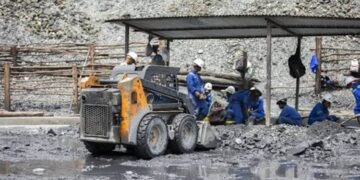
Zambia, a country rich in natural resources, gains scant rewards from the foreign companies that extract its mineral wealth. For example, in 2011, five companies producing copper worth US$4.28 billion paid only US$310 million to the government in taxes. This represented 11% and 19% of production for 2010 and 2011 respectively. In fact, only one or two mining companies declared positive earnings. Others reported losses of questionable validity, according to the UK-based non-governmental organisation War on Want and the Zambia Extractive Industries Transparency Initiative.

Consequently, the country loses about US$3 billion a year in tax revenues, a sum equivalent to an eighth (12.5%) of its current annual GDP.

War on Want has accused Vedanta, a copper producer operating in Zambia, of dodging taxes through transfer mispricing. This is when related companies or divisions trade with each other at prices that aren’t market related, to avoid being liable for tax. Vedanta has 29 subsidiaries operating in the “secrecy jurisdictions” of Mauritius, the Netherlands, the British Virgin Islands and Jersey. Zambia’s tax regime allows the company to pay less tax when it spends money on physical assets or makes losses. It paid only US$11,111 against profits of US$221 million in 2011-2012.

Likewise, Associated British Foods was accused in 2015 of paying no tax in Zambia, even though its local affiliate, Zambia Sugar, made profits of US$123 million. This, according to War on Want’s report, cost Zambian public services US$27 million — enough to put 48,000 children into school. The revenue lost to tax havens was 10 times greater than the amount given each year to Zambia by the UK in educational subsidies.

Nigeria provides another example. The Shell Group, through its affiliate, Shell Petroleum Development Company of Nigeria, had a special sharing arrangement with another affiliate, Shell Petroleum International Mattschappij BV (SPIM). Services and expenditure were charged to the group so that it made no profit over eight years, between 1992 and 1993. This cost Shell £20.09 million (US$44.75 million) in tax revenues. This is published in the Nigerian Revenue Law Report, 1998-1999 Shell Petroleum International Mattschappij B. V. v Federal Board of Inland Revenue, appeal no. FHC/L/CS/1A 96, Volume 1. This is not unusual; it is one of many cases.

Why does exploitation continue?

In an age of globalisation, developing countries have been encouraged to deregulate and privatise their economies to attract foreign investment. The flow of foreign direct investment into Nigeria from transnational corporations grew from US$0.59 billion in 1990 to US$2.14 billion in 2000 and US$2.31 billion in 2019. That represented 1.09%, 1.64%, and 0.52% of GDP respectively. Zambia attracted US$0.12 billion in 2000 and US$1.11 billion in 2017.

As our investigation reveals, however, opening economies to the outside world can have the opposite effect of that intended. Rather than attracting the lucrative inward investment so desperately needed, countries in sub-Saharan Africa have opened their economies to self-interested multinational corporations.

Globally, between 50 and 60 tax havens give sanctuary to more than 2 million companies, including thousands of banks and investment funds. Of the Fortune 500 companies, nearly three-quarters have subsidiaries in offshore tax havens.

As long as small, independent nations gain financial benefit from declaring themselves tax havens, poor nations will be exploited.

There is an urgent need to clamp down on tax practices that drain countries with impoverished economies, and to give poor countries a real voice in tax negotiations.

It seems probable that if the loopholes in the tax laws are not closed, then the rule of law and the effective administration of tax will not be strengthened in Africa. Consequently, the continent may continue to lose billions of dollars to the activities of transnational corporations and their affiliates.

ـــــــــــــ

*Professor of Finance, University of Portsmouth
*Professor of Taxation, University of Lagos

Source: The Conversation
Tags: avoiding taxesmultinationals in AfricaNigeriaZambia

Related Posts

Giant Dangote oil refinery to begin production in third quarter
Energy

Shipping data shows Indian diesel exports to West Africa at record high

January 28, 2026
Ex-Nigerian minister, Alison-Madueke faces bribery charges in London court
Economy

Nigeria lowers entry barriers to attract investors for latest oil round

January 28, 2026
Nigeria’s Niger State to work with Islamic Development Bank on $163 million solar project
Featured

Nigeria’s Niger State to work with Islamic Development Bank on $163 million solar project

January 27, 2026
Can the recent bilateral relationship between China and Angola lead to genuine economic and social progress this time?
Central Africa

African nations now send more money to China than they receive in new loans

January 27, 2026
Mali takes 51% stake in China-backed local explosives venture
Economy

Mali takes 51% stake in China-backed local explosives venture

January 26, 2026
Guinea cancels 129 exploration permits, further tightening control
Featured

Guinea’s bauxite exports jump 25% to 183 million tons in 2025 on Chinese demand

January 26, 2026

Search Qiraat Africa

No Result
View All Result

Follow on Twitter

Follow @africanqiraat

Trending

At least six killed in border clashes between South Sudan and Uganda

South Sudan government says rebel advance poses ‘serious threat to peace’

January 27, 2026
Brief History and Culture of the City of Lagos, Nigeria

Brief History and Culture of the City of Lagos, Nigeria

July 24, 2024
Republic of Congo to pass new gas code soon as it seeks to lure investment

Norway police file charges over suspected oil bribery in Congo Republic

January 26, 2026
More than 640,000 people affected by catastrophic Mozambique floods

More than 640,000 people affected by catastrophic Mozambique floods

January 25, 2026
Osei Tutu (c. 1660—c. 1717) , founder of the Asante nation

Osei Tutu (c. 1660—c. 1717) , founder of the Asante nation

December 6, 2025
The NYSC SCHEME in Nigeria: Impacts, Challenges, and the Path Forward

The NYSC SCHEME in Nigeria: Impacts, Challenges, and the Path Forward

June 19, 2025

Facebook

Sections

  • About Us
  • Privacy Policy
  • Opinion
  • Infographics
  • News
  • Analysis
  • Figures
  • Culture & Literature
  • Follow Ups
  • Historical Readings
  • Interview
  • Studies


© Copyright Qiraat Africa. Developed by Bunnaj Media .

No Result
View All Result
  • News
  • Analysis & Report
  • Studies
  • Opinion
  • Interview
  • Culture & Literature
  • Figures
  • Follow-ups
  • Historical Readings
  • Regions

© 2021 Copyright Qiraat Africa.