




























Lopé-Okanda in Gabon is one of the world’s most exceptional sites due to its vast nature reserve and uniquely integrating environmental value with ancient cultural heritage. It was inscribed on the UNESCO World Heritage List in 2007 as a “mixed site” (cultural and natural), a rare designation given to areas that demonstrate a continuous and successful interaction between humans and their environment over thousands of years.
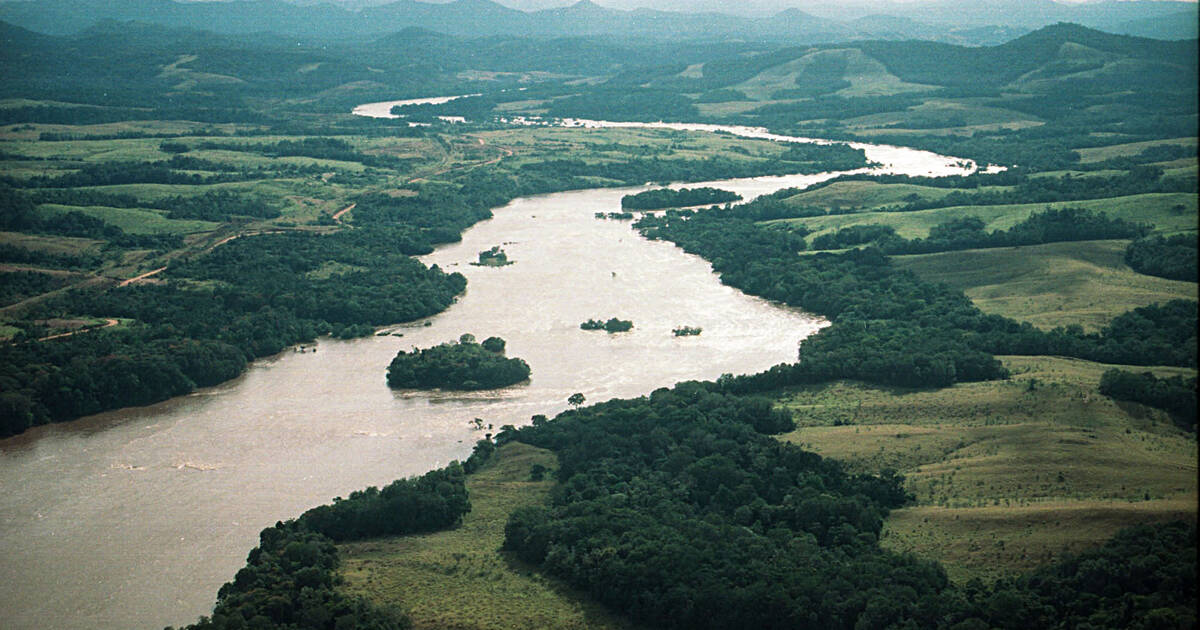
The area covers approximately 491,291 hectares in central Gabon, stretching along the Ogooué River valley, and provides a living record of climatic and biological changes and human migrations in Central Africa from the Palaeolithic to the Iron Age.
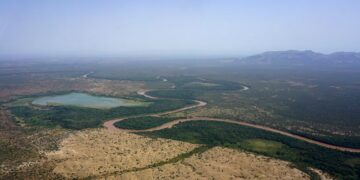
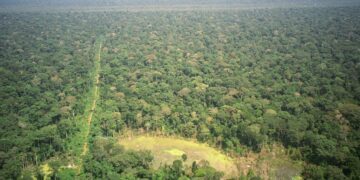
Lopé-Okanda is characterised by its diverse topography, which forms what is known as a “savanna forest mosaic”. This landscape is not merely aesthetic; it is the product of geological and climatic processes dating back to the last Ice Age (approximately 15,000 years ago).
The savanna found in Lopé is a “relict savanna”, a patch of grassland that was not completely covered by dense tropical forests after the Ice Age. This ecological overlap provides very rich transitional ecotones, where species that inhabit open forests meet those that inhabit dense scrubland.
The region is influenced by a relatively mild tropical climate compared to the surrounding areas due to its location in the Ogooué River basin and the influence of air currents from the Atlantic Ocean, which has helped maintain this delicate balance between grassland and forest.
Lopé is a vital stronghold for some of the most endangered species on the African continent. Thanks to strict conservation efforts, the area remains a natural laboratory for studying animal behaviour in its native habitats.
- African Elephants (Forest Elephants): These elephants rely on Lubi’s forest corridors to move between the rainforests and play a pivotal role in dispersing tree seeds and maintaining the forest’s structure.
- Primates: The site boasts high densities of western gorillas and chimpanzees.
- Mandrills: Lopé is renowned for being the only place in the world where mandrills can congregate in massive groups, sometimes numbering over 1,000 individuals in spectacular gatherings known as “giant groups”.
The area contains marantaceous forests and riverine exhibition forests, which are highly productive in fruit production, explaining the high density of herbivores and ferruginous animals.
What distinguishes Lopé-Okanda from other African reserves is its profound historical depth, documented over thousands of years. The region served as a major transit corridor for human migrations.
According to UNESCO:
“The Ecosystem and Relic Cultural Landscape of Lopé-Okanda represents an unusual interface between dense and well conserved tropical rainforest and relict savannah environments. A greater number of threatened species of large mammals find their last refuge in Lopé-Okanda than in any other comparable rainforest area in the Congo Rainforest Biogeographical Province. The property also preserves a record of biological evolution over the last 15,000 years of the still extant rainforest-savannah transition zone.
The Lopé-Okanda National Park displays remarkable evidence for settlement stretching over 400,000 years from the Palaeolithic, through the Neolithic and Iron Age, to the present day Bantu and Pygmy peoples. The National Park includes the River Ogooué valley, one of the principle migration routes for the diffusion of people and languages, including the Bantu, to Central and Southern Africa, in the Neolithic and Iron Age, as evidenced in extraordinary number of substantial settlements sites and an extensive collection of rock art petroglyphs.
The Lopé-Okanda National Park provides the oldest dates for the extension of the Tshitolien culture towards the Atlantic and it has revealed evidence of the early domestication of plants and animals and the use of forest resources.”
The area boasts over 1,800 petroglyphs dating from various periods. Concentrated primarily in the Ogooué River Valley, these engravings depict geometric shapes, animals, and hunting tools. They reflect the intellectual and technological development of the peoples who inhabited the region and provide evidence of complex social and religious rituals.

Archaeological excavations have revealed the remains of iron smelting furnaces and villages dating back to the Early Iron Age. This discovery is crucial for understanding how African societies transitioned from a hunter-gatherer lifestyle to settled agriculture and metalworking.
Lopé-Okanda is considered a major physical testament to the Great Bantu Migration. It is believed that Bantu-speaking groups used the Ogooué River valley as a major migration route from West Africa to Central and Southern Africa, bringing with them agricultural and metallurgical techniques.
The relationship in Lopé-Okanda is not one of exploitation, but rather one of adaptation. Early humans used the open savanna for hunting and the forests for gathering fruits, while the river provided transportation and trade.
The Lopé-Okanda region faces contemporary challenges that require careful management to maintain its fragile balance. Despite protection, the trade in ivory and bushmeat remains a threat to large game. Altering rainfall levels could lead to forest encroachment on the remaining savanna, threatening grassland-dependent species.
The Trans-Gabon Railway, which runs through the region, is an economic lifeline but requires continuous monitoring to minimise its environmental impact on animal movement. The area is currently managed by the Gabonese National Agency for Nature Reserves (ANPN), which follows an approach that combines scientific research, wildlife protection, and the promotion of responsible ecotourism that supports local communities.