
















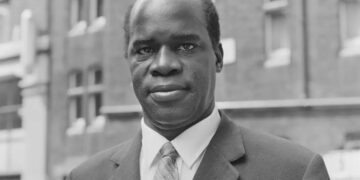
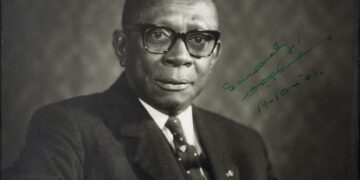


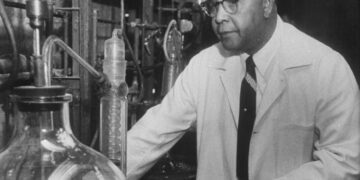









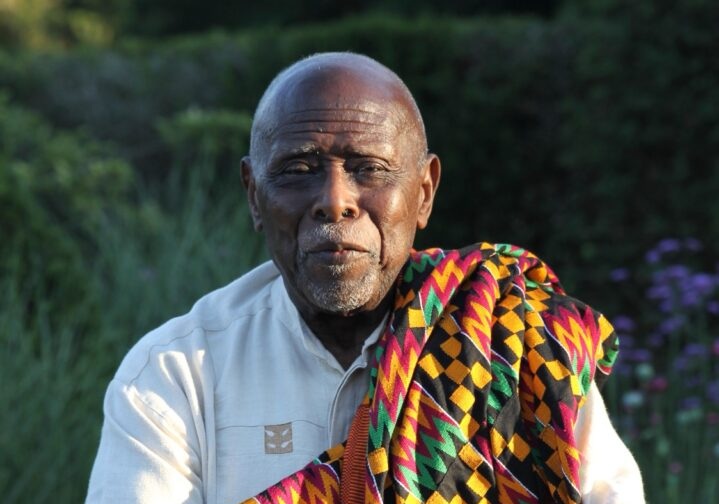
The career of Ghanaian physician and scientist Felix Konotey-Ahulu, who lived from 1930 to 2025, is considered one of the most influential scientific paths in the fields of haematology and human genetics, particularly concerning sickle cell disease. Konotey-Ahulu was a medical practitioner and a field researcher whose work in Ghana and the UK transformed the global understanding of how to diagnose and manage this genetic disease in African contexts.
Felix Israel Domeno Konotey-Ahulu was born on 12 July 1930 in Odumase, Krobo, in the Eastern Region, Ghana (then the Gold Coast). He received his early education at distinguished local schools such as Achimota College before pursuing university studies in medicine. He completed his medical training at University College London and obtained his postgraduate medical qualifications from the Royal Colleges of Physicians of London and Glasgow.
This dual combination of the African environment in which the disease was prevalent and advanced Western laboratories was the key that allowed him to see the gaps in the prevailing medical knowledge in the mid-twentieth century, where research on sickle cell anaemia was often conducted far from the native patients on the African continent.
Sickle cell anaemia is a genetic disorder caused by a mutation in the haemoglobin gene, resulting in red blood cells becoming sickle-shaped and obstructing blood flow. Konotey-Ahulu’s most significant contribution has been in documenting the clinical diversity of this disease.
One of his most notable scientific achievements was the development of a system for assessing disease severity known as the Konotey-Ahulu Clinical Severity Scoring. Before this scale, sickle cell anaemia patients were often viewed as a homogenous group with the same medical prognosis. However, through studying thousands of cases at Korle Bu Teaching Hospital in Accra, he demonstrated a vast variation in symptoms; some patients live relatively normal lives well into old age, while others experience severe complications at a young age.
This scale has helped clinicians tailor treatment to individual cases, rather than following general protocols that may not be suitable for everyone.
During his work in Ghana, Konotey-Ahulu established one of the world’s largest databases of sickle cell anaemia patients. He also recorded the family lineages and social histories of patients.
He contributed to a deeper scientific understanding of the relationship between sickle cell anaemia and malaria. The sickle cell gene (HbS) provides relative protection against deadly malaria, which explains its persistence and prevalence in West Africa. Konotey-Ahulu documented cases of “haemoglobinuria-foetal persistence” (HPFH), a genetic condition that mitigates the symptoms of sickle cell anaemia, opening new avenues for research into gene therapies that mimic this effect.
In 1991, he published his monumental reference work, “The Sickle Cell Disease Patient”. This book was a comprehensive anthropological and medical study. In it, he criticised the way Western literature portrayed African patients, emphasising the importance of human dignity in the treatment of those with genetic conditions.
Using statistical and genetic equations to illustrate the probabilities of disease transmission, Konotey-Ahulu was a pioneer in advocating for premarital screening in Ghana for “genomic education” that empowers families to make informed decisions.
Konotey-Ahulu was known for his unwavering stance on ethical issues in science. He vehemently opposed eugenics and selective abortion based on genetic testing of sickle cell patients. He believed in the interconnectedness of science and faith, being a devout Christian who saw scientific inquiry as a means to understand the wonders of creation. This stance earned him widespread respect in conservative African societies, where he was able to break down the barrier between modern science and traditional beliefs.
Throughout his long career, Felix Konotey-Ahulu held several prestigious positions, including Director of the Haematology Department at Korle Bu Teaching Hospital (KBTH) in Ghana; Visiting Professor at several British and African universities; Consultant at Cromwell Hospital in London; and Founding Member of several African medical societies focused on tropical diseases.
According to Pieter le Roux:
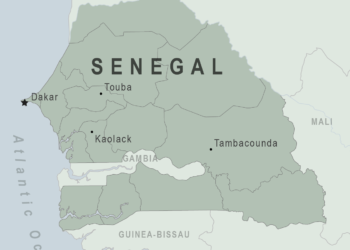
“He was Schofield Fellow, Christ’s College, Cambridge (1970–71), and in 1976 he gave Edinburgh University’s MacArthur Postgraduate Lecture. He has lectured in Turkey, Brazil, Greece, Singapore, Australia, India, Hungary, Canada, Denmark, Switzerland, Sweden (Stockholm) and, on the African continent, in Ghana, Nigeria, Cameroon, Ivory Coast, Sierra Leone, Liberia, Senegal, Kenya, Tanzania, Zambia, South Africa and Egypt. He did Grand Rounds at the NIH (Bethesda), George Washington University, Johns Hopkins, Howard University, Illinois and Chicago Universities, and in Cook County Hospital, Chicago.
He was once Editor of the Ghana Medical Journal, Chairman of a Ghanaian Government Committee to investigate Hospital Fees, Member of the WHO Expert Advisory Panel on Human Genetics, and a temporary Consultant to the Commonwealth Secretariat’s Medical Department in London. In March 1980, he was the University of Ghana Alumni Lecturer on the subject ‘Genes and Society, and Society and Genes’. Professor Roland Scott invited him as ‘Annual Visiting Professor’ to Howard University College of Medicine, and as Honorary Consultant to its Centre for Sickle Cell Disease, Washington DC.”
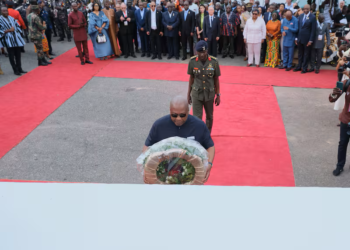
Felix Konotey-Ahulu passed away on Tuesday, May 27, 2025, leaving behind a school of thought centred on “personalised medicine” long before the term gained widespread use in the West. His research demonstrated that environmental and nutritional factors in Africa play a crucial role in how genes are expressed, a field now known as epigenetics.
His work contributed to reducing mortality rates among children with sickle cell anaemia in Ghana and West Africa by raising awareness about the importance of hydration, nutrition, and infection prevention—simple yet revolutionary measures at the time.