
















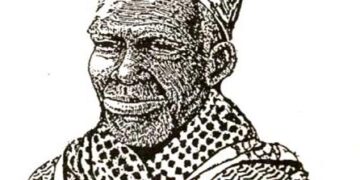









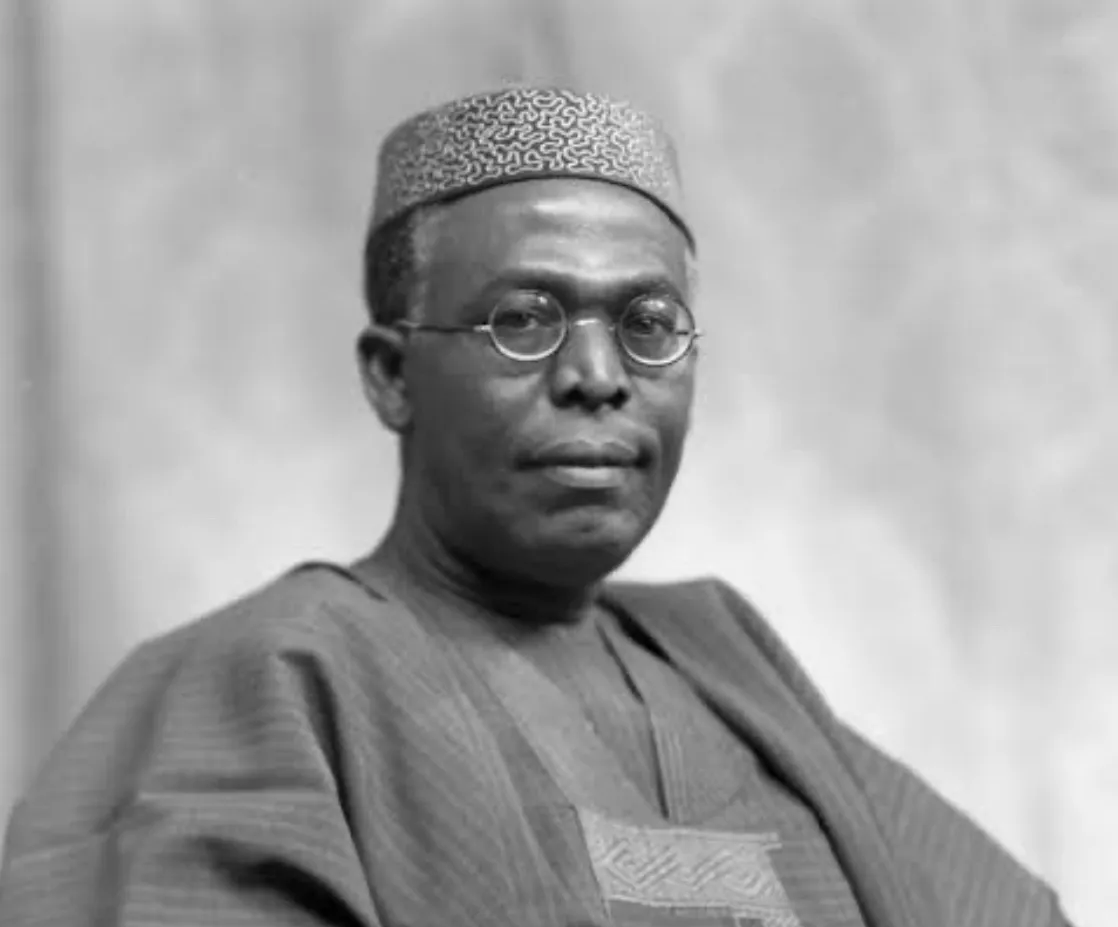
Obafemi Awolowo is considered one of the pillars of 20th-century Nigerian politics and a pivotal figure in the West African country’s history who left a significant mark on African federalist thought. He was a political leader and an economic and legal theorist who shaped many of the administrative foundations upon which the Nigerian state was built, both before and after independence.
He was known as “The Sage” for his wisdom and forward-thinking policies that shaped Nigeria, despite never becoming president. He was also called “Asiwaju Awon Yoruba” (Leader of the Yorubas), a significant title recognizing him as the foremost Yoruba leader in the modern era.
Obafemi Jeremiah Oyeniyi Awolowo was born on March 6, 1909, in the town of Ikenne, in what is now Ogun State. He faced hardship in his early life after the death of his father, forcing him to work in menial jobs to finance his education. He graduated from the University of London as an external student in commerce and later earned a Bachelor of Laws degree in England, where he was called to practice law at the Inner Temple in 1946.
This academic background, combining economics and law, formed the core of his later politics; he believed that political emancipation was worthless without a solid economic foundation and widespread education.
While in London, Awolowo founded the Egbé Ọmọ Odùduwà in 1945, a cultural organization aimed at promoting the unity of the Yoruba people. In 1951, this movement supported the formation of the Nigerian political party Action Group (AG).
Awolowo was a firm believer that Nigeria, with its vast ethnic and linguistic diversity, could only be successfully governed through a genuine federal system. He opposed extreme centralization and argued that each region should have autonomy in managing its resources and educational and cultural affairs, which sometimes put him in intellectual conflict with other leaders such as Nnamdi Azikiwe, who tended towards more centralized approaches in his early days.
Awolowo held the position of premiership of the Western Region between 1954 and 1959. This period is considered the golden age of his administrative achievements, as he transformed Nigeria’s Western Region (now Southwest Nigeria) into a model of development in Africa.
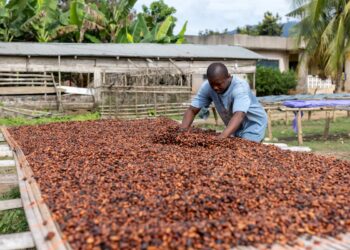
Awolowo is believed to be the first to launch a free and compulsory primary education program in Africa in 1955 due to his position that human capital was the true engine of the economy. He established the first television station in Africa (Western Nigeria Television, WNTV, later absorbed into the NTA network), built the Cocoa Tower in Ibadan, and created investment institutions to market agricultural crops, making the Western Region the most developed in Nigeria. He established strict, merit-based standards for the civil service, leading to high efficiency in the implementation of public projects.
Awolowo’s journey was not devoid of political crises and imprisonment. After independence in 1960, he moved to the federal level, becoming the leader of the opposition in parliament. However, internal conflicts within his party, the Action Group, and tensions with the federal government led to a severe political crisis in the Western Province in 1962.
In 1963, he was charged with high treason and conspiring to overthrow the federal ggovernment andsentenced to ten years in prison. He served three years in Calabar prison before being released in 1966 by General Yakubu Gowon following a series of military coups that shook the country.
Awolowo played a crucial and controversial role during the Biafran War (the secession of the southeast), also known as the Nigerian Civil War (1967–1970). He was appointed by General Gowon as Vice President of the Federal Executive and Commissioner (Minister) of Finance.
He successfully financed the federal war effort without borrowing from abroad, a rare financial achievement in wartime. He implemented harsh economic measures, such as changing the Nigerian currency to prevent Biafran leaders from using cash and imposing trade restrictions. These policies remain a subject of considerable debate among historians; some see them as a military necessity to end the war, while others view them as cruel and detrimental to civilians.
After the restoration of democracy, Awolowo founded the Nigerian Unity Party (UPN) and ran for president in 1979 and 1983. His campaigns rested on four pillars: free education, free healthcare, rural development, and full employment. Despite his broad popular support in the west and parts of central Nigeria, he failed to win the federal presidency. His supporters attributed this to election rigging, while analysts argued that his strong “regionalist” leanings and outspokenness limited his appeal in the north and east.
Awolowo described himself as a “democratic socialist.” He did not believe in Marxist socialism but rather in a form of state capitalism that ensured a fair distribution of wealth through robust social services. He authored several books explaining his vision, including “Path to Nigerian Freedom” (1947), “Thoughts on the Nigerian Constitution” (1966), and “The People’s Republic” (1968).
Obafemi Awolowo died on May 9, 1987. His legacy remains the subject of mixed assessments. His supporters and followers consider him “the best president Nigeria never had,” praising his organizational skills, financial integrity, and educational vision.
However, his critics take issue with his inclination towards “Yoruba nationalism” in his early days and his political rigidity, which may have prevented the achievement of a national consensus around him, in addition to his financial decisions during the civil war.