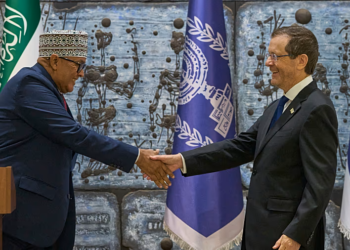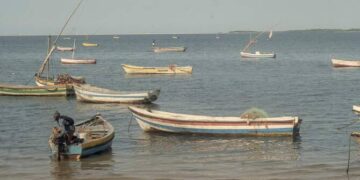








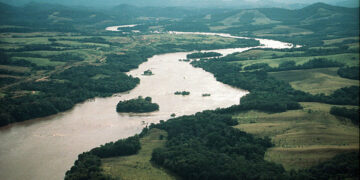
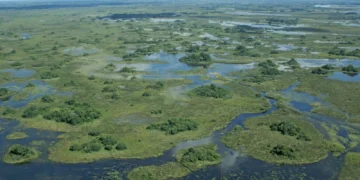

Guinea-Bissau, situated on the Atlantic coast, is a predominantly low-lying country that is slightly hilly farther inland. West Africa’s Guinea-Bissau was part of the Portuguese Empire for centuries. In 1956 a group of Cape Verdeans founded the national liberation party for Guinea and Cape Verde—the African Party for the Independence of Guinea and Cape Verde (Partido Africano da Independência da Guiné e Cabo Verde; PAIGC).
Most notable of its leaders was Amílcar Cabral, a brilliant revolutionary theoretician. In 1973 it gained its independence, and a year later, in 1974, the name of the country was changed by adding the country’s capital city, Bissau, to avoid confusion with French Guinea. At the end of the 1990s the country experienced a conflict that drew in Guinea, Nigeria, Senegal, and France and ended with the president going into exile.
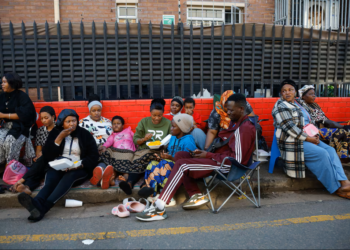
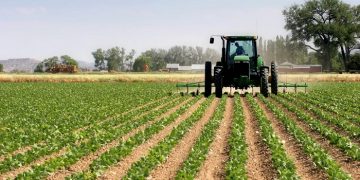
Guinea-Bissau’s population was 2.1 million in 2023. With its arable land and water surfaces, agriculture is the backbone of the country. The economy depends mainly on agriculture; fish, cashew nuts, and groundnuts are its major exports. In Guinea-Bissau under Umaro Embaló, a substantial part of the economic and social infrastructure is in ruins, with rising youth unemployment and widespread poverty. An estimated 80% of the population lives in abject poverty.
Since gaining independence, the military in Guinea-Bissau has maintained disproportionate influence in politics, largely relying on implicit threats rather than presenting a coherent alternative political vision. Undoubtedly, the constrained relationship between the military and civilian authorities, as well as internal divisions within the military itself, has significantly contributed to the country’s governance challenges. These tensions have been provoked by the manipulation of ethnic divisions for political gain and the competition for control over the state’s resources.
The United Nations Office on Drugs and Crime (UNODC) first warned in 2008 that Guinea-Bissau risked becoming a “narco state.” Since then, major drug busts in the country continue to cement it as a drug-trafficking hub, with dealers found by investigators to be working with help from the military. Likewise, restrictions on the media and freedom of association have eased somewhat, though police continued to disrupt some demonstrations, says US NGO Freedom House. Also, it says that journalists regularly face harassment and intimidation, including pressure regarding their coverage from political figures and government officials. While Reporters Without Borders says journalists self-censor when covering government shortcomings, organized crime, and the influence of the military.
The Military as a Political Actor
Guinea-Bissau’s post-independence politics were marked by tension between the former comrades-in-arms at the head of the Bissau-Guinean state. Guinea-Bissau’s armed forces include an amalgam of veterans, claiming historical legitimacy from the liberation war, and officers who use their positions for personal gain rather than furthering democracy and national interests.
Thus, the West African nation has a history of coups. Before now, it previously had four coups and several attempted ones since its independence from Portugal more than 50 years ago. On September 10, 1974, after more than 11 years of war with Portugal and the toppling of Portugal’s authoritarian dictatorship, Guinea-Bissau gained independence. Luis Cabral becomes Guinea-Bissau’s first president. Cabral is overthrown by Prime Minister João Bernardo Vieira during a bloodless coup on November 14, 1980.
On May 7, 1999, the military overthrew President Vieira, and Malam Bacai became interim president. On November 28, 1999, Kumba Yala won the next presidential election. The military seizes power and overthrows Yala on September 14, 2003. In 2012, soldiers seized control between rounds of a presidential election, halting a vote that was expected to return the ruling party to power. Mr. Umaro Sissoco Embaló won the December 2019 presidential election but faced a last-minute standoff with parliament before taking office in February.
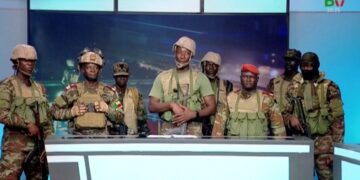
A former prime minister, Mr. Embaló is the first president to be elected without the backing of the PAIGC. His predecessor, Jose Mario Vaz, was the first elected leader since the army mutinied in 2012 and plunged the country—already plagued by corruption and cocaine trafficking—into chaos, and the first to complete his term without being overthrown. Meanwhile, the opposition-dominated parliament has not convened since Dec. 2023, when it was dissolved by Embaló after an attempted coup. In November 2025, Embaló was seeking to be the first president to win a second term when the military seized power.
Several theories have emerged to elucidate the causes behind military involvement in African politics and to rationalize why such an issue was perceived as both inevitable and indispensable. These theories span various domains, including the colonial legacy, contagion influence, weak socio-economic institutions, political culture, military structure, corruption, and the politicization of the military. All these factors can be observed in the current political scenario in Guinea-Bissau, where the military still holds significant power within the state and blackmails some political leaders who are not willing to cooperate.
Proponents of these theories posited that military rule served as a necessary evil essential for effecting change and expediting Africa’s development. However, the prolonged presence of the military in African politics failed to yield the anticipated positive outcomes. Instead, it exacerbated issues like corruption and underdevelopment. Consequently, it emanated from a coalition of demands for reinstating civil democratic rule to address these challenges.
Why the Military Keeps Intervening and the Underlying Causes?
In Guinea-Bissau, the real political power may be seen within the military elite; they exert direct influence, which is to attempt to overthrow the government, or indirect interference in political affairs. The indirect influence of the military still exists, and it can overshadow and control the decisions of democratically elected political leaders. Scholars and analysts indicate that there are some structural and historical root causes that can help to explain the reasons for which the military remains central in Guinea-Bissau’s political life. Which are:
- Legacy of the liberation struggle: In countries like Guinea-Bissau, which underwent a liberation war against imperialism, the dynamics of civil-military relations have been profoundly shaped by unique experiences. During the national struggle against imperialism, civilians and the military collaborated closely, forging a distinctive connection. Many present civilian leaders in African countries were once freedom fighters, contributing to a shared ethos of freedom and nationalism that has influenced a distinct ideology of nationalism. This shared history serves as the foundation for contemporary civil-military relations in post-liberation countries, particularly Guinea-Bissau.
- Fragile institutions and weak governance: Guinea-Bissau is among the world’s poorest nations. Chronic poverty, low state revenue, and corruption have hollowed out government institutions. Civil servants often go unpaid, and the state struggles to deliver basic services. The first successful coup came in 1980, when President Luis Cabral was ousted by Prime Minister João Bernardo Vieira, who had accused Cabral’s government of mismanagement. In June 1998, a failed coup attempt triggered a civil war after Vieira dismissed Brigadier-General Ansumane Mane from his position as chief of staff.
Vieira himself was deposed in 1999 after a military revolt sparked by a mutiny over arms-smuggling allegations. In 2003, Kumba Yala was elected president following two interim leaderships after Vieira. He faced a turbulent relationship with General Mane, resulting in clashes during which Mane was killed. In the same year, President Yala was deposed in a bloodless coup led by one of his own generals, who accused him of mismanaging the economy.
In 2004, General Verissimo Correia Seabra, the military leader behind the coup, was killed during an army revolt. Henrique Rosa assumed interim leadership until 2005, when Vieira returned to power after a runoff in the presidential election. After surviving at least two coup attempts and army revolts, Vieira was shot dead on March 2, 2009, by a group of soldiers allegedly loyal to his main rival, army chief of staff General Batista Tagme Na Waie, who had been killed in a bomb blast the previous day.
Following Vieira’s assassination, Raimundo Pereira assumed interim leadership until Malam Bacai Sanha was elected in September. Sanha died from illness in January 2012 before completing his term. Soldiers seized power between rounds of a presidential election, detaining interim President Raimundo Pereira, election front-runner Carlos Gomes Junior, and his challenger Kumba Yala. Gunmen attacked the presidential palace during a cabinet meeting. President Umaro Sissoco Embalo survived. The government said it was a coup attempt linked to drug trafficking.
In 2012, soldiers seized control between rounds of a presidential election, halting a vote that was expected to return the ruling party to power. In addition, courts in the country of 2.2 million people have often been unable to rule on electoral disputes or constrain government overreach, creating a vacuum for military intervention.
- Socio-economic crisis and poverty: The military’s interferences, rooted in a complex array of motivations, have disrupted governance structures, blocked political stability, and created a climate of uncertainty. The historical backdrop, dating back to the country’s fight for independence, set the stage for the military’s enduring influence. The drivers of military involvement, such as the pursuit of power, addressing socio-economic challenges, and maintaining stability, are important in understanding the military’s role in politics. The consequences of this involvement are evident in the recurrent power struggles and coups that have characterized the nation’s post-independence history.
The mounting dissatisfaction with Yalá’s leadership creates fertile ground for military interference. By 2003, the political and economic situation in Guinea-Bissau had deteriorated significantly. The government’s inability to pay public sector salaries, coupled with the president’s frequent interference in judicial and legislative matters, further eroded public trust and legitimacy. Among this backdrop, the military, which had traditionally played an essential role in Guinea-Bissau’s politics, began to see itself as the guardian of national stability.
- Factionalism and patronage networks within the army and politics: There are about 27 to 40 different ethnic groups in Guinea-Bissau, and according to the 2009 census, the Fula or Fulani ethnic group is the largest in the country, accounting for 28.5% of the total population. Others are Balanta, Mandinka, Papel, Manjaco, Beafada, Mancanha, etc. Ethnic divisions and economic disparities have contributed to military involvement in Guinea-Bissau’s politics. Ethnic competition for power has fuelled tensions within civilian leadership, allowing the military to assert itself as a stabilizing force.
While not the primary driver of conflict, ethnic divisions influence military recruitment, promotions, and political alliances. Patronage networks based on ethnicity weaken the state and make political consensus elusive. Thus, this institutional fragility creates a vacuum that military actors and criminal networks are always ready to fill. Additionally, economic interests, particularly control over lucrative sectors like natural resources, have motivated military leaders to engage in politics to protect their financial interests.
- External pressures, corruption, and illicit economies: Ongoing political strife and economic challenges were compounded by drug smuggling, an increasing problem for Guinea-Bissau and other western African countries in the mid-2000s. With a geography favorable to smuggling and the inability to adequately protect its coastline and airspace, Guinea-Bissau was a particularly desirable target, and individuals in the upper echelons of the government, military, and other sectors were allegedly involved in drug trafficking. Last year, a son of former President Malam Bacai Sanha was sentenced to more than six years in prison by a U.S. court for leading an international heroin trafficking ring.
The Human Cost and Institutional Decline: What It Means for Citizens
The impact of the military on the government in Guinea-Bissau has been overwhelmingly negative. The frequent military coups and uprisings disrupt political continuity and undermine the implementation of long-term development plans. This instability discourages foreign investment, decomposes public trust in institutions, and prevents socio-democratic progress.
The military’s involvement also weakens democratic institutions, as political decisions are often influenced by military interests rather than democratic deliberation. Moreover, economic factors deepen these motivations, as inadequate resource distribution has created a severe disparity between military personnel and political elites. This unequal treatment has fueled resentment within the military ranks, fueling discontent and occasionally leading to military uprisings, such as the 1998 civil war.
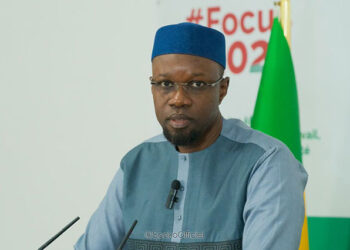
Before now, the opposition in Guinea-Bissau was increasingly concerned about the potential emergence of a dictatorship under President Umaro Sissoco Embaló. Since assuming office in 2020 by proclaiming himself as the president and the commander in chief of the army forces, Sissoco has continuously consolidated control over key institutions, flashing severe political turmoil across the nation. He systematically confronted political adversaries, parliament, and other governmental bodies.
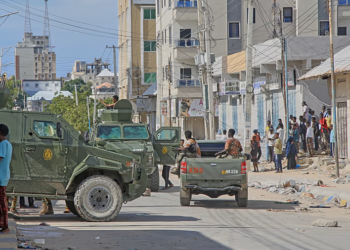
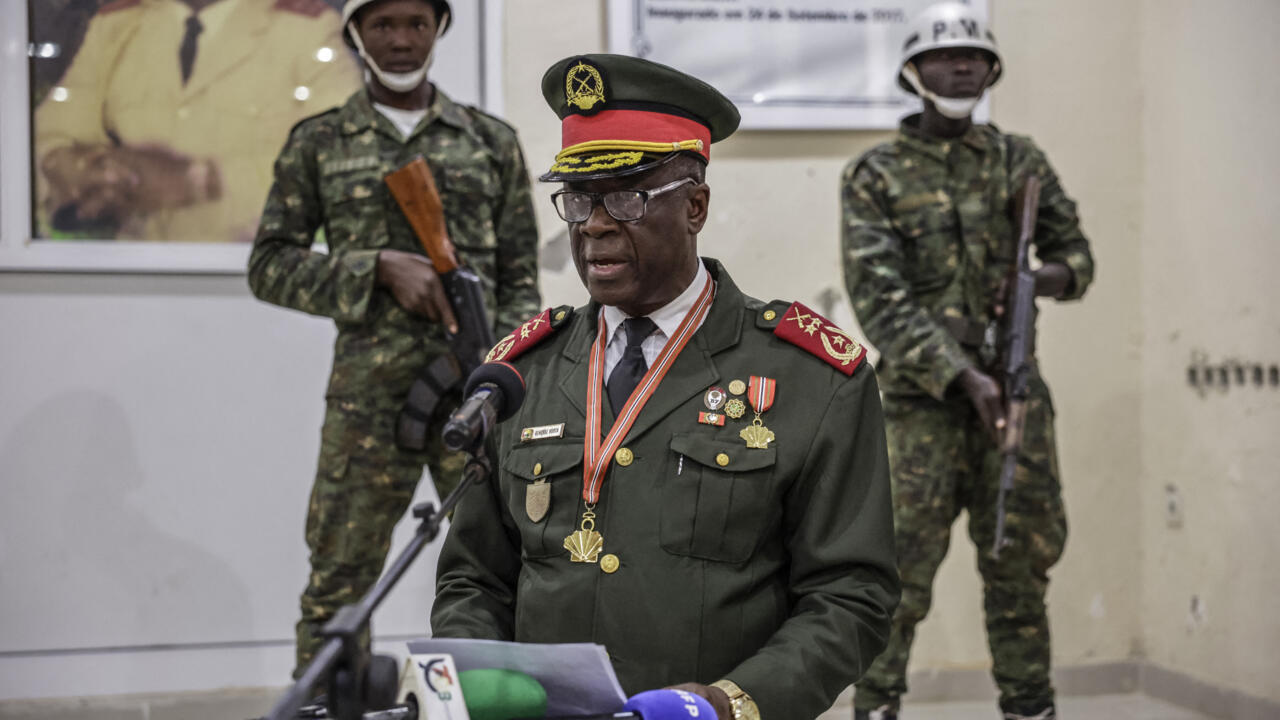
The November 2025 Guinea-Bissau coup crystallizes multiple overlapping processes of institutional decay, elite antagonism, and security force fragmentation. General Horta Inta-a, the head of the presidential guard, was subsequently sworn in as “transitional” leader, and Ilídio Vieira Té, a close Embaló ally, was appointed prime minister. The timing of the development and Embaló’s connection to the new government figures have led domestic opposition groups and some West African political leaders to claim the coup was staged to facilitate Embaló’s continued rule by proxy.
Some civil society organizations have accused Embaló of orchestrating the latest coup in order to prevent any unfavorable election results from being published. Political analyst Ryan Cummings said the president’s previous actions—such as postponing the elections for a year—had fueled such suspicions. However, it is also “highly plausible” that the armed forces acted independently to prevent a political stalemate, as both Embaló and Dias were claiming they had won this election, Mr. Cummings told the BBC.
Beverly Ochieng, West Africa analyst at the intelligence firm Control Risks, also acknowledged the skepticism surrounding the coup. However, she said that tensions within the political elite, combined with the decision to ban Pereira from the presidential race, “likely contributed to a military intervention.” There have been many reasons for the various coups in the Sahel since 2020. Takeovers in Mali, Burkina Faso, and Niger, for example, were driven in part by growing terrorist insurgencies, Russian disinformation, and rising anti-French sentiment.
Guinea-Bissau’s transition could end up taking much longer than the one year pledged by General Inta-a. A wave of coups has swept through West and Central Africa in recent years, and juntas in Mali, Niger, and Burkina Faso have all clung to power, postponing elections in their countries for as much as five years. By contrast, data from the conflict monitoring organization Armed Conflict Location and Event Data, or ACLED, shows very little conflict or protest in Guinea-Bissau leading up to the coup. Instead, events appear to lie in political opportunism in the wake of an election marred by flaws and allegations of illegitimacy.
What Would Real Change Look Like?
International partners will need to collaborate with Guinea-Bissau to secure dignified working conditions for qualified civil servants. In addition, much more needs to be done to reform Guinea-Bissau’s security sector. Encompassing the military, police, judiciary, and related fields, the country’s security sector has often been politicized and involved in corruption and narco-trafficking.
In addition, a broad, bottom-up, long-term reconciliation process should be implemented or reinitiated. Media-promoted participatory processes in which socially just, democratic governance is debated should accompany this reconciliation process. Over the past decade, the country has achieved profound progress with respect to fiscal and macroeconomic stability; efforts in this vein should continue but also focus on social issues.
As such, even if Guinea-Bissau was becoming increasingly autocratic already, the latest takeover is likely a cure worse than the disease. Whether the international community that has condemned the coup—from the United Nations to the African Union to the Economic Community of West African Nations—is willing or able to take credible steps to help guide Guinea-Bissau back to constitutional rule looks uncertain, given the recent example of other coup-hit nations across the continent.
It is imperative to underline that, while the African Union and ECOWAS insist on respecting and upholding a constitutional order, the new government has to prioritize multilateral policy, indiscriminately search for foreign investors to mechanize agriculture to ensure food security, further focus on basic industrializing of the economy, and create, to some degree, employment for the youth.