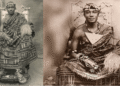


























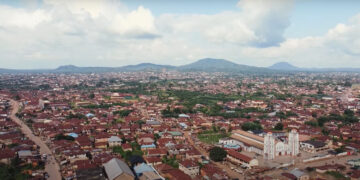

The Gbaya people are one of the largest ethnic groups in Central Africa, with their demographic and geographic presence concentrated primarily in the Central African Republic, extending into eastern Cameroon, northern Democratic Republic of Congo, and limited areas of Nigeria and Congo-Brazzaville. Numbering in the millions, they represent a significant demographic, political, and social force in their region and have a history marked by social transformations and political resistance.
The Gbaya language belongs to the Adamawa-Ubangi language family, a branch of the Niger-Congo language family. Historically, anthropological and linguistic studies indicate that the Gbaya people originated in the northern regions of present-day Central African Republic and Nigeria, before migrations southward and eastward due to external pressures, including Fulani invasions and the slave trade that flourished in previous centuries.
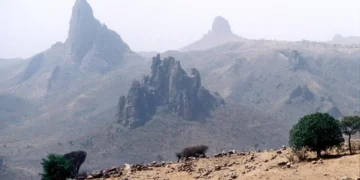
The areas inhabited by the Gbaya are characterized by a diverse environment, ranging from rich savannahs to tropical forests. This has shaped a flexible way of life based on utilizing available natural resources. The largest concentration of Gbaya people is found on the Yade Plateau in the western Central African Republic, a region of strategic agricultural and climatic importance.
The social structure of the Gbaya people is historically based on a patrilineal clan system. Unlike the large centralized kingdoms that emerged in West Africa or the Great Lakes region, the Gbaya organization was traditionally decentralized. Power was distributed among clan chiefs and local elders, with decisions made through collective consultation rather than absolute monarchical authority.
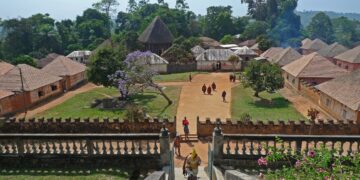
The traditional Gbaya village consists of a group of housing units that accommodate extended families. The planning of these villages was dictated by security and economic necessities. They were built near water sources and arable land, while maintaining sufficient distance to allow for the privacy of each clan within the community.
The history of the Gbaya is marked by significant clashes with colonial powers and the expansionist ambitions of neighboring states. Perhaps the most famous event in their recent history is the “Axe-Hand War,” or the Kongo-Wara Rebellion, which took place between 1928 and 1931.
This rebellion against French colonialism erupted as a result of the imposition of forced labor on cotton plantations and railway construction, as well as the harsh treatment by colonial concessionary companies. The rebellion was led by a spiritual figure, who succeeded in uniting broad segments of the Gbaya and neighboring groups under a single banner. Although French forces ultimately suppressed the rebellion using superior military technology, it remained a symbol of resistance in Central Africa and compelled the colonial administration to revise some of its policies regarding forced labor.
The religious landscape of the Gbaya has undergone radical transformations over the centuries. Historically, traditional religion centered on the worship of a supreme being and cosmic lawgiver, with a pivotal role played by the tribe’s ancestors, who were believed to mediate between the material and spiritual worlds.
With the arrival of Christian missionaries at the beginning of the 20th century, large numbers of Gbaya converted to Christianity, particularly Protestantism and Catholicism. In contrast, there is a Muslim minority concentrated in areas bordering Fulani and Chadian populations. Nevertheless, some traditional rituals are still observed at social events, such as rites of passage, circumcisions, and harvest celebrations, where masks and expressive dances are used to strengthen community bonds.
Agriculture is the backbone of the Gbaya economy. The primary crop is cassava (manihot), which forms the staple food of the population, along with maize, peanuts, and yams. Hunting and Gathering
In addition to agriculture, the Gbaya people practice seasonal hunting and gathering wild fruits. Hunting is part of the men’s cultural identity, with nets and arrows used in group expeditions aimed at securing protein and strengthening bonds within the clan. Women play a vital role in processing crops and local marketing, granting them a degree of economic independence within the family.
The Gbaya people possess a rich heritage of folktales and proverbs passed down orally from generation to generation. A prominent figure in their stories is the Wanto, a mythical spider-like creature from West African folklore, representing intelligence, cunning, and human frailty. These tales serve as a means of moral instruction, entertainment, and explanation of natural phenomena.
In modern times, Gbaya elites have played a pivotal role in the domestic politics of the Central African Republic. Since independence in 1960, many members of this group have held high-ranking positions in the government, including the presidency at various times.
However, political competition for power and resources has sometimes led to ethnic tensions with other groups, such as the Zagara or Mbom. During the political and military crises that have plagued the Central African Republic in the last two decades, the Gbaya communities have found themselves at the heart of the conflict, particularly with the rise of the Anti-Balaka militias, many of whose members came from rural Gbaya villages, in response to attacks by the Seleka groups.
The Gbaya people today face complex challenges linked to the geopolitical realities of Central Africa:
- Poverty and Development: Despite the natural resources of their lands, their regions suffer from a severe lack of basic infrastructure such as roads, schools, and health centers.
- Security and stability: Ongoing armed conflicts in the Central African Republic have displaced hundreds of thousands of Gbaya people, both as internally displaced persons and refugees in Cameroon and Chad.
- Preserving identity: With increasing urbanization and migration to major cities like Bangui and Douala, young people face the challenge of preserving their language and traditions amidst the dominance of global cultures and official languages (French and Sangho).
The Gbaya language is characterized by its tonal nature, where the meaning of a word changes with the pitch of the sound—a linguistic complexity that reflects the depth of the group’s cultural development. Socially, the Gbaya are known for their system of alliances with neighboring groups, a traditional system that prevents armed conflict and encourages intermarriage and trade, helping them survive and spread across a wide geographical area.
From an objective perspective, the Gbaya people are not simply a mass of people but a complex social fabric that has adapted to the changing times, from the colonial era to the modern state. Their ability to balance preserving their tribal roots with integrating into the structures of the modern state reflects cultural resilience, despite the political and economic obstacles that hinder the region’s overall progress.