



Qiraat Africa
عربي  |  Fr
Advertisement
  • News
    • All
    • Climate Change
    • Economy
    • Education
    • Energy
    • Health
    • Migration
    • Mining
    • Politics
    • Security
    • Society
    • Sport
    Is Ethiopia’s Tigray barreling towards another war?

    Ethiopian Airlines cancels flights to Tigray region after clashes

    African governments look to Islamic finance after Benin sukuk success

    African governments look to Islamic finance after Benin sukuk success

    Ukraine says Niger’s move to cut relations is ‘regrettable’

    Gunfire, blasts rock Niger airport overnight before calm restored

    DR Congo Military Court Issues Arrest Warrant for Corneille Nangaa

    Rebel leader denounces US-DRC minerals deal one year after Goma’s fall

    Zambia groups say freedom of expression under threat

    Zambia is hopeful of agreement on debt restructuring terms with Afreximbank

    Rwanda’s presidential election set for July 15, 2024

    Rwanda says UK owes $130 million over scrapped asylum scheme

    Giant Dangote oil refinery to begin production in third quarter

    Shipping data shows Indian diesel exports to West Africa at record high

    Ex-Nigerian minister, Alison-Madueke faces bribery charges in London court

    Nigeria lowers entry barriers to attract investors for latest oil round

    Uganda’s constitutional court to hear challenges against anti-homosexuality law

    Uganda court releases prominent rights activist on bail

  • Analysis
    • All
    • Climate Change
    • Digital & Tech
    • Economy
    • Energy & Power
    • Health
    • Politics
    • Security
    • Society
    BRICS Plus and the Shifting Global Power Balance: Implications of South Africa’s Role

    BRICS Plus and the Shifting Global Power Balance: Implications of South Africa’s Role

    African Union suspends Niger over coup, prepares sanctions; France denies report it asked Algeria to use airspace for a Niger operation

    Leaders in Africa’s human rights institutions are being elected. Why it matters

    Sahel Alliance leaders meet in Bamako to deepen break with ECOWAS

    The AES and the Reconfiguration of Regional Security Architecture: A Look at the 2025 Bamako Summit

    US airstrikes in northern Nigeria: potential windfalls and dangers

    US airstrikes in northern Nigeria: potential windfalls and dangers

    Why France’s Focus is Shifting to Anglophone Africa

    Why France’s Focus is Shifting to Anglophone Africa

    UN believes hundreds were killed in Tanzania election protests

    Cameroon and Tanzania’s rulers clung to power in 2025—but look more vulnerable than ever

    General sworn in as Guinea-Bissau leader in swift coup after disputed vote

    Military and Politics in Guinea-Bissau

    Global power shifts are playing out in the Red Sea region: why this is where the rules are changing

    Global power shifts are playing out in the Red Sea region: why this is where the rules are changing

    Understanding Trump’s Christian Genocide Claim and Military Threat: What It Means for Nigeria-U.S. Relations

    Understanding Trump’s Christian Genocide Claim and Military Threat: What It Means for Nigeria-U.S. Relations

  • Studies
    Benin government says armed forces foil coup attempt

    Coup contagion? A rash of African power grabs suggests copycats are taking note of others’ success

    One in three South Africans have never heard of AI: what this means for policy

    One in three South Africans have never heard of AI: what this means for policy

    Social Media as a Catalyst for the Spread of Dangerous Wealth Ritual Myths

    Social Media as a Catalyst for the Spread of Dangerous Wealth Ritual Myths

    Overcoming Education Barriers for Young Mothers in Sub-Saharan Africa

    Overcoming Education Barriers for Young Mothers in Sub-Saharan Africa

    Youth Empowerment Through Vocational Training in Rural Sub-Saharan Africa

    Youth Empowerment Through Vocational Training in Rural Sub-Saharan Africa

    Manufacturers in Ghana and Nigeria claim that although corruption damages businesses, digital technologies provide a chance to combat it

    Manufacturers in Ghana and Nigeria claim that although corruption damages businesses, digital technologies provide a chance to combat it

    Environmental Threats and Conservation Efforts in Namibia

    Environmental Threats and Conservation Efforts in Namibia

    Your teachers’ level of knowledge affects how well you perform in class: perspectives from 14 French-speaking African nations

    Your teachers’ level of knowledge affects how well you perform in class: perspectives from 14 French-speaking African nations

    Islamic Finance in Nigeria: Between Islamization and Shariah Non-Compliance Polemics

    Islamic Finance in Nigeria: Between Islamization and Shariah Non-Compliance Polemics

  • Infographics
  • Figures
    What does a diary entry reveal about the West African origins of Apongo, a rebel leader in Jamaica?

    What does a diary entry reveal about the West African origins of Apongo, a rebel leader in Jamaica?

    Obafemi Awolowo (1909 – 1987): Nigerian statesman and influential advocate of independence

    Obafemi Awolowo (1909 – 1987): Nigerian statesman and influential advocate of independence

    Tunka Manin (c. 1010–1078), the last ruler of the Ghana Empire

    Tunka Manin (c. 1010–1078), the last ruler of the Ghana Empire

    Samuel Ajayi Crowther (1809-1891): First African Anglican Bishop

    Samuel Ajayi Crowther (1809-1891): First African Anglican Bishop

    Osei Tutu (c. 1660—c. 1717) , founder of the Asante nation

    Osei Tutu (c. 1660—c. 1717) , founder of the Asante nation

    Walter Sisulu (1912 – 2003): South African activist

    Walter Sisulu (1912 – 2003): South African activist

    Modibo Keïta (1915-1977): First President of Mali

    Modibo Keïta (1915-1977): First President of Mali

    Robert Mugabe (1924 – 2019): Revolutionary and former President of Zimbabwe

    Robert Mugabe (1924 – 2019): Revolutionary and former President of Zimbabwe

    Idi Amin Dada (1928 – 2003): Military officer and former President of Uganda

    Idi Amin Dada (1928 – 2003): Military officer and former President of Uganda

  • History
    The battles of Isandlwana and Rorke’s Drift

    The battles of Isandlwana and Rorke’s Drift

    Kimberley’s Big Hole, Northern Cape, South Africa

    Kimberley’s Big Hole, Northern Cape, South Africa

    Ogbunike Caves, Southeastern Nigeria

    Ogbunike Caves, Southeastern Nigeria

    Historic Town of Grand-Bassam

    Historic Town of Grand-Bassam

    Mandara Mountains, Northern Cameroon and Nigeria

    Mandara Mountains, Northern Cameroon and Nigeria

    Zong Massacre

    Zong Massacre

    Abomey, southern Benin

    Abomey, southern Benin

    Ifẹ̀, an ancient city in south-western Nigeria

    Ifẹ̀, an ancient city in south-western Nigeria

    Robben Island, South Africa

    Robben Island, South Africa

  • Others
    • Culture / Literature
    • Follow-ups
    • Interview
    • Opinion
  • Countries
    • Country profiles
    • Regions
      • Central Africa
      • East Africa
      • Southern Africa
      • West Africa
No Result
View All Result
  • News
    • All
    • Climate Change
    • Economy
    • Education
    • Energy
    • Health
    • Migration
    • Mining
    • Politics
    • Security
    • Society
    • Sport
    Is Ethiopia’s Tigray barreling towards another war?

    Ethiopian Airlines cancels flights to Tigray region after clashes

    African governments look to Islamic finance after Benin sukuk success

    African governments look to Islamic finance after Benin sukuk success

    Ukraine says Niger’s move to cut relations is ‘regrettable’

    Gunfire, blasts rock Niger airport overnight before calm restored

    DR Congo Military Court Issues Arrest Warrant for Corneille Nangaa

    Rebel leader denounces US-DRC minerals deal one year after Goma’s fall

    Zambia groups say freedom of expression under threat

    Zambia is hopeful of agreement on debt restructuring terms with Afreximbank

    Rwanda’s presidential election set for July 15, 2024

    Rwanda says UK owes $130 million over scrapped asylum scheme

    Giant Dangote oil refinery to begin production in third quarter

    Shipping data shows Indian diesel exports to West Africa at record high

    Ex-Nigerian minister, Alison-Madueke faces bribery charges in London court

    Nigeria lowers entry barriers to attract investors for latest oil round

    Uganda’s constitutional court to hear challenges against anti-homosexuality law

    Uganda court releases prominent rights activist on bail

  • Analysis
    • All
    • Climate Change
    • Digital & Tech
    • Economy
    • Energy & Power
    • Health
    • Politics
    • Security
    • Society
    BRICS Plus and the Shifting Global Power Balance: Implications of South Africa’s Role

    BRICS Plus and the Shifting Global Power Balance: Implications of South Africa’s Role

    African Union suspends Niger over coup, prepares sanctions; France denies report it asked Algeria to use airspace for a Niger operation

    Leaders in Africa’s human rights institutions are being elected. Why it matters

    Sahel Alliance leaders meet in Bamako to deepen break with ECOWAS

    The AES and the Reconfiguration of Regional Security Architecture: A Look at the 2025 Bamako Summit

    US airstrikes in northern Nigeria: potential windfalls and dangers

    US airstrikes in northern Nigeria: potential windfalls and dangers

    Why France’s Focus is Shifting to Anglophone Africa

    Why France’s Focus is Shifting to Anglophone Africa

    UN believes hundreds were killed in Tanzania election protests

    Cameroon and Tanzania’s rulers clung to power in 2025—but look more vulnerable than ever

    General sworn in as Guinea-Bissau leader in swift coup after disputed vote

    Military and Politics in Guinea-Bissau

    Global power shifts are playing out in the Red Sea region: why this is where the rules are changing

    Global power shifts are playing out in the Red Sea region: why this is where the rules are changing

    Understanding Trump’s Christian Genocide Claim and Military Threat: What It Means for Nigeria-U.S. Relations

    Understanding Trump’s Christian Genocide Claim and Military Threat: What It Means for Nigeria-U.S. Relations

  • Studies
    Benin government says armed forces foil coup attempt

    Coup contagion? A rash of African power grabs suggests copycats are taking note of others’ success

    One in three South Africans have never heard of AI: what this means for policy

    One in three South Africans have never heard of AI: what this means for policy

    Social Media as a Catalyst for the Spread of Dangerous Wealth Ritual Myths

    Social Media as a Catalyst for the Spread of Dangerous Wealth Ritual Myths

    Overcoming Education Barriers for Young Mothers in Sub-Saharan Africa

    Overcoming Education Barriers for Young Mothers in Sub-Saharan Africa

    Youth Empowerment Through Vocational Training in Rural Sub-Saharan Africa

    Youth Empowerment Through Vocational Training in Rural Sub-Saharan Africa

    Manufacturers in Ghana and Nigeria claim that although corruption damages businesses, digital technologies provide a chance to combat it

    Manufacturers in Ghana and Nigeria claim that although corruption damages businesses, digital technologies provide a chance to combat it

    Environmental Threats and Conservation Efforts in Namibia

    Environmental Threats and Conservation Efforts in Namibia

    Your teachers’ level of knowledge affects how well you perform in class: perspectives from 14 French-speaking African nations

    Your teachers’ level of knowledge affects how well you perform in class: perspectives from 14 French-speaking African nations

    Islamic Finance in Nigeria: Between Islamization and Shariah Non-Compliance Polemics

    Islamic Finance in Nigeria: Between Islamization and Shariah Non-Compliance Polemics

  • Infographics
  • Figures
    What does a diary entry reveal about the West African origins of Apongo, a rebel leader in Jamaica?

    What does a diary entry reveal about the West African origins of Apongo, a rebel leader in Jamaica?

    Obafemi Awolowo (1909 – 1987): Nigerian statesman and influential advocate of independence

    Obafemi Awolowo (1909 – 1987): Nigerian statesman and influential advocate of independence

    Tunka Manin (c. 1010–1078), the last ruler of the Ghana Empire

    Tunka Manin (c. 1010–1078), the last ruler of the Ghana Empire

    Samuel Ajayi Crowther (1809-1891): First African Anglican Bishop

    Samuel Ajayi Crowther (1809-1891): First African Anglican Bishop

    Osei Tutu (c. 1660—c. 1717) , founder of the Asante nation

    Osei Tutu (c. 1660—c. 1717) , founder of the Asante nation

    Walter Sisulu (1912 – 2003): South African activist

    Walter Sisulu (1912 – 2003): South African activist

    Modibo Keïta (1915-1977): First President of Mali

    Modibo Keïta (1915-1977): First President of Mali

    Robert Mugabe (1924 – 2019): Revolutionary and former President of Zimbabwe

    Robert Mugabe (1924 – 2019): Revolutionary and former President of Zimbabwe

    Idi Amin Dada (1928 – 2003): Military officer and former President of Uganda

    Idi Amin Dada (1928 – 2003): Military officer and former President of Uganda

  • History
    The battles of Isandlwana and Rorke’s Drift

    The battles of Isandlwana and Rorke’s Drift

    Kimberley’s Big Hole, Northern Cape, South Africa

    Kimberley’s Big Hole, Northern Cape, South Africa

    Ogbunike Caves, Southeastern Nigeria

    Ogbunike Caves, Southeastern Nigeria

    Historic Town of Grand-Bassam

    Historic Town of Grand-Bassam

    Mandara Mountains, Northern Cameroon and Nigeria

    Mandara Mountains, Northern Cameroon and Nigeria

    Zong Massacre

    Zong Massacre

    Abomey, southern Benin

    Abomey, southern Benin

    Ifẹ̀, an ancient city in south-western Nigeria

    Ifẹ̀, an ancient city in south-western Nigeria

    Robben Island, South Africa

    Robben Island, South Africa

  • Others
    • Culture / Literature
    • Follow-ups
    • Interview
    • Opinion
  • Countries
    • Country profiles
    • Regions
      • Central Africa
      • East Africa
      • Southern Africa
      • West Africa
No Result
View All Result
Qiraat Africa
عربي  |  Fr
No Result
View All Result
Home Analysis & Report

Somaliland’s Political Economy: A Crossroad of Hopes and Challenges

Oyebamiji Usman Adesoji by Oyebamiji Usman Adesoji
January 26, 2025
Somalia: Puntland refuses to recognise federal government after disputed constitutional changes
Share on FacebookShare on Twitter

Somaliland is part of Somalia and the larger Horn of Africa region. It has hundreds of miles of coastline along the Gulf of Aden to the north, and it borders Ethiopia to the south and west and Djibouti to the northwest. Puntland, a semiautonomous state of Somalia that lies due east, disputes some of Somaliland’s territorial claims. In 2001, 10 years after breaking away from Somalia, Somaliland still was not internationally recognized as an independent country. Undeterred, the government held a referendum that year, the results of which clearly showed that Somaliland’s inhabitants supported the region’s claim of independence. Even so, while Somaliland aims at splitting Somalia into independent states, Puntland fights for the reestablishment of a federal Somali state. As such, they are always in constant arguments.

Although Somaliland is strategically located in geopolitical and trade terms with key global military and shipping interests in the region that could help the US counter China. In particular, the Bab-el Mandeb strait in the Gulf of Aden between Somaliland’s Berbera port, Djibouti, and Yemen is widely seen as a critical shipping choke point for moving goods and military wares in the sub-region. This territory, officially a unitary republic of over 6 million inhabitants and a land area of 176,120 square kilometers, boasts of all the trappings of an independent country, such as its own president elected every five years, a respectable currency, the Somaliland Shilling, and a total GDP of $3.782 billion, according to a 2022 estimate. Hence, the following sections pointed out will enlighten the readers on Somaliland in relation to the geopolitical events in the Horn of Africa, the region’s political economy, and its effects on the overall development.

Somaliland and the Geopolitics of the Horn of Africa

Somaliland is a former British protectorate that joined the rest of Somalia on 1 July 1960. Between 1969 and the early 1980s, Mohamed Siad Barre’s military government imposed a system of “scientific socialism,” which was characterized by the nationalization of banks, insurance firms, oil companies, and large industrial firms; the establishment of state-owned enterprises, farms, and trading companies; and the organizing of state-controlled cooperatives. In the chaos that followed Barre’s departure, Somaliland declared its independence and has since rebuilt the city and created its own currency, institutions, and security structures. This is often contrasted to Somalia, which collapsed into anarchy for decades and still faces many challenges, including from Islamist militants, and does not hold direct elections (BBC, 2024). Accordingly, in spite of mediation efforts by Turkey, the United Arab Emirates, Djibouti, and the United Kingdom, the two sides have not moved any closer to the fundamental question of whether to remain united or separate.

Some observers, such as Adam Daud Ahmed, a political and security analyst in the Horn of Africa, argue that in direct contrast to the general instability characterizing the region, Somaliland has maintained a stable and democratic governance model since declaring independence from Somalia in 1991. Likewise, Somaliland has demonstrated extraordinary resilience and resolve to build a stable and democratic society, achieving remarkable milestones along the way. As well, in a book, ”When There Was No Aid: War and Peace in Somaliland,” by Sarah G. Phillips, an Associate Professor in the Department of Government and International Relations at The University of Sydney. Phillips noted that there are other intriguing ingredients behind Somaliland’s relative success, none of which fit within a technocratic frame. Firstly, the elite all went to the one secondary school, forging trusted personal relationships with each other through the old school tie; secondly, apprehension of a conflict returning helps keep the peace.

Withal, many countries have encouraged the breakaway state’s elections and economic development, but none have recognized Somaliland. While some experts see historical and geopolitical reasons for countries such as Ethiopia and Kenya to take this step, others say the African Union (AU) would have to be the first to do so. In 2024, Ethiopia and Somaliland sign a memorandum of understanding for landlocked Ethiopia to use one of Somaliland’s ports. Somalia describes the agreement as an act of “aggression.”. Somalia, angered by the deal, expelled Ethiopian diplomats, pushed the withdrawal of Ethiopian troops under the African Union peacekeeping mission in Somalia (ATMIS), and agreed to the deployment of Egyptian forces in their stead, risking further destabilization of the already volatile Horn of Africa region. Hargeisa is also hopeful U.S. President-elect Donald Trump will be favorable to its cause. While former diplomats in charge of Donald Trump’s Africa policy want him to include recognition of Somaliland’s independence in his program, reports said. According to the BBC, powerful and influential Republicans are pushing for the same thing, including Congressman Scott Perry, who last month introduced a bill proposing formal US recognition for Somaliland.

Somaliland’s Political Economy: State of Affairs

The Somaliland economy is driven by the private sector, according to the World Bank’s report in January 2016. The international financial institution points out that, like most other economies in the world, the government footprint is limited, amounting to under 10 percent of the gross domestic product (GDP). Gemstones and industrial minerals that are abundant in Somaliland include any kind of gemstones. There are also plenty of other minerals in Somaliland, such as industrial minerals like iron ore, titanium, aluminum, tungsten, tin, and galena, and other rare earth metals like columbite tantalite, molybdenum, and many other rare minerals that are only found in a few places in the world. Due to the weakness of local production, consumer as well as producer goods are mostly imported from foreign countries. Imports principally through Berbera Port are classified into food items, i.e., sugar, rice, wheat flour, wheat, cooking oil, dates, pasta, biscuits, etc. And nonfood items including petrol, diesel, clothes, cars/trucks, spare parts, cigarettes, soap, building materials, etc. However, another import channel is Wajale customs on the Ethiopia-Somaliland border, where food and nonfood items, primarily Kat, are imported.

Besides, the economy of Somaliland largely depends on livestock and agriculture. In 2019, Somaliland had a gross domestic product (GDP) of about US$ 2 billion, most of which it received in remittances from Somalilanders working abroad, and a GDP per capita of US$ 950, which is one of the lowest in the world. Livestock is the main export, which is shipped to neighboring Djibouti and Ethiopia, as well as to Gulf states such as the UAE, Saudi Arabia, and Oman. Somaliland generates an estimated US$ 250 to US$ 350 million per year of hard currency. However, in relation to the trade, a few prominent businessmen dominate the Somaliland economy, monopolizing much of the trade in livestock, food, and construction materials, as well as the clearance, retail, wholesale, and transportation services, leaving no room for smaller traders and merchants. Moreover, the problem with these smaller traders is that they do not generate enough capital to grow into large-scale enterprises or provide employment opportunities beyond family members. In addition, the sector appears to lack the ability to initiate original business ideas. Therefore, Somaliland constitutes what we can call an ‘oligopolistic state,’ referring to the small number of firms and elites that, after independence—and through discreet cross-border business networks and unaccounted financial flows—colluded, either explicitly or tacitly, to limit competition and restrict the authority of the state in order to achieve above-normal market returns and protections.

In the Burco conference that was declared on Somaliland’s independence on 18 May 1991, which was based on the legal and historical grounds of British Somaliland on 26 June 1960, all the major Somaliland-inhabited tribes, including the Harti, Isaaq, Isse, and Gedabursi, etc., attended. But perhaps due to the conflict-affected situation, the Burco declaration and the Harti delegates were not fully satisfied at that time, and later they had interpreted the conference into a peace and reconciliation conference rather than a government and independence conference from the collapsed Somalia. For the Harti elites, it was just a matter of capacity and a weakened position that waits for the first chance. Somaliland maintains a hybrid political order that integrates traditional political institutions into its governance system. The system stems from the 1993 inter-clan conferences, where the current structure of governance was put in place with the establishment of the Guurti, or the upper house of parliament, mainly taken by representatives from traditional clan leaders, as the house retains mandate for all matters concerning dispute settlements. However, seen as an obstacle to the progression of the democratization process, clans play a major role in the political discourse.

Political economy is about how politics affects the economy and the economy affects politics. The political economy thus begins with the observation that actual policies are often quite different from “optimal’’ policies, the latter defined as subject to technical and informational, but not political, constraints. The Somaliland constitution limits the number of political parties to no more than three. In the region, the constitution also makes it unlawful for any political party to be based on regionalism or clannism. The selection process for the three political parties eligible to participate in national elections is set in the Law for Regulation of Political Associations and Certification of Political Parties (Law No. 14). Political associations would compete in local council elections, with the three receiving the most votes eligible to stand for subsequent elections. While the three political parties are the Peace, Unity, and Development Party; Waddani; and For Justice and Development.

In contrast with southern Somalia, Somaliland has enjoyed relative peace since the late 1990s. This is when feuding within Somaliland’s largest clan—the Isaaq—ended in a peace settlement, brokered by some non-Isaaq clans. The previous armed conflict within the Isaaq was based on who should control the political economy, which was weak at the time. Today, the Isaaq clan controls much of the political and economic landscape. This may intensify tensions, especially if minority clans feel sidelined. The eastern parts of the Sool and Sanaag regions, as well as the district of Buhoodle in Togdheer, are primarily inhabited by the Dhulbahante and Warsengeli sub-clans of the Darod clan. They have been subject to a long-running territorial contest between Somaliland and Puntland. At the same time, its reputation for orderly polls and relatively consensual politics has come under strain recently, and disputes among politicians caused a two-year delay of the presidential vote. However, in the end, Somaliland’s institutions and political establishment largely withstood the stress test. The results saw Abdirahman Mohamed Abdullahi “Cirro,” leader of the Waddani party, secure the presidency with 64 percent of the vote, defeating incumbent Muse Bihi of the Kulmiye party.

In September 2016, the Somaliland government agreed to a thirty-year concession with DP World, the Dubai-based ports operator, to develop and operate the port of Berbera. The US$440 million expansion will transform Berbera—already a significant hub for the Horn of Africa’s regional livestock trade—beyond recognition. The two-phase development incorporates plans for a new 400m quay, a 250,000 m² yard, and upgrades to the city’s airport. The Berbera corridor will expand port access for neighbouring Ethiopia, which has a 19 per cent stake in the development., In addition, the United Arab Emirates (UAE) has committed over US$100 million in additional investment to upgrade the 250 km road connecting the port with Hargeisa, Somaliland’s capital, and Togwajale, a town astride the border with Ethiopia. Likewise, this investment has enormous potential to act as a driver of inclusive development, generating formal and informal jobs and stimulating a range of economic sectors in a geopolitically crucial region characterized by poverty, unemployment, and inequality as well as radical Islam and violent conflict.

Read also

Ethiopian Airlines cancels flights to Tigray region after clashes

African governments look to Islamic finance after Benin sukuk success

Gunfire, blasts rock Niger airport overnight before calm restored

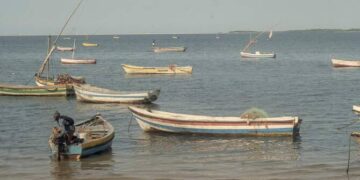
To the contrary, in recent times, the new livestock-exporting guidelines imposed by the Federal Government of Somalia have affected the livestock markets in Burao and Hargeisa. Products made by small-scale factories in Burao are no longer marketed in Puntland or other federal member states. Also, the closure of key trade corridors, including the recent one linking Erigabo to other regions, has disrupted vital economic connections, severely impacting Somaliland’s recovery. While the absence of international recognition has profound implications for Somaliland’s economic development. In an interview in September 2024, the former interior minister, Mohamed Kahin Ahmed, explained that the region is unable to access international financial markets or secure development aid from global institutions such as the World Bank and International Monetary Fund. However, the region has benefited significantly from foreign aid in various forms, provided by countries, non-governmental organizations (NGOs), and the diaspora. While peace did not require vast external financing. There was none available anyway at the time, save for remittance flows to Somaliland families, totaling an estimated $500–900 million annually by 2019.

The Path to a New Future

Despite its challenges, including economic constraints and limited international support, Somaliland has managed to create a functioning state with essential services and governance structures. The region’s successes highlight the potential for a peaceful and democratic alternative in a historically tumultuous area. All the same, reform of key sectors is needed to sustain revenue generation and create a more competitive economy, according to the World Bank. At length, in a study titled “The Role of Business in Maintaining Peace in Somaliland’’ by Musa Ahmed M. and Cindy Horst in 2017, it is argued that foreign private actors are important to attract capital, skills, and knowledge and could boost the local economy. They could also assist in improving the state’s autonomy from domestic business elites. As well, considering the political culture and weak institutional capacity in Somaliland, foreign actors may threaten the peace by affecting the delicate power balance between local actors and by introducing transnational interests.

While building the capacity of the human resources of the state, developing new policies that worked in the interest of the citizens, and implementing the existing policies would be key factors that would decisively affect the state’s efforts to develop and prosper. Needless to say, Somaliland desperately needs to establish responsible governance institutions that provide social services to those in need across the country. However, Somaliland’s stability and democratic governance contrast sharply with Somalia’s instability and the authoritarian regimes throughout the rest of the Horn. This is a chance to appear as a beacon of democracy in a sea of autocracies in the region.

ــــــــــــــــــــــــــــــ

This article expresses the views and opinions of the author and does not necessarily reflect the views of Qiraat Africa and its editors.
Source: Qiraat Africa
Tags: EthiopiaHorn of AfricaSomaliaSomaliland
Oyebamiji Usman Adesoji

Oyebamiji Usman Adesoji

Writer and researcher on business, entrepreneurship and geopolitical affairs.

Related Posts

DR Congo Military Court Issues Arrest Warrant for Corneille Nangaa
Central Africa

Rebel leader denounces US-DRC minerals deal one year after Goma’s fall

January 29, 2026
Zambia groups say freedom of expression under threat
Economy

Zambia is hopeful of agreement on debt restructuring terms with Afreximbank

January 29, 2026
Rwanda’s presidential election set for July 15, 2024
East Africa

Rwanda says UK owes $130 million over scrapped asylum scheme

January 28, 2026
Giant Dangote oil refinery to begin production in third quarter
Energy

Shipping data shows Indian diesel exports to West Africa at record high

January 28, 2026
Ex-Nigerian minister, Alison-Madueke faces bribery charges in London court
Economy

Nigeria lowers entry barriers to attract investors for latest oil round

January 28, 2026
Uganda’s constitutional court to hear challenges against anti-homosexuality law
East Africa

Uganda court releases prominent rights activist on bail

January 28, 2026

Search Qiraat Africa

No Result
View All Result

Follow on Twitter

Follow @africanqiraat

Trending

At least six killed in border clashes between South Sudan and Uganda

South Sudan government says rebel advance poses ‘serious threat to peace’

January 27, 2026
Brief History and Culture of the City of Lagos, Nigeria

Brief History and Culture of the City of Lagos, Nigeria

July 24, 2024
Republic of Congo to pass new gas code soon as it seeks to lure investment

Norway police file charges over suspected oil bribery in Congo Republic

January 26, 2026
More than 640,000 people affected by catastrophic Mozambique floods

More than 640,000 people affected by catastrophic Mozambique floods

January 25, 2026
Osei Tutu (c. 1660—c. 1717) , founder of the Asante nation

Osei Tutu (c. 1660—c. 1717) , founder of the Asante nation

December 6, 2025
The NYSC SCHEME in Nigeria: Impacts, Challenges, and the Path Forward

The NYSC SCHEME in Nigeria: Impacts, Challenges, and the Path Forward

June 19, 2025

Facebook

Sections

  • About Us
  • Privacy Policy
  • Opinion
  • Infographics
  • News
  • Analysis
  • Figures
  • Culture & Literature
  • Follow Ups
  • Historical Readings
  • Interview
  • Studies


© Copyright Qiraat Africa. Developed by Bunnaj Media .

No Result
View All Result
  • News
  • Analysis & Report
  • Studies
  • Opinion
  • Interview
  • Culture & Literature
  • Figures
  • Follow-ups
  • Historical Readings
  • Regions

© 2021 Copyright Qiraat Africa.