







Qiraat Africa
عربي  |  Fr
Advertisement
  • News
    • All
    • Climate Change
    • Economy
    • Education
    • Energy
    • Health
    • Migration
    • Mining
    • Politics
    • Security
    • Society
    • Sport
    Is Ethiopia’s Tigray barreling towards another war?

    Ethiopian Airlines cancels flights to Tigray region after clashes

    African governments look to Islamic finance after Benin sukuk success

    African governments look to Islamic finance after Benin sukuk success

    Ukraine says Niger’s move to cut relations is ‘regrettable’

    Gunfire, blasts rock Niger airport overnight before calm restored

    DR Congo Military Court Issues Arrest Warrant for Corneille Nangaa

    Rebel leader denounces US-DRC minerals deal one year after Goma’s fall

    Zambia groups say freedom of expression under threat

    Zambia is hopeful of agreement on debt restructuring terms with Afreximbank

    Rwanda’s presidential election set for July 15, 2024

    Rwanda says UK owes $130 million over scrapped asylum scheme

    Giant Dangote oil refinery to begin production in third quarter

    Shipping data shows Indian diesel exports to West Africa at record high

    Ex-Nigerian minister, Alison-Madueke faces bribery charges in London court

    Nigeria lowers entry barriers to attract investors for latest oil round

    Uganda’s constitutional court to hear challenges against anti-homosexuality law

    Uganda court releases prominent rights activist on bail

  • Analysis
    • All
    • Climate Change
    • Digital & Tech
    • Economy
    • Energy & Power
    • Health
    • Politics
    • Security
    • Society
    BRICS Plus and the Shifting Global Power Balance: Implications of South Africa’s Role

    BRICS Plus and the Shifting Global Power Balance: Implications of South Africa’s Role

    African Union suspends Niger over coup, prepares sanctions; France denies report it asked Algeria to use airspace for a Niger operation

    Leaders in Africa’s human rights institutions are being elected. Why it matters

    Sahel Alliance leaders meet in Bamako to deepen break with ECOWAS

    The AES and the Reconfiguration of Regional Security Architecture: A Look at the 2025 Bamako Summit

    US airstrikes in northern Nigeria: potential windfalls and dangers

    US airstrikes in northern Nigeria: potential windfalls and dangers

    Why France’s Focus is Shifting to Anglophone Africa

    Why France’s Focus is Shifting to Anglophone Africa

    UN believes hundreds were killed in Tanzania election protests

    Cameroon and Tanzania’s rulers clung to power in 2025—but look more vulnerable than ever

    General sworn in as Guinea-Bissau leader in swift coup after disputed vote

    Military and Politics in Guinea-Bissau

    Global power shifts are playing out in the Red Sea region: why this is where the rules are changing

    Global power shifts are playing out in the Red Sea region: why this is where the rules are changing

    Understanding Trump’s Christian Genocide Claim and Military Threat: What It Means for Nigeria-U.S. Relations

    Understanding Trump’s Christian Genocide Claim and Military Threat: What It Means for Nigeria-U.S. Relations

  • Studies
    Benin government says armed forces foil coup attempt

    Coup contagion? A rash of African power grabs suggests copycats are taking note of others’ success

    One in three South Africans have never heard of AI: what this means for policy

    One in three South Africans have never heard of AI: what this means for policy

    Social Media as a Catalyst for the Spread of Dangerous Wealth Ritual Myths

    Social Media as a Catalyst for the Spread of Dangerous Wealth Ritual Myths

    Overcoming Education Barriers for Young Mothers in Sub-Saharan Africa

    Overcoming Education Barriers for Young Mothers in Sub-Saharan Africa

    Youth Empowerment Through Vocational Training in Rural Sub-Saharan Africa

    Youth Empowerment Through Vocational Training in Rural Sub-Saharan Africa

    Manufacturers in Ghana and Nigeria claim that although corruption damages businesses, digital technologies provide a chance to combat it

    Manufacturers in Ghana and Nigeria claim that although corruption damages businesses, digital technologies provide a chance to combat it

    Environmental Threats and Conservation Efforts in Namibia

    Environmental Threats and Conservation Efforts in Namibia

    Your teachers’ level of knowledge affects how well you perform in class: perspectives from 14 French-speaking African nations

    Your teachers’ level of knowledge affects how well you perform in class: perspectives from 14 French-speaking African nations

    Islamic Finance in Nigeria: Between Islamization and Shariah Non-Compliance Polemics

    Islamic Finance in Nigeria: Between Islamization and Shariah Non-Compliance Polemics

  • Infographics
  • Figures
    What does a diary entry reveal about the West African origins of Apongo, a rebel leader in Jamaica?

    What does a diary entry reveal about the West African origins of Apongo, a rebel leader in Jamaica?

    Obafemi Awolowo (1909 – 1987): Nigerian statesman and influential advocate of independence

    Obafemi Awolowo (1909 – 1987): Nigerian statesman and influential advocate of independence

    Tunka Manin (c. 1010–1078), the last ruler of the Ghana Empire

    Tunka Manin (c. 1010–1078), the last ruler of the Ghana Empire

    Samuel Ajayi Crowther (1809-1891): First African Anglican Bishop

    Samuel Ajayi Crowther (1809-1891): First African Anglican Bishop

    Osei Tutu (c. 1660—c. 1717) , founder of the Asante nation

    Osei Tutu (c. 1660—c. 1717) , founder of the Asante nation

    Walter Sisulu (1912 – 2003): South African activist

    Walter Sisulu (1912 – 2003): South African activist

    Modibo Keïta (1915-1977): First President of Mali

    Modibo Keïta (1915-1977): First President of Mali

    Robert Mugabe (1924 – 2019): Revolutionary and former President of Zimbabwe

    Robert Mugabe (1924 – 2019): Revolutionary and former President of Zimbabwe

    Idi Amin Dada (1928 – 2003): Military officer and former President of Uganda

    Idi Amin Dada (1928 – 2003): Military officer and former President of Uganda

  • History
    The battles of Isandlwana and Rorke’s Drift

    The battles of Isandlwana and Rorke’s Drift

    Kimberley’s Big Hole, Northern Cape, South Africa

    Kimberley’s Big Hole, Northern Cape, South Africa

    Ogbunike Caves, Southeastern Nigeria

    Ogbunike Caves, Southeastern Nigeria

    Historic Town of Grand-Bassam

    Historic Town of Grand-Bassam

    Mandara Mountains, Northern Cameroon and Nigeria

    Mandara Mountains, Northern Cameroon and Nigeria

    Zong Massacre

    Zong Massacre

    Abomey, southern Benin

    Abomey, southern Benin

    Ifẹ̀, an ancient city in south-western Nigeria

    Ifẹ̀, an ancient city in south-western Nigeria

    Robben Island, South Africa

    Robben Island, South Africa

  • Others
    • Culture / Literature
    • Follow-ups
    • Interview
    • Opinion
  • Countries
    • Country profiles
    • Regions
      • Central Africa
      • East Africa
      • Southern Africa
      • West Africa
No Result
View All Result
  • News
    • All
    • Climate Change
    • Economy
    • Education
    • Energy
    • Health
    • Migration
    • Mining
    • Politics
    • Security
    • Society
    • Sport
    Is Ethiopia’s Tigray barreling towards another war?

    Ethiopian Airlines cancels flights to Tigray region after clashes

    African governments look to Islamic finance after Benin sukuk success

    African governments look to Islamic finance after Benin sukuk success

    Ukraine says Niger’s move to cut relations is ‘regrettable’

    Gunfire, blasts rock Niger airport overnight before calm restored

    DR Congo Military Court Issues Arrest Warrant for Corneille Nangaa

    Rebel leader denounces US-DRC minerals deal one year after Goma’s fall

    Zambia groups say freedom of expression under threat

    Zambia is hopeful of agreement on debt restructuring terms with Afreximbank

    Rwanda’s presidential election set for July 15, 2024

    Rwanda says UK owes $130 million over scrapped asylum scheme

    Giant Dangote oil refinery to begin production in third quarter

    Shipping data shows Indian diesel exports to West Africa at record high

    Ex-Nigerian minister, Alison-Madueke faces bribery charges in London court

    Nigeria lowers entry barriers to attract investors for latest oil round

    Uganda’s constitutional court to hear challenges against anti-homosexuality law

    Uganda court releases prominent rights activist on bail

  • Analysis
    • All
    • Climate Change
    • Digital & Tech
    • Economy
    • Energy & Power
    • Health
    • Politics
    • Security
    • Society
    BRICS Plus and the Shifting Global Power Balance: Implications of South Africa’s Role

    BRICS Plus and the Shifting Global Power Balance: Implications of South Africa’s Role

    African Union suspends Niger over coup, prepares sanctions; France denies report it asked Algeria to use airspace for a Niger operation

    Leaders in Africa’s human rights institutions are being elected. Why it matters

    Sahel Alliance leaders meet in Bamako to deepen break with ECOWAS

    The AES and the Reconfiguration of Regional Security Architecture: A Look at the 2025 Bamako Summit

    US airstrikes in northern Nigeria: potential windfalls and dangers

    US airstrikes in northern Nigeria: potential windfalls and dangers

    Why France’s Focus is Shifting to Anglophone Africa

    Why France’s Focus is Shifting to Anglophone Africa

    UN believes hundreds were killed in Tanzania election protests

    Cameroon and Tanzania’s rulers clung to power in 2025—but look more vulnerable than ever

    General sworn in as Guinea-Bissau leader in swift coup after disputed vote

    Military and Politics in Guinea-Bissau

    Global power shifts are playing out in the Red Sea region: why this is where the rules are changing

    Global power shifts are playing out in the Red Sea region: why this is where the rules are changing

    Understanding Trump’s Christian Genocide Claim and Military Threat: What It Means for Nigeria-U.S. Relations

    Understanding Trump’s Christian Genocide Claim and Military Threat: What It Means for Nigeria-U.S. Relations

  • Studies
    Benin government says armed forces foil coup attempt

    Coup contagion? A rash of African power grabs suggests copycats are taking note of others’ success

    One in three South Africans have never heard of AI: what this means for policy

    One in three South Africans have never heard of AI: what this means for policy

    Social Media as a Catalyst for the Spread of Dangerous Wealth Ritual Myths

    Social Media as a Catalyst for the Spread of Dangerous Wealth Ritual Myths

    Overcoming Education Barriers for Young Mothers in Sub-Saharan Africa

    Overcoming Education Barriers for Young Mothers in Sub-Saharan Africa

    Youth Empowerment Through Vocational Training in Rural Sub-Saharan Africa

    Youth Empowerment Through Vocational Training in Rural Sub-Saharan Africa

    Manufacturers in Ghana and Nigeria claim that although corruption damages businesses, digital technologies provide a chance to combat it

    Manufacturers in Ghana and Nigeria claim that although corruption damages businesses, digital technologies provide a chance to combat it

    Environmental Threats and Conservation Efforts in Namibia

    Environmental Threats and Conservation Efforts in Namibia

    Your teachers’ level of knowledge affects how well you perform in class: perspectives from 14 French-speaking African nations

    Your teachers’ level of knowledge affects how well you perform in class: perspectives from 14 French-speaking African nations

    Islamic Finance in Nigeria: Between Islamization and Shariah Non-Compliance Polemics

    Islamic Finance in Nigeria: Between Islamization and Shariah Non-Compliance Polemics

  • Infographics
  • Figures
    What does a diary entry reveal about the West African origins of Apongo, a rebel leader in Jamaica?

    What does a diary entry reveal about the West African origins of Apongo, a rebel leader in Jamaica?

    Obafemi Awolowo (1909 – 1987): Nigerian statesman and influential advocate of independence

    Obafemi Awolowo (1909 – 1987): Nigerian statesman and influential advocate of independence

    Tunka Manin (c. 1010–1078), the last ruler of the Ghana Empire

    Tunka Manin (c. 1010–1078), the last ruler of the Ghana Empire

    Samuel Ajayi Crowther (1809-1891): First African Anglican Bishop

    Samuel Ajayi Crowther (1809-1891): First African Anglican Bishop

    Osei Tutu (c. 1660—c. 1717) , founder of the Asante nation

    Osei Tutu (c. 1660—c. 1717) , founder of the Asante nation

    Walter Sisulu (1912 – 2003): South African activist

    Walter Sisulu (1912 – 2003): South African activist

    Modibo Keïta (1915-1977): First President of Mali

    Modibo Keïta (1915-1977): First President of Mali

    Robert Mugabe (1924 – 2019): Revolutionary and former President of Zimbabwe

    Robert Mugabe (1924 – 2019): Revolutionary and former President of Zimbabwe

    Idi Amin Dada (1928 – 2003): Military officer and former President of Uganda

    Idi Amin Dada (1928 – 2003): Military officer and former President of Uganda

  • History
    The battles of Isandlwana and Rorke’s Drift

    The battles of Isandlwana and Rorke’s Drift

    Kimberley’s Big Hole, Northern Cape, South Africa

    Kimberley’s Big Hole, Northern Cape, South Africa

    Ogbunike Caves, Southeastern Nigeria

    Ogbunike Caves, Southeastern Nigeria

    Historic Town of Grand-Bassam

    Historic Town of Grand-Bassam

    Mandara Mountains, Northern Cameroon and Nigeria

    Mandara Mountains, Northern Cameroon and Nigeria

    Zong Massacre

    Zong Massacre

    Abomey, southern Benin

    Abomey, southern Benin

    Ifẹ̀, an ancient city in south-western Nigeria

    Ifẹ̀, an ancient city in south-western Nigeria

    Robben Island, South Africa

    Robben Island, South Africa

  • Others
    • Culture / Literature
    • Follow-ups
    • Interview
    • Opinion
  • Countries
    • Country profiles
    • Regions
      • Central Africa
      • East Africa
      • Southern Africa
      • West Africa
No Result
View All Result
Qiraat Africa
عربي  |  Fr
No Result
View All Result
Home Analysis & Report

Why are West and Central African nations cutting military ties with France?

Oyebamiji Usman Adesoji by Oyebamiji Usman Adesoji
January 21, 2025
Ivory Coast: Emmanuel Macron’s envoy for Africa in discussion with Alassane Ouattara over “remodelling” of French military presence

Alassane Ouattara and Emmnanuel Macron

Share on FacebookShare on Twitter

West and Central Africa is home to 534 million people—half of them children (UNICEF, 2025). The World Bank notes that the subregion is rich in resources and brimming with opportunities. It has experienced high economic growth since the mid-2000s, powered by high commodity prices across natural resource-rich countries, before slowing down over the recent period. According to UNHCR, the UN Refugee Agency, political instability and armed conflict in West and Central Africa are expected to drive the number of forcibly displaced and stateless people up by 9% to 13.6 million in 2024, 8.4 million of them internally displaced. Throughout Africa, French rule was characterized by sharp contradictions between a rhetorical commitment to the “civilization” of indigenous people through cultural, political, and economic reform and the harsh realities of violent conquest, economic exploitation, legal inequality, and sociocultural disruption. At the same time, French domination was never as complete as the solid blue swathes on maps of “Greater France” would suggest.

Recently, French President Emmanuel Macron has irked West African leaders, particularly in Chad and Senegal, after lamenting that African countries “forgot to say thank you” for France’s decade-long military deployment to fight an Islamist insurgency during a meeting with French ambassadors. Alas, this follows Ivory Coast President Alassane Ouattara’s announcement that the 43rd BIMA marine infantry battalion at Port-Bouet in the capital, Abidjan, where French troops are stationed, would be handed over to domestic forces this month. With the withdrawal of its troops from the Ivory Coast, France now retains forces in Africa in only Djibouti and Gabon. In this regard, the following discussion will make readers understand the historical and ideological concept of Françafrique and why anger against France is growing in West and Central Africa today.

Françafrique and the Hidden Dynamics of French Power in Africa

After WWII, then French President Charles de Gaulle began la Francafrique, France’s informal sphere of influence in Africa. Apart from secretly vetting and backing African political elites, he also created the French colonies in the African monetary zone. These zones, which continue to exist today as the CFA, encompass 12 former colonies—Benin, Burkina Faso, Côte d’Ivoire, Mali, Niger, Senegal, Togo, Cameroon, Central African Republic, Chad, and Republic of the Congo—plus Guinea-Bissau and Equatorial Guinea. Together, they account for 14 percent of Africa’s total population, cover approximately 965,000 square miles, and represent 12 percent of the continent’s GDP. Françafrique refers to the complex system of political, economic, and military relationships between France and its former colonies in Africa, characterized by neocolonialism, paternalism, and corruption. From the time of independence onwards, Paris’ dominant presence in its former African empire has been based on three pillars. These are, namely, a network of French experts present at the state level of African countries, in financial, institutional, and educational structures. Secondly, the presence of French troops stationed in various military bases across the continent, as well as numerous French military advisers attached to African armies in senior advisory roles. Finally, a monetary pillar through the Communautés Financières d’Afrique Franc (CFA), made up of two CFA currencies. CFA is the common name for the two currencies circulating in the fourteen member countries of the zone, which is made up of two economic communities. These are the Communauté Économique des États de l’Afrique Centrale (CEEAC) and the Union économique et monétaire ouest-africaine (UEMOA), both printed by the Banque de France in Chamalières in Auvergne-Rhône-Alpes. The outer convertibility of the CFA in both communities is guaranteed by the French Treasury (Trésor public).

Read also

Ethiopian Airlines cancels flights to Tigray region after clashes

African governments look to Islamic finance after Benin sukuk success

Gunfire, blasts rock Niger airport overnight before calm restored

In addition to these, France works alongside African nations in the security and counter-terrorism fields, particularly in the Sahel region, by supporting the G5. The security of African countries is an important issue for France—since these challenges are shared, it would be unrealistic not to extend our efforts and surveillance to African countries. Peace and security in Africa are central to stability in France. Accordingly, France also contributes to African security by developing security and defense cooperation programs in a number of countries. By providing advice, training, and knowledge, it supports cooperation between African countries in fields ranging from cybersecurity to maritime piracy. An immediate An example was in 2013, when France’s then-President Francois Hollande was celebrated. in Mali for Operation Serval, a military intervention launched following a UN Security Council Resolution and a request for military assistance from Bamako that pushed back militant groups wreaking havoc in the region. Hollande touted the mission as a blueprint. for future cooperation, and the following year, the G5 Sahel—a regional security and development initiative—was established with French backing. However, aside from military partnerships, the landscape of economic and trade relations is rapidly changing in the Sahel. Geopolitical organizations like BRICS (the intergovernmental institution that includes Brazil, Russia, India, China, South Africa, Ethiopia, Iran, and the United Arab Emirates) have grown in stature and membership. China also provides an alternative trade and business partner away from Western former colonialist associates.

Impact of French Military Strategies in Africa: A Historical Perspective

The Industrial Revolution and the European countries’ need for raw materials, manpower, and markets had led them to acquire colonies in Africa, especially since the beginning of the 19th century. After the agreement of leading states on colonization in the Berlin Conference (1884), everything changed very fast. As late as the 1870s, only 10% of the continent was under direct European control. And by 1900, Europeans ruled more than 90% of the African continent. As for the French side, French West Africa was colonized between 1890 and 1914, and French-Ecuadorian Africa between 1899 and 1922. Before August 1914, no government had given serious thought to the potential contribution of French Africa, either in men or raw materials, to a war in Europe. The enormous losses on the Western Front led to the recruitment of French Africa’s first great conscript army. By the end of the war, French Africa had sent 450,000 soldiers and 135,000 factory workers to Europe.

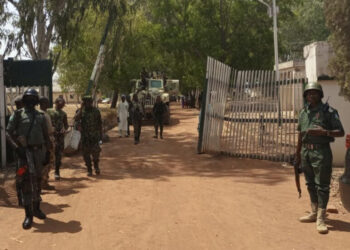
However, since the independence of French colonies in Africa, France has maintained a policy of economic, political, and military sway dubbed Françafrique, which included having thousands of permanent troops in the region. France still has 600 troops in Ivory Coast, 350 in Senegal, 350 in Gabon, and around 1,500 in Djibouti, and has had 1,000 troops in Chad. In addition, France’s defense ministry said the role of French troops in Africa is to train local soldiers and reinforce their capacities to fight extremism, mainly in peacekeeping, intelligence, and logistics. But critics say keeping boots on the ground also has allowed Paris to retain influence and protect political regimes favorable to France. Prof. Bruno Charbonneau, from Canada’s Royal Military College of Saint-Jean and an expert on peace and conflict interventions in West Africa, agrees: “The French military presence in Africa has also always allowed France to be at the heart of conflict resolution and management mechanisms in French-speaking Africa, particularly at the UN Security Council,” he says. Giving military support to friendly African regimes in this manner has meant France can project and protect its own interests and mount rapid armed interventions, he adds.

Ultimately, France has successfully used its security presence since decolonization to exert influence in countries where it has interests, maintaining both regional hegemony and its vision of order and stability. While that strength is still potent, strategic rationales for maintaining substantial presences are weakening, and, in addition to wary French and African public opinion, recent initiatives by the African Union also threaten to further weaken France’s interventionist reflex, such as the 2004 creation of the Peace and Security Council and its African Standby Force to—supposedly—allow Africans to intervene in their own affairs. Today, some former French colonies in Africa, such as Burkina Faso, Mali, Guinea, Niger, and Gabon, are fast gaining notoriety for military coups as people are losing hope in democracy in Francophone Africa, and since 2020, anti-French sentiments seem to have triggered some coups. Experts blame the worrying trend on high levels of poverty, poor governance, ineffective civil society, and, above all, excessive French influence, and these coups show changing ties with France.

The Growing Movement to Dismantle Françafrique

In 2021, Christophe Bigot, Africa and Indian Ocean Director at the Ministry for Europe and Foreign Affairs, explains the challenges for French diplomacy in Africa. He said, in many respects, France’s present and future are closely linked to those of Africa. However, increasing anti-French sentiments in former French colonies have seen France suffer diplomatic blows across the West and Central African region as its once-influential “Francafrique” sphere rapidly shrinks. Many governments and citizens, especially in the military-led countries of the Sahel, detest France’s real and perceived political interference in their countries. They see France as paternalistic for its deep involvement in sectors like mining and for its inability to decisively halt the spread of armed groups, despite thousands of French soldiers stationed in the region. Despite the move toward multilateralism, France hasn’t fully abandoned its traditional bilateral structure. According to Radio France International, France has yet to officially revise or renegotiate the secret and public defense treaties signed with a select number of African countries. Critics charge that France uses this secrecy, as well as ambiguous definitions of what defines internal or external threats, to intervene according to its own interests.

Mali, Niger, and Burkina Faso are all currently led by military juntas, following a series of coups across Africa’s Sahel region since 2020. This wave of military takeovers has earned the region its reputation as the “coup belt” and has drawn widespread international condemnation about the erosion of democratic governance. Yet, the coups and their military leaders are supported by many citizens within these countries who see them as liberating forces. While pushing out former Western allies, the military leaders in Burkina Faso, Niger, and Mali have increasingly pursued security and economic ties with Russia. Based on a report from Bismarck Analysis, local military commanders have used the power vacuum created by the French pullback to overthrow their civilian leaders. Bismarck Analysis was founded in 2017 to help companies, governments, philanthropists, and investors better understand the world. The report further noted the interest of other major players like the United States and, surprisingly, Russia in Africa. As reported by Al Jazeera, by January 2025, six African countries—Mali, Burkina Faso, Niger, Chad, Senegal, and Ivory Coast—had cut military ties with France. However, Wagner’s operations in several African nations, such as Mali, have drawn criticism, with human rights groups accusing its forces of severe abuses. Wagner forces have also reportedly arrived in Equatorial Guinea, where they are tasked with protecting its authoritarian leader, President Teodoro Obiang, mirroring the activities of the Russian mercenaries in the neighboring Central African Republic, where they have evolved into the dominant foreign force.

In the medium term, the withdrawal of French troops is likely to destabilize the region, alter power dynamics, and open opportunities for non-Western actors. The long-term impact will depend on the ability of regional powers, international organizations, and emerging global players to fill the void left by France. To the contrary, analyst Shaantanu Shankar of the Economist Intelligence Unit argues that it is impossible to say whether the departure of French forces led to the increased violence, but it did create a “huge security vacuum,” one that cannot be filled by Russia. Troops from the Russian private military company Wagner are being financed by the junta governments with fewer financial resources, he added. While many analysts argue that the decision of Senegal, Chad, and Côte d’Ivoire to end military relations with France, although under very different circumstances, is political, especially with the growing sentiments across borders. They argue that pandering to populism could give some sense of legitimacy to governments, especially in the case of Côte d’Ivoire, whose election is in nine months. In addition, having seen the outcome of anti-French sentiments in other countries, incumbent governments loathe losing their political powers and are doing what they can to keep them. In conclusion, the West and Central African nations military arrangements with France are failing due to their historical antecedents, the emerging world order, and the multidimensional challenges in the region during this time.
Source: Qiraat Africa
Tags: Central AfricaFrançafriqueFrench military basesWest Africa
Oyebamiji Usman Adesoji

Oyebamiji Usman Adesoji

Writer and researcher on business, entrepreneurship and geopolitical affairs.

Related Posts

DR Congo Military Court Issues Arrest Warrant for Corneille Nangaa
Central Africa

Rebel leader denounces US-DRC minerals deal one year after Goma’s fall

January 29, 2026
Zambia groups say freedom of expression under threat
Economy

Zambia is hopeful of agreement on debt restructuring terms with Afreximbank

January 29, 2026
Rwanda’s presidential election set for July 15, 2024
East Africa

Rwanda says UK owes $130 million over scrapped asylum scheme

January 28, 2026
Giant Dangote oil refinery to begin production in third quarter
Energy

Shipping data shows Indian diesel exports to West Africa at record high

January 28, 2026
Ex-Nigerian minister, Alison-Madueke faces bribery charges in London court
Economy

Nigeria lowers entry barriers to attract investors for latest oil round

January 28, 2026
Uganda’s constitutional court to hear challenges against anti-homosexuality law
East Africa

Uganda court releases prominent rights activist on bail

January 28, 2026

Search Qiraat Africa

No Result
View All Result

Follow on Twitter

Follow @africanqiraat

Trending

At least six killed in border clashes between South Sudan and Uganda

South Sudan government says rebel advance poses ‘serious threat to peace’

January 27, 2026
Brief History and Culture of the City of Lagos, Nigeria

Brief History and Culture of the City of Lagos, Nigeria

July 24, 2024
Republic of Congo to pass new gas code soon as it seeks to lure investment

Norway police file charges over suspected oil bribery in Congo Republic

January 26, 2026
Osei Tutu (c. 1660—c. 1717) , founder of the Asante nation

Osei Tutu (c. 1660—c. 1717) , founder of the Asante nation

December 6, 2025
More than 640,000 people affected by catastrophic Mozambique floods

More than 640,000 people affected by catastrophic Mozambique floods

January 25, 2026
The NYSC SCHEME in Nigeria: Impacts, Challenges, and the Path Forward

The NYSC SCHEME in Nigeria: Impacts, Challenges, and the Path Forward

June 19, 2025

Facebook

Sections

  • About Us
  • Privacy Policy
  • Opinion
  • Infographics
  • News
  • Analysis
  • Figures
  • Culture & Literature
  • Follow Ups
  • Historical Readings
  • Interview
  • Studies


© Copyright Qiraat Africa. Developed by Bunnaj Media .

No Result
View All Result
  • News
  • Analysis & Report
  • Studies
  • Opinion
  • Interview
  • Culture & Literature
  • Figures
  • Follow-ups
  • Historical Readings
  • Regions

© 2021 Copyright Qiraat Africa.