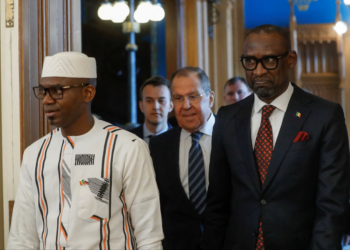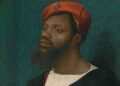












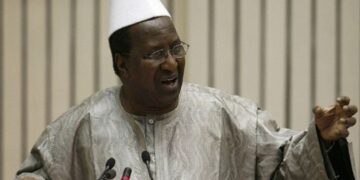


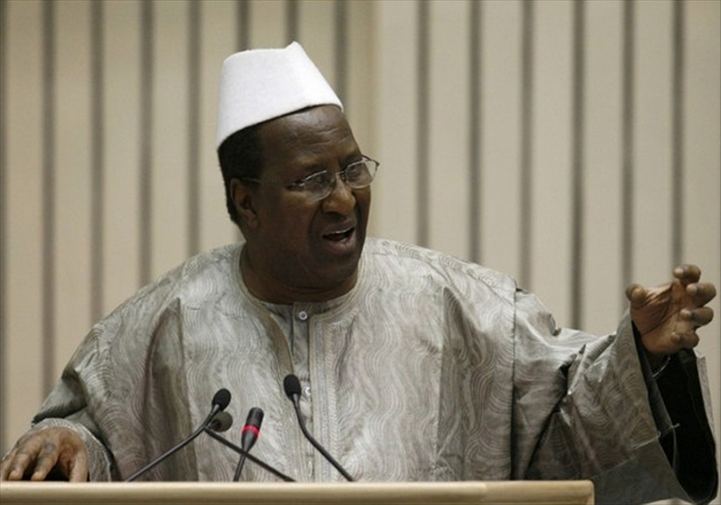
Alpha Oumar Konaré is an exceptional figure in contemporary African history, a combination of the qualities of an academic, a specialised historian, a field archaeologist, and a statesman who led his country through a critical transition. Konaré served two consecutive terms as President of Mali (1992-2002) and emerged as one of the key architects of multi-party democracy in West Africa.
Alpha Oumar Konaré was born on February 2, 1946, in Kayes, western Mali. He began his education in Mali before moving to Poland for postgraduate studies, where he earned a doctorate in history and archaeology from the University of Warsaw.
Konaré’s interest in archaeology stemmed from his view that it is a tool for reclaiming the African identity distorted by colonialism. Upon returning to Mali, he worked as a researcher and head of the Department of Historical and Archaeological Heritage, later becoming director of the National Museum in Bamako.
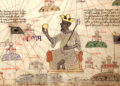
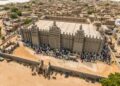
During his archaeological work, Konaré focused on protecting historical sites in Timbuktu and Djenné, striving to document oral history and connect it to material discoveries. He believed that a modern state could not be built without a deep awareness of its cultural roots, a conviction that later led him, as a politician, to invoke the symbols of the ancient Mali, Songhai, and Ghana empires in his political discourse to promote national unity.
Konaré began his political activism during a time when Mali was under the one-party rule of military leader Moussa Traoré. He engaged in both clandestine and public advocacy for freedoms, founding the magazine Les Echos (Echoes) and the newspaper Jamana as platforms for the intellectual opposition.
In 1990, he co-founded the Alliance for Democracy in Mali (ADEMA-PASJ), the party he would later lead to power. Following widespread popular protests in March 1991 and the military intervention led by Amadou Toumani Touré to overthrow Traoré, Konaré emerged as a civilian figure capable of leading the transition through elections.
In 1992, Konaré won the first multi-party democratic elections in the history of independent Mali. His presidency faced enormous structural challenges, ranging from a collapsing economy to ethnic tensions in the north. Decentralization as a Governance Strategy
The “decentralisation” project is considered Konaré’s most important administrative legacy. As an expert who understood the diversity of local communities, he recognised that a centralised governance in Bamako could not effectively manage a vast country like Mali. He divided the country into more than 700 communes, granting local authorities broad powers to manage their resources and affairs. The idea was to bring the state closer to the citizen and reduce the sense of marginalisation that fuelled separatist conflicts.
At the beginning of his rule, Konaré faced an armed Tuareg rebellion. Instead of relying solely on military force, he pursued a path of reconciliation. These efforts culminated in 1996 with the “Flame of Peace” ceremony in Timbuktu, where thousands of weapons surrendered by the rebels were burnt in a symbolic act reflecting his desire to turn the page on the war.
Konaré invested in cultural infrastructure on an unprecedented scale. During his reign, Mali hosted the 2002 Africa Cup of Nations, and numerous monuments, museums, and cultural centres were built. He viewed Mali as a “cultural superpower” despite its economic poverty and sought to use this asset to boost tourism and his country’s international standing.
Despite democratic achievements, Konaré’s rule was not without its criticisms and objections. Mali remained mired in extreme poverty and heavily reliant on foreign aid. Structural adjustment policies failed to deliver tangible improvements in the well-being of the working class.
His administration was accused of widespread nepotism and corruption within the ruling party, which subsequently eroded public trust in democratic institutions. Some analysts believe that the peace agreements he signed in the north were merely “palliative” and failed to address the deep-rooted causes of the crisis, the disastrous consequences of which manifested in the collapse of the state in 2012.
In 2002, Konaré set a rare precedent on the African continent by voluntarily stepping down after serving his two constitutional terms, rejecting attempts to amend the constitution to remain in power. His ambitions then shifted to the continental level, where he was elected Chairperson of the African Union Commission (2003-2008). During this period, he championed the idea of a “United States of Africa” and full economic and political integration. He adopted a firm policy against unconstitutional changes of government on the continent. He also worked to activate the African Union Peace and Security Council to intervene in continental crises without waiting for foreign intervention.
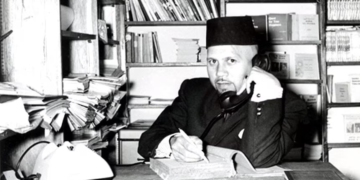
“The Academic President” Konaré was distinguished by his eloquent oratory style, blending political terminology with historical analysis. He preferred to wear traditional Malian dress to reinforce pride in local identity. Even after leaving official positions, he remained a cultural authority, returning to historical research and writing, emphasising that power is a means to serve historical thought, not an end in itself.
Alpha Oumar Konaré Quotes
“I witnessed with my own eyes China’s great achievements made in economic growth, and feel that China is quite capable to adjust to the development of international situations.
It’s not security measures, it’s not prisons in Madrid and walls in Africa that will solve the problem.” –
I hope progress will be achieved in the fields of culture and education, particularly as this year has been dedicated for African languages
The peoples of Africa have become fed up with wars and conflicts and, for this reason, the African Union is doing its best to resolve the conflicts in the continent.”
Without an African internal market, it is an illusion to believe that we can strive towards overseas markets.”
Haiti is an African country outside of Africa. The AU wants to help create conditions in which a new government can be democratically elected in Haiti.”
We call on all Somalis to desist from violence and use legitimate ways of participating in the reconstruction of their country.”
In my eye, China is a nation that can always be a friend and partner of Africa.”