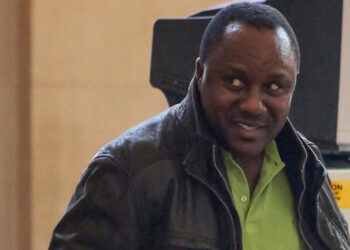











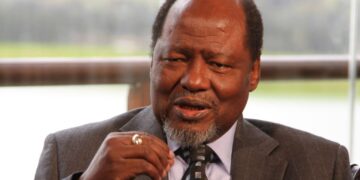


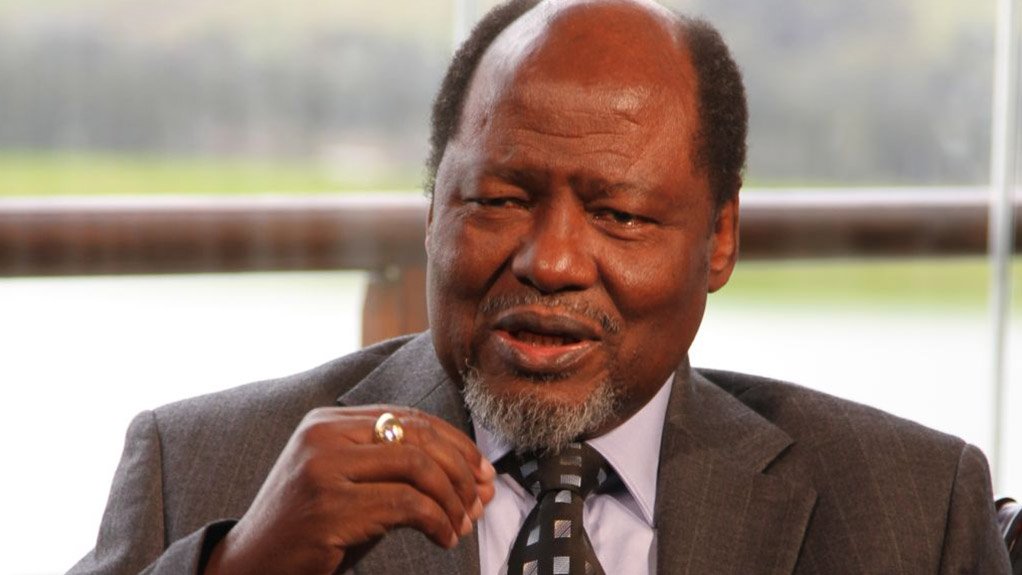
Joaquim Alberto Chissano is a prominent political figure who shaped the state of Mozambique and the Southern African region during the second half of the 20th century and the beginning of the 21st century. Chissano’s career was the embodiment of radical transformations that his country underwent, from the struggle against Portuguese colonialism, through a bloody civil war, to the establishment of a democratic system and a market economy.
Joaquim Chissano was born on October 22, 1939, in the village of Chibuto in the Gaza region of Mozambique. He received his primary education in Catholic schools, then moved to the capital, Lourenço Marques (now Maputo), to pursue his secondary education, where he was among the first Black students permitted to attend elite Portuguese schools. Chissano became involved in politics early on, moving to Portugal to study medicine. However, his anti-colonial activism attracted the attention of the Portuguese secret police, forcing him to flee to France and then Tanzania. There, he joined the Mozambican Liberation Front (FRELIMO) upon its founding in 1962, becoming close to its first leader, Eduardo Mondlane, and later Samora Machel.
During the War of Independence (1964–1974), Chissano played a military role and distinguished himself as a skilled diplomat. He represented FRELIMO in Tanzania and played a pivotal role in garnering international support for the Mozambican cause.
Following the signing of the Lusaka Accord in 1974, which paved the way for independence, Chissano was appointed head of the transitional government. With the formal declaration of independence on June 25, 1975, he assumed the post of Minister of Foreign Affairs, a position he held for 11 years. During this period, Chissano became “the face of Mozambique to the world”, managing his country’s complex relations during the Cold War, attempting to balance the alliance with the Eastern Bloc with the need for pragmatic relations with the West to alleviate economic pressures.
In 1986, President Samora Machel was killed in a questionable plane crash, leaving Chissano with a major responsibility at a critical juncture. He assumed the presidency with the country engulfed in a brutal civil war between the government (FRELIMO) and the Mozambican National Resistance (RENAMO), which was then supported by the apartheid regimes of South Africa and Rhodesia.
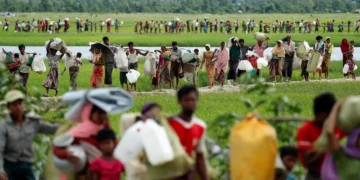
Chissano recognised from the outset that a military solution would not resolve the conflict, which had already claimed nearly a million lives and displaced millions more. He embarked on a path of negotiation characterised by patience and quiet diplomacy.
Chissano’s efforts culminated in the signing of the General Peace Agreement in Rome in 1992 with opposition leader Afonso Dhlakama. This marked a pivotal turning point; Chissano agreed to abandon the one-party system and embrace a multi-party democracy.
This was followed by the adoption of a new constitution in 1990, which enshrined freedom of the press, multi-party politics, and judicial independence. In 1994, the first democratic elections in the country’s history were held, and Chissano won, thus cementing his legitimacy not only as a revolutionary leader but also as a democratically elected president.
Chissano inherited a completely shattered economy; Mozambique was ranked as the poorest country in the world. He spearheaded a radical economic transformation, moving the country from Marxist central planning to a free market economy. His government collaborated with the World Bank and the International Monetary Fund to implement reforms that included privatisation, reducing inflation, and attracting foreign investment.
Under his leadership, Mozambique experienced high economic growth rates, sometimes reaching 10% annually, which was considered an “economic miracle” in the post-war context. Yet, despite macroeconomic growth, Chissano faced criticism for the widening gap between rich and poor, persistently high levels of illiteracy and inadequate healthcare, and the AIDS epidemic, which decimated the workforce.
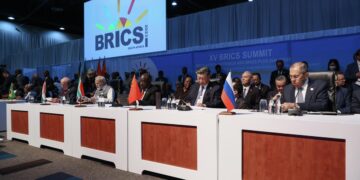
Chissano’s influence extended beyond domestic affairs; he became a prominent voice within the African Union and the Southern African Development Community (SADC). Known for his ability to resolve conflicts, he acted as a mediator in numerous African crises, from Uganda to Madagascar and Zimbabwe.
On his foreign policy, he successfully transformed Mozambique from a country isolated by the West due to its socialist leanings into a strategic partner of the United States and the European Union while maintaining strong relations with China and Russia.
In an unusual move in African politics at the time, Chissano announced in 2004 that he would not run for a third presidential term, even though the constitution allowed him to. He peacefully handed power to his successor, Armando Guebuza, in 2005. This decision was a major factor in his receiving the Mo Ibrahim Prize for Excellence in African Leadership in 2007. The prize committee considered Chissano to have set an example of leadership that prioritises the national interest and institutional stability over personal ambition to remain in power.
Looking at Chissano’s rule, he is credited with ending one of Africa’s longest and most violent civil wars, establishing a solid democratic infrastructure, and achieving financial stability that reduced the country’s external debt. However, his administration faced accusations of widespread administrative corruption within the state and the ruling party. He was also criticised for the slow dissemination of the benefits of economic growth to rural and marginalised communities, leaving large segments of the population below the poverty line.
Chissano’s activities did not cease after leaving the presidential palace; he continued to serve as a special envoy for the United Nations in several conflict zones, most notably his efforts in negotiating with the Lord’s Resistance Army in Uganda. He also serves on several international advisory boards and organisations concerned with development and leadership in Africa.