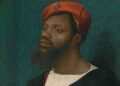















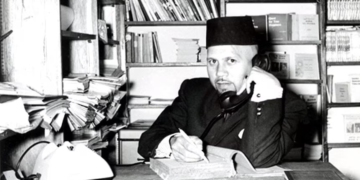







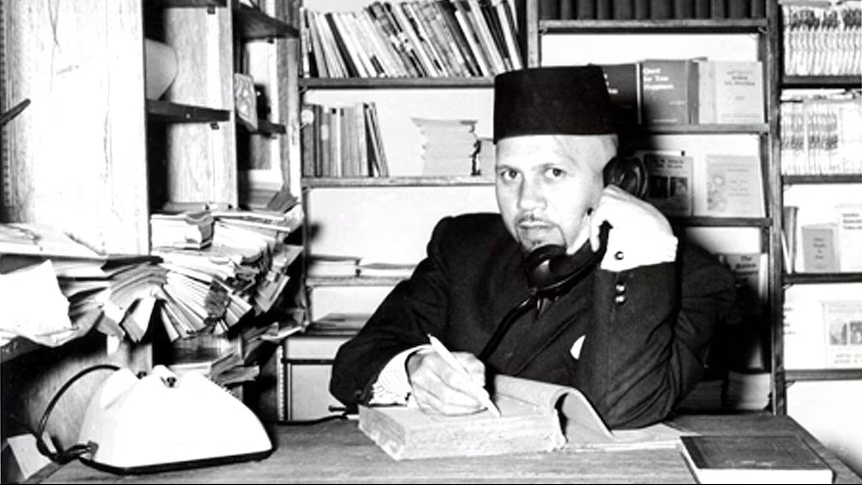
Imam Abdullah Haron represents a pivotal figure in the history of the South African struggle against apartheid. He was a religious leader in the Cape Town area and an intellectual and activist bridge connecting Islamic principles of social justice with the broader national liberation movement.
Abdullah Haron was born in 1924 in the Claremont area of Cape Town. He grew up in an environment marked by the economic and social marginalization imposed by colonialism, a situation that was later exacerbated by the rise of apartheid. He received his early education in local schools, but his passion for Islamic studies led him to Mecca in the 1940s, where he spent two years immersed in Islamic sciences. Upon his return to South Africa, Haron brought theoretical knowledge and a reformist vision.
In 1955, he was appointed imam of the University Mosque in Claremont, one of the oldest mosques in the region. This appointment was a turning point; at the age of 31, he represented a new generation of imams who did not confine themselves to preaching within the mosque but went out to address pressing societal issues.
Under the leadership of Imam Haron, Al-Jamia Mosque transformed from a place of worship into a center for social and political activism. His sermons focused on issues of poverty, education, and human rights, citing Quranic verses that urge support for the oppressed and resistance against injustice.
The Imam founded the Claremont Muslim Youth Association to raise awareness among young Muslims about their responsibilities to their country. He believed that a Muslim could not remain neutral in a struggle between right and wrong and that remaining silent in the face of injustice was a betrayal of religious principles.
In 1960, he helped found the community newspaper Muslim News (1960-1986), the first Islamic periodical in South Africa, which served as a platform for disseminating political news and analyzing the unjust laws imposed by the regime, making it an effective tool for raising political awareness among both Muslims and non-Muslims.
One of Imam Haron’s greatest contributions was his ability to forge alliances that transcended racial and religious boundaries. At a time when the apartheid regime sought to fragment society into isolated racial enclaves, the Imam established close ties with major liberation movements such as the African National Congress (ANC) and the Pan-African Congress (PAC).
Imam Haron was one of the few who could connect Muslim communities (often categorized as “colored”) with the oppressed Black majority. He organized fundraising campaigns for the families of political prisoners and provided material and moral support to victims of the Collective Areas Ordinance, which forcibly displaced thousands from their homes.
In the mid-1960s, Imam Haron traveled to Egypt, Saudi Arabia, and the United Kingdom. During these trips, he met with leaders of liberation movements in exile and international officials, explaining the nature of the suffering in South Africa and seeking support for the cause. These international activities made him a “dangerous figure” in the eyes of the apartheid regime’s intelligence services.
On May 28, 1969, the security police arrested Imam Abdullah Haron under Section 6 of the Terrorism Act. This law allowed authorities to detain individuals without trial for indefinite periods for investigative purposes. He spent 123 days in solitary confinement at Caledon Square Prison. During this time, he was cut off from the outside world, and neither his family nor his lawyer was permitted to visit him.
On September 27, 1969, the authorities announced the death of Imam Haron in his cell. The police claimed that he had died from a fall down the prison stairs. However, the initial autopsy report revealed 26 bruises and lacerations on his body, along with fractured ribs and severe internal injuries that could not have resulted from a simple fall.
His death sparked widespread outrage. More than 40,000 mourners attended his funeral, a massive political and symbolic demonstration against the regime. Despite clear evidence of torture, the official 1970 inquiry concluded that “no one was responsible” for his death, a finding that remained a stain on the apartheid justice system for decades.
The story of Imam Haron did not end with his death; his family and activists continued to demand the truth. More than half a century later, as a result of legal and public pressure, the inquiry into the circumstances of his death was reopened in 2022. In October 2023, Judge Daniel Thulare issued a landmark ruling that overturned the long-standing official narrative. The new investigation, based on forensic expert testimony and historical documents, concluded that:
- Imam Abdullah Haron was deliberately killed as a result of severe physical and psychological torture at the hands of members of the police’s “Security Branch.”
- The story of his fall down the stairs was a complete fabrication to cover up the crime.
- The responsibility lies with the state and the investigating officers who carried out his torture.
This verdict was a vindication for the Imam’s family, a victory for South African national memory, and an exposure of the brutal methods used by the apartheid regime to silence dissenting voices.
Today, Imam Abdullah Haron left a legacy that extends far beyond the institutions he founded. His life inspired generations of South African Muslims to engage in political activism and reject the separation of worship from confronting social injustice. He embodied the idea that the struggle against racism is a shared human cause, helping to bridge the divide between the country’s diverse religious communities.
Numerous books have been written about his life, documentaries have been produced, and his biography is studied in school curricula as a model of peaceful and intellectual resistance.