
































The Bafut Chiefdom, located in the Northwest Region of Cameroon, is one of the most prominent and powerful traditional kingdoms in the Grassfields. It represents a unique model of political and social organization that has withstood the winds of colonial and post-colonial change, preserving its cultural identity and centuries-old administrative structure.
The Bafut people trace their origins to the Tikar groups who migrated from the northern regions of present-day Cameroon. According to oral tradition, the founding of the chiefdom was linked to a search for fertile land and strategic locations that offered protection and resources. These groups settled on the Bafut Plateau, where the high hills and temperate climate allowed for the development of a settled agricultural society.
Bafut evolved from a collection of small villages into a powerful, centralized kingdom under the leadership of the Fon, the title given to the king. Over time, Bafut extended its influence over neighboring regions, not only through military force but also through a complex system of political alliances and marriages that made it a regional powerhouse in trade and politics.
The Bafut system of government is characterized by a delicate balance between central authority and traditional institutions that function as checks and balances.
- The Fon: The Fon is the ruler and represents the apex of the political and spiritual hierarchy of the chiefdom. He is chosen from among the sons of the deceased king through a secretive and complex process conducted by councils of elders. Once installed, the Fon becomes sacred, and his actions and decisions are subject to strict protocols designed to maintain his prestige and symbolic status.
- The Kwifor Council: The Kwifor is considered the most powerful secret society in Bafut, functioning as both the executive and judicial body. This council is composed of non-royal individuals, ensuring a mechanism to check Fon power and prevent tyranny. The Kwifor is responsible for enforcing laws, administering major rituals, and acting as a mediator in significant disputes.
- Council of Elders and Local Chiefs: The chiefdom is divided into districts or small villages, each headed by a local chief (sub-chief) who represents the Fon in their region. These chiefs form an advisory council that contributes to shaping public policy and conveying the needs of the population to the royal palace.
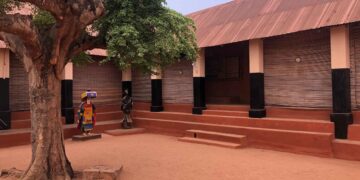
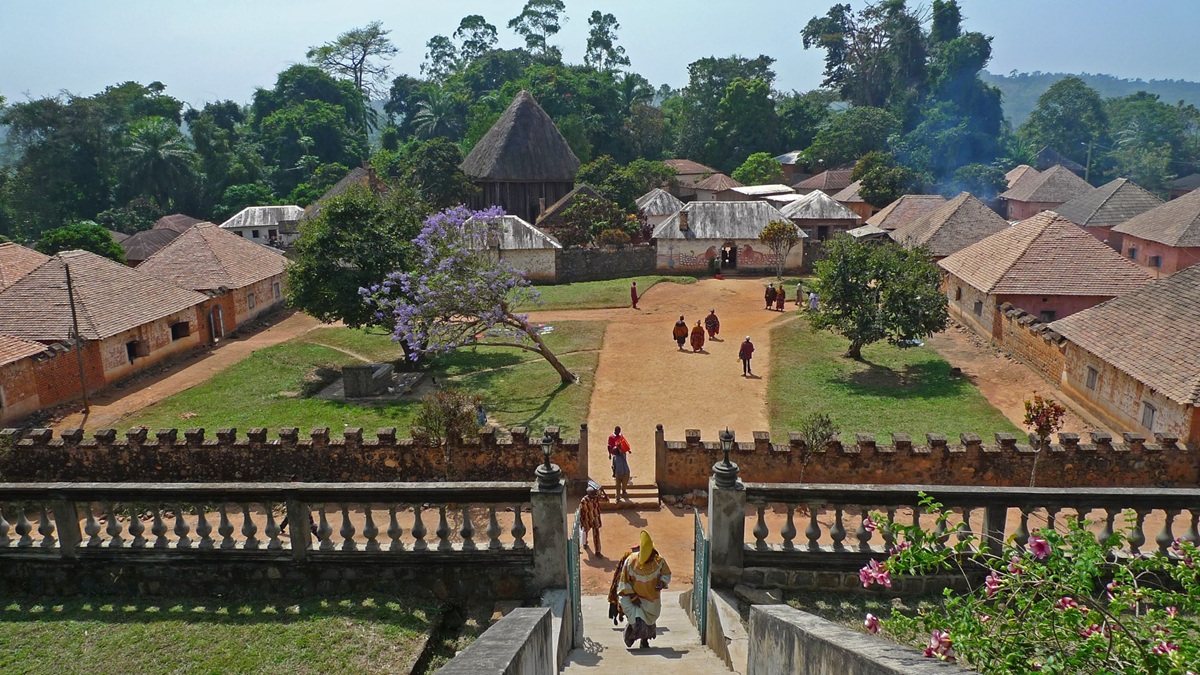
The Fon’s Palace is the beating heart of the chiefdom and a UNESCO World Heritage Tentative List site. It comprises over 50 buildings, surrounded by sacred woodlands and ceremonial spaces. The Achum Shrine is the most important structure within the palace and serves as the sacred ancestral shrine. Its unique architectural design utilizes local materials such as thatch, bamboo, and clay. The high conical roof and hand-carved wooden decorations reflect the skill of Bafut’s artisans and express profound cosmic and religious concepts.
The Achum is off-limits to outsiders and unauthorized individuals, as it is where the most sacred rituals associated with renewing the king’s power and protecting the kingdom take place. The building was partially destroyed during the colonial wars with the Germans but was meticulously reconstructed to preserve its original character.
The late 19th and early 20th centuries saw violent confrontations between the Bafut chiefdom and German colonial forces. These confrontations became known as the Bafut Wars. Tensions began when German expeditions attempted to penetrate the region to control trade routes and exploit labor. The Bafut people offered fierce and organized resistance, using their mountainous terrain to their advantage. In 1901, German forces launched a major offensive, burning large parts of the palace and the town. Despite being outnumbered, the resistance continued for years, eventually forcing the Germans to adopt a policy of indirect administration, recognizing the traditional authority of the Fon in exchange for loyalty to the colonial administration.
After World War I, control of the region passed to the British Mandate, which reinforced the Native Authority system, allowing the Bafut chieftaincy to maintain its traditional administrative and judicial structure within the British colonial framework.
Social life in Bafut is based on a strong caste and family system, where extended families play a pivotal role in preserving values.
- Abine-Mfor: The largest annual festival, it celebrates the end of the harvest and renews allegiance to the Fon. It features traditional dances, elaborate costumes, and music featuring drums and wind instruments. The festival is an opportunity to showcase the cultural strength and social cohesion of the chiefdom.
- The Role of Women: Women, especially the Queen Mother and Fon wives, play important advisory and social roles. Traditional women’s associations exist, such as the Takumbeng, a powerful women’s association that intervenes in political and social crises to protect the community and enforce moral order.
- Handicrafts: Bafut is renowned for its weaving, wood carving, and pottery. These crafts are not merely commodities but also vehicles for transmitting cultural and historical symbols.
The Bafut Chiefdom today faces the dual challenges of modernization and the contemporary political crises in Cameroon. Bafut lies at the heart of the English-speaking region, which is experiencing conflict between the central government and separatist movements. This conflict has significantly impacted the stability of the chiefdom, placing immense pressure on the palace and local communities, displacing many residents, and threatening the continuity of certain rituals and cultural practices.
The chiefdom strives to balance preserving its traditional agrarian identity with the demands of the modern economy. Bafut has become an educational center with numerous schools and institutions, fostering a new generation that seeks to connect ancestral heritage with future aspirations.
Ongoing efforts are underway to promote Bafut as a cultural tourism destination. Preserving the palace and developing local museums aim to make heritage a source of national income and to strengthen national pride.