





































The Ogbunike Caves, located in Anambra State in southeastern Nigeria, are one of the most prominent geological and cultural landmarks in West Africa. Situated in a deep valley covered by dense tropical forests, specifically in the Oyi Administrative Area, the caves represent a complex system of interconnected caves, formed over millions of years by geomorphological processes and groundwater.
The Ogbunike Caves consist of an extensive network of caves and passages divided into different levels. Scientifically, these caves belong to the sedimentary formations, where water flowing from small rivers and underground springs played a major role in carving the sandstone and limestone rocks over millennia.
The entrances and passages consist of
- Access: Reaching the main cave entrance requires descending a stone staircase of approximately 317 steps, constructed by the state government to facilitate movement up the steep slope.
- Chambers: The caves contain 10 large main chambers connected by narrow, winding passages. Some of these passages require crawling to navigate, while others are quite steep.
- Water System: A small river flows from within one of the chambers into the nearby River Nkido. An interesting phenomenon at this site is the temperature contrast; visitors can observe warm water flowing from the caves meeting the cold river water at a specific point.
For the Igbo people who inhabit the region, Ogbunike Caves are more than just a rock formation; they are a site of profound historical and spiritual significance. The caves played a vital role as a natural refuge during periods of historical turmoil. Local oral traditions indicate that the inhabitants used the caves to shelter from slave traders during the era of the transatlantic slave trade. The caves also gained strategic importance during the Nigerian Civil War (Biafra War, 1967–1970), when civilians and combatants sought refuge there from aerial bombardment and military operations.
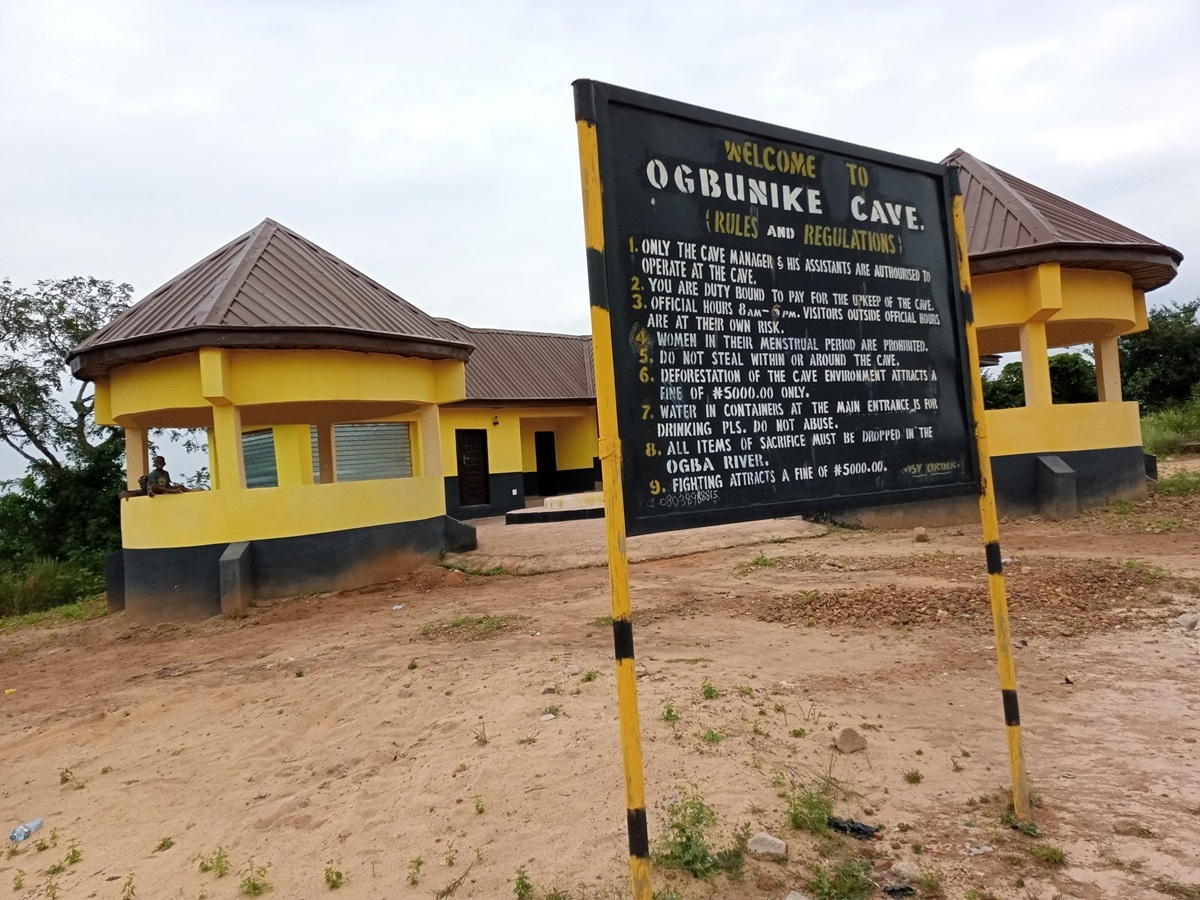
The caves are surrounded by a set of customary rules that are still observed today. Visitors are required to remove their shoes before entering as a sign of respect for the sanctity of the place, according to local beliefs that consider the caves to be the dwelling place of spiritual beings.
The area surrounding the caves boasts unique biodiversity. The surrounding forest is part of a tropical rainforest belt and is home to numerous rare bird and plant species. Inside the caves, large colonies of bats live, playing a vital ecological role in pollinating plants and controlling insects in the surrounding area. Small aquatic organisms also inhabit the pools scattered throughout the rock chambers.
Ogbunike Caves was included on UNESCO’s Tentative List of World Heritage Sites in 2007. This inclusion was based on criteria combining outstanding natural value with enduring cultural relevance.
According to UNESCO:
“Ogbunike caves are associated with living traditions and are said to be used by the people for many centuries. The site still retains its historical and spiritual significance. There is an annual festival called “Ime Ogbe” celebrated in commemoration of the discovery of the caves. The biodiversity of the site has remained almost in tact. The integrity of the site can be attested to by the presence of the primary forests around the caves. The Nkisa River flows by the side of the caves into which the water that drains from the caves empties itself. At that point, where the difference in temperature is felt between the river and the water from the rock. The entire site is within ranges of undulating hills and valleys which stretch across other communities and farmlands. The site has sufficient boundaries (20 hectares) to protect its values from direct effects of human encroachment.”
“The Ogbunike caves like the ancient cave temple of Arochukwu in Abia State of Nigeria were a symbol of justice. Ogbunike caves have attractive waterfall at the North West part of the cave that could compare to Kalambo falls in East Africa. The caves are believed to have been in existence for centuries with minimal defacement. The caves occupy a large expanse of area.”
The caves attract thousands of visitors annually, from geologists to adventure tourists. Exploring the caves is characterized by high humidity and complete darkness in some areas, requiring the use of flashlights and the accompaniment of experienced local guides familiar with the passageways to avoid getting lost.
Despite its immense importance, the site faces serious challenges that threaten its sustainability. Population growth in the areas surrounding the town of Ogbunike is eroding the forest that protects the caves, potentially impacting the hydrological system and local climate within the caves.
The area also lacks the necessary modern tourist facilities (hotels, information centers, and well-paved roads) befitting a UNESCO World Heritage Site, limiting the economic benefits for the local community. Some visitors leave plastic waste in the waterways, threatening wildlife (especially bats and aquatic life) and marring the natural beauty of the area. Similarly, heavy rainfall, exacerbated by climate change, is increasing the erosion of the stone staircases and entrances, requiring costly and regular maintenance.
In comparison to other caves worldwide, Ogbunike Caves stand out as “living caves,” as natural processes such as water dripping and the formation of stalactites and stalagmites are still actively occurring. Their close connection to the contemporary identity of the region’s inhabitants also gives them an anthropological significance that transcends mere touristic value.