

































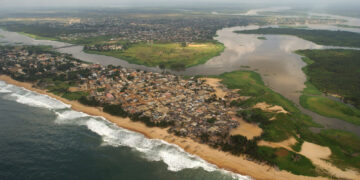

The historic town of Grand-Bassam in Ivory Coast embodies the era of French colonialism in West Africa and its political and social transformations. Located about 40 kilometers east of the economic capital, Abidjan, the city derives its significance from having been the country’s first colonial capital between 1893 and 1896. Due to its historical and architectural value, UNESCO inscribed it on the World Heritage List in 2012.
Grand-Bassam enjoys a strategic and geographically advantageous location, situated on a narrow coastal strip separating the Atlantic Ocean from Ébrié Lagoon. This location made it a natural harbor and a base for French commercial and administrative operations at the end of the 19th century. However, the sandy terrain and humid tropical climate have presented structural challenges to the sustainability of construction and urban growth.
The city is divided into two main areas separated by the lagoon: the new city, where most of the current population lives, and the “colonial quarter” (Quartier France), which contains the historical landmarks.
The historic quarter is characterized by architecture dating from the late 19th and early 20th centuries, based on functional principles adapted to the local climate. Buildings feature high ceilings, large windows facing each other to ensure natural ventilation, and spacious balconies that protect the walls from direct sunlight and heavy rain. Local and imported building materials, such as brick, wood, and early concrete, were used, creating an aesthetic blend that combines European identity with the African environment.
Grand-Bassam witnessed events that shaped the future of modern Ivory Coast, and its history can be divided into pivotal phases. In 1893, France chose Grand-Bassam as the administrative center of its new colony due to its strategic location on the coast. During this period, major administrative buildings such as the Governor’s Palace, the courthouse, and post and customs offices were constructed. However, the outbreak of yellow fever in 1896 led the French administration to relocate the capital to Bingerville, causing a gradual decline in the city’s political importance.
Despite losing its status as the capital, Grand-Bassam remained a major commercial center until the 1930s. The city was the primary export hub for cocoa, coffee, timber, and vegetable oils destined for Europe. The construction of the wharf facilitated the movement of large ships, making it a vital link in the colonial economy.
The city is considered a symbol of national resistance; in 1949, Grand-Bassam witnessed a historic march by Ivorian women who walked from Abidjan to Bassam prison to demand the release of political leaders imprisoned by the colonial authorities. This event cemented the city’s place in political memory as a “cradle” of liberation movements.
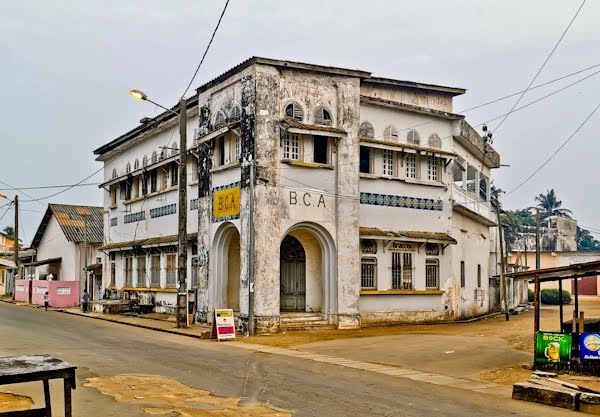
UNESCO designated Grand-Bassam a World Heritage Site based on specific criteria, the most important being that it provides exceptional evidence of cultural exchange between Europe and Africa. The city’s urban planning reflects the class and racial segregation prevalent during the colonial era, with European residential areas geographically and administratively separated from those of the local population. This serves as a tangible record of the social and political history of that period.
According to UNESCO:
“Grand-Bassam bears witness, through its well preserved urban organisation, to an important cultural tradition linked to its role as a colonial capital, an administrative centre for the former AOF (Afrique occidentale française) and a regional commercial hub. From the 1880s to the 1950s, the town brought together various African, European and Middle Eastern populations. Cohabitation between them was harmonious but at the same time conflictual.
“Grand-Bassam constitutes an outstanding example of rational colonial town planning, with its specialised quarters in an overall urban network in which vegetation has an important role. The colonial architecture is characterised by a sober and functional style, using principles of hygiene adapted to a tropical location. The organisation of the vernacular house in the N’zima village echoes this approach, expressing the permanency of indigenous values.”
Today, Grand-Bassam faces complex challenges that threaten the preservation of its architectural and historical heritage. Due to high humidity and salinity from the ocean, many historic buildings suffer from wall erosion and roof collapses. The exorbitant costs of restoration prevent property owners from maintaining them according to strict historical standards. • Urban sprawl: Population pressure from neighboring Abidjan has transformed the city into a residential and tourist area, threatening to alter the tranquil character of the historic district in favor of modern tourist facilities.
Despite its international ranking, the city still needs a developed tourism infrastructure capable of attracting visitors while preserving the scientific and archaeological value of its sites. Beyond its colonial history, Grand-Bassam is a vibrant cultural center. The local population (especially the Aban ethnic group) is famous for the annual Abissa festival, a traditional celebration held at the end of the year to purify the community and celebrate national unity. This festival attracts thousands of tourists and reflects the city’s authentic African character, which has not been erased by European architecture.
The city has also become home to many artists and artisans, with woodcarving, pottery, and traditional textile workshops scattered throughout its historic alleyways, transforming it into an “art village” that contributes significantly to the local economy.
Tourism economy: Today, Grand-Bassam relies heavily on beach and cultural tourism. The city’s expansive beaches make it a prime weekend getaway for Abidjan residents, while hotels and restaurants housed in restored colonial buildings offer a blend of relaxation and historical charm. However, there is criticism regarding the extent to which the local community benefits from this tourism revenue, which is often concentrated in the hands of large investors.