






















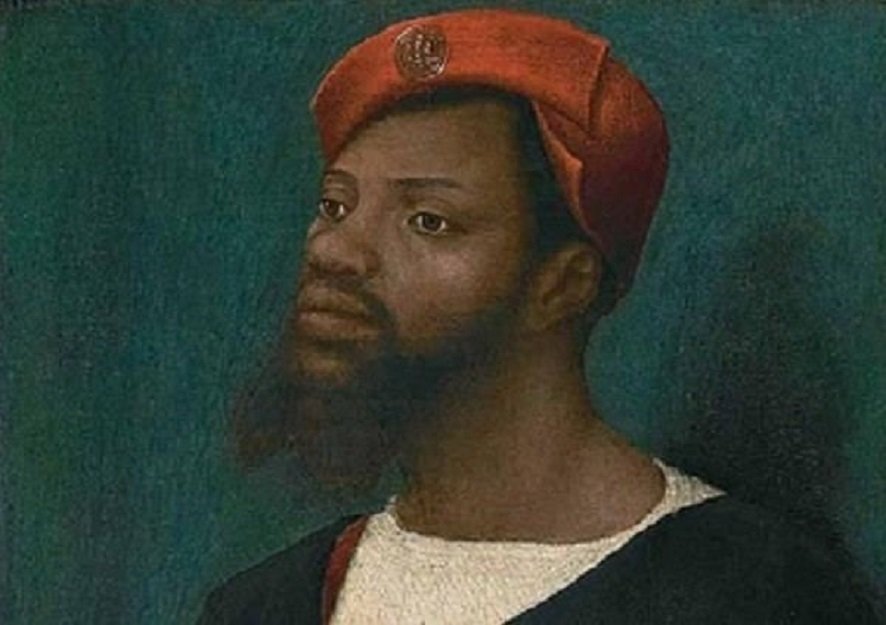
Some historians believe King Tunka Manin represents the zenith of the political and economic power of the ancient Ghana Empire (Wagadu/Wagadugu) before its historical decline. Manin ruled in the 11th century CE, a period marked by significant religious and political transformations in the region.
Tunka Manin, also known as Tunkamenin, born around 1010 AD, was a Ghanaian ruler who reigned from 1062 to 1076 AD. King Bassi was his forefather. Manin was crowned king because he was the son of the former ruler’s sister. He succeeded Bassi in 1062 AD because of the matrilineal succession system prevalent in the Ghana Empire.
This system ensured the continuation of royal blood within the ruling line through the mother, a tradition common in many African kingdoms. Upon his ascension to the throne, the Ghana Empire dominated a vast territory encompassing parts of present-day Mauritania, Mali, and Senegal.
The renowned Andalusian geographer Abu Ubayd al-Bakri described him in his book “Kitāb al-Masālik wa-l-Mamālik (Book of Roads and Kingdoms),” noting that Manin possessed great prestige and absolute power and was regarded as a ruler capable of maintaining a balance of power among the tribes that comprised the empire.
Tunka Manin’s rule was characterized by strong administrative centralization, relying on the efficiency of the royal court in Koumbi Saleh (the capital). The king maintained a direct system of communication with his subjects. Historians recount that Manin would go out daily to listen to the people’s grievances. He would sit in a domed chamber adorned with gold and jewels, surrounded by his army commanders and ministers, with horses saddled with gold and guard dogs wearing collars of precious metals before them.
Although Tunka Manin adhered to the traditional religion of the nation (which centered on ancestor veneration and the worship of natural phenomena), he demonstrated political acumen in his dealings with Muslim merchants and scholars. Manin permitted the construction of mosques within the capital and employed many Muslims as ministers and scribes in his court, given their literacy and numeracy skills—essential for managing an empire dependent on international trade.
Gold was the backbone of Manin’s power. Controlling the Bambouk and Bouré mines allowed him to dominate the global gold markets of the time. To stabilize the value of gold and prevent inflation, the king decreed that all gold bullion belonged to the royal treasury, while gold dust was left for traders and the general public to circulate.
He imposed a strict tax system on trans-Saharan trade caravans. Traders paid a tax of one gold dinar for every donkey-load of salt entering the country and two dinars for every load leaving. Similar taxes were levied on copper and other goods. Also, salt from the northern desert mines (such as Taghaza) was as valuable as gold, and Manin capitalized on the demand for salt in the southern forest regions to solidify Ghana’s role as an indispensable trading hub.
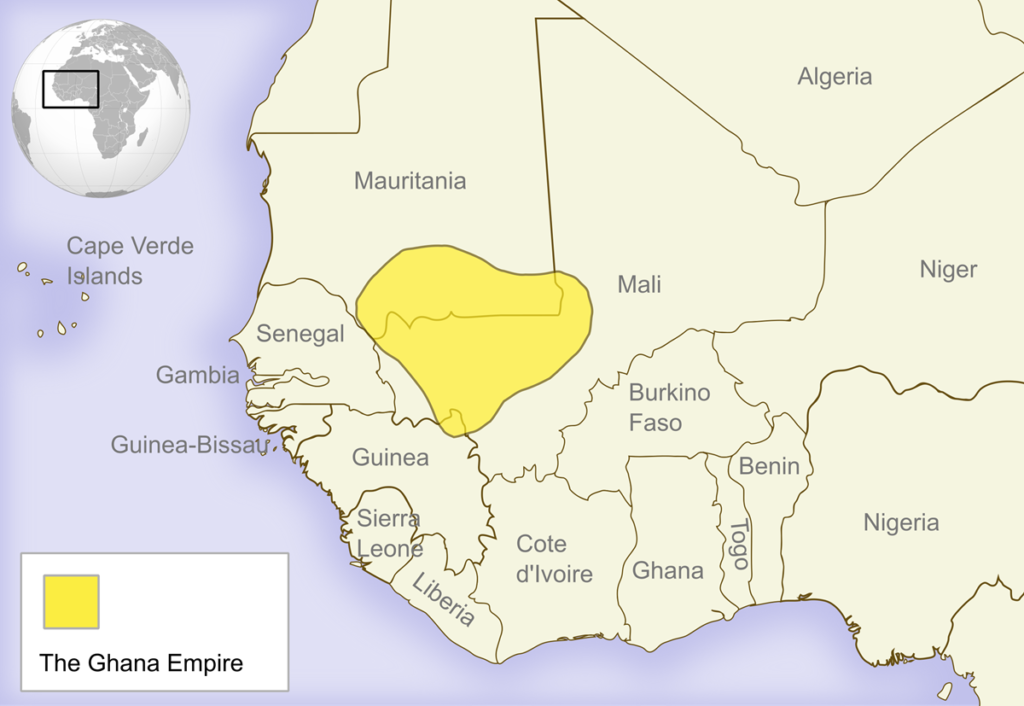
Tunka Manin commanded a massive army, estimated by al-Bakri at around 200,000 soldiers, including 40,000 archers. This army enabled him to protect trade caravans from Bedouin raids, subjugate neighboring kingdoms and impose tribute upon them, and secure the empire’s borders against the growing threat of the Almoravid movement in the north.
The reign of Tunka Manin witnessed the beginning of direct conflict with the Almoravid movement, led by Abu Bakr ibn Umar al-Lamtuni. The Almoravids sought to control the gold trade routes and spread Sunni Islam in the region.
Despite the strength of Manin’s army, the empire began to suffer from internal and external pressures. The region began to experience climate changes that led to the decline of agriculture and livestock herding. The Almoravids also succeeded in cutting off some vital caravan routes, weakening the state treasury.
In 1076 CE (near the end of Manin’s reign or shortly after), the Almoravids captured Koumbi Saleh. Manin died in 1078 AD, and although Almoravid rule was short-lived, the blow dealt to the empire was devastating, as it lost its central authority and its allied tribes began to break away.
According to sources, “At exactly 1240, the Ghana Empire finally disintegrated, paving the way for the rise of another empire—the Mali Empire..”
“The Ghana Empire declined and fell for three fundamental reasons. One, the monopoly which the empire enjoyed with its control of the trade in gold weakened suddenly when the Sanhaja Berbers joined the fray. This led to a serious unhealthy competition.
“Two, the sporadic attacks on the empire by its enemies, notably the Almoravids and the Muslim State of Tekrur, the Susus and the Mandingos tremendously affected the defense capacity of the empire and later weakened its economy as a result of unceasing bombardments. These attacks occurred during 1062 to 1076 when Tunkamenin was in power.
“The third reason, however, was an internal crisis. The ambition of local lords and sub-kings to achieve political independence and financial autonomy disrupted the administrative and political system of the empire such that the internal insurrections made it easier for the external campaign. Tunka Manin fought relentlessly and held off the Almoravids for close to ten years.”
Tunka Manin is remembered in African history as the last of the great kings who managed to maintain the unity of ancient Ghana as a dominant regional power. His life serves as a model of African leadership that combined inherited traditions with a pragmatic openness to external influences (such as Islam and writing).