





Qiraat Africa
عربي  |  Fr
Advertisement
  • News
    • All
    • Climate Change
    • Economy
    • Education
    • Energy
    • Health
    • Migration
    • Mining
    • Politics
    • Security
    • Society
    • Sport
    Nigeria champions African-Arab Trade to boost agribusiness, industrial growth

    Nigeria champions African-Arab Trade to boost agribusiness, industrial growth

    South Africa, Mozambique sign energy cooperation deal

    South Africa, Mozambique sign energy cooperation deal

    Ghana sanitation minister resigns over alleged stashed cash

    Ghana’s inflation slows for 11th straight month in November

    Security chief detained in South Sudan

    Security chief detained in South Sudan

    Nigeria’s overnight lending rate falls 100 bps on excess liquidity, policy shift

    Nigeria tightens cash withdrawal limits to curb money-laundering risk

    Kenyan lawmakers identify ‘disturbing trend’ of misconduct by British troops

    Kenyan lawmakers identify ‘disturbing trend’ of misconduct by British troops

    Mali adopts new mining code to boost sector’s contribution to GDP

    Mali recovers $1.2 billion in arrears from miners, eyes annual windfall under new code

    Nigeria’s defence minister quits as government faces rising violence

    Nigeria’s defence minister quits as government faces rising violence

    Guinea-Bissau: Nigeria offers protection to opposition candidate Dias; Election commission says cannot conclude presidential election process

    Guinea-Bissau: Nigeria offers protection to opposition candidate Dias; Election commission says cannot conclude presidential election process

  • Analysis
    • All
    • Climate Change
    • Digital & Tech
    • Economy
    • Energy & Power
    • Health
    • Politics
    • Security
    • Society
    Global power shifts are playing out in the Red Sea region: why this is where the rules are changing

    Global power shifts are playing out in the Red Sea region: why this is where the rules are changing

    Understanding Trump’s Christian Genocide Claim and Military Threat: What It Means for Nigeria-U.S. Relations

    Understanding Trump’s Christian Genocide Claim and Military Threat: What It Means for Nigeria-U.S. Relations

    South Africa needs to rethink its community media policy – 4 ways to close the gaps

    South Africa needs to rethink its community media policy – 4 ways to close the gaps

    Cameroon’s Biya declared vote winner, opposition reports gunfire

    What do the recent 2025 elections in Cameroon and Ivory Coast reveal about their state of democracy?

    Ivory Coast president Ouattara’s party pushes him to run again

    Ivory Coast elections: Ouattara’s final rule or forever rule?

    Charting New Waters: Maritime Advancements and West Africa’s Development

    Charting New Waters: Maritime Advancements and West Africa’s Development

    The Critical Role of Gold in Tanzania’s Economic Growth

    The Critical Role of Gold in Tanzania’s Economic Growth

    Five Years After the Coup in Mali: Are Stability and Growth Within Reach?

    Five Years After the Coup in Mali: Are Stability and Growth Within Reach?

    Cameroon President Paul Biya marks 41 years in power

    Paul Biya at 92: will defections weaken his grip on absolute power in Cameroon?

  • Studies
    One in three South Africans have never heard of AI: what this means for policy

    One in three South Africans have never heard of AI: what this means for policy

    Social Media as a Catalyst for the Spread of Dangerous Wealth Ritual Myths

    Social Media as a Catalyst for the Spread of Dangerous Wealth Ritual Myths

    Overcoming Education Barriers for Young Mothers in Sub-Saharan Africa

    Overcoming Education Barriers for Young Mothers in Sub-Saharan Africa

    Youth Empowerment Through Vocational Training in Rural Sub-Saharan Africa

    Youth Empowerment Through Vocational Training in Rural Sub-Saharan Africa

    Manufacturers in Ghana and Nigeria claim that although corruption damages businesses, digital technologies provide a chance to combat it

    Manufacturers in Ghana and Nigeria claim that although corruption damages businesses, digital technologies provide a chance to combat it

    Environmental Threats and Conservation Efforts in Namibia

    Environmental Threats and Conservation Efforts in Namibia

    Your teachers’ level of knowledge affects how well you perform in class: perspectives from 14 French-speaking African nations

    Your teachers’ level of knowledge affects how well you perform in class: perspectives from 14 French-speaking African nations

    Islamic Finance in Nigeria: Between Islamization and Shariah Non-Compliance Polemics

    Islamic Finance in Nigeria: Between Islamization and Shariah Non-Compliance Polemics

    What determines a return to civilian rule after military coups in Africa?

    What determines a return to civilian rule after military coups in Africa?

  • Infographics
  • Figures
    Robert Mugabe (1924 – 2019): Revolutionary and former President of Zimbabwe

    Robert Mugabe (1924 – 2019): Revolutionary and former President of Zimbabwe

    Idi Amin Dada (1928 – 2003): Military officer and former President of Uganda

    Idi Amin Dada (1928 – 2003): Military officer and former President of Uganda

    Albert John Luthuli (1898–1967): South African politician and first African Nobel Laureate

    Albert John Luthuli (1898–1967): South African politician and first African Nobel Laureate

    Shaka Zulu (1787-1828), founder of the Zulu empire in Southern Africa

    Shaka Zulu (1787-1828), founder of the Zulu empire in Southern Africa

    Chimamanda Ngozi Adichie, Nigerian writer

    Chimamanda Ngozi Adichie, Nigerian writer

    Olaudah Equiano (1745-1797), writer and abolitionist

    Olaudah Equiano (1745-1797), writer and abolitionist

    Ex-Credit Suisse chief executive Tidjane Thiam eyeing Ivory Coast 2025 presidential contest

    Tidjane Thiam, Ivorian businessman and politician

    François (Ngarta) Tombalbaye (1918-1975): First President of Chad

    François (Ngarta) Tombalbaye (1918-1975): First President of Chad

    Apollo Milton Obote (1925-2005): Former President of Uganda

    Apollo Milton Obote (1925-2005): Former President of Uganda

  • History
    Zong Massacre

    Zong Massacre

    Abomey, southern Benin

    Abomey, southern Benin

    Ifẹ̀, an ancient city in south-western Nigeria

    Ifẹ̀, an ancient city in south-western Nigeria

    Robben Island, South Africa

    Robben Island, South Africa

    Mount Kilimanjaro, Tanzania

    Mount Kilimanjaro, Tanzania

    Kumbi Saleh, the capital of the ancient Ghana Empire

    Kumbi Saleh, the capital of the ancient Ghana Empire

    Kano, an ancient city in northern Nigeria

    Kano, an ancient city in northern Nigeria

    Agadez, historic city in Niger

    Agadez, historic city in Niger

    Olduvai Gorge, a significant paleoanthropological site in Tanzania

    Olduvai Gorge, a significant paleoanthropological site in Tanzania

  • Others
    • Culture / Literature
    • Follow-ups
    • Interview
    • Opinion
  • Countries
    • Country profiles
    • Regions
      • Central Africa
      • East Africa
      • Southern Africa
      • West Africa
No Result
View All Result
  • News
    • All
    • Climate Change
    • Economy
    • Education
    • Energy
    • Health
    • Migration
    • Mining
    • Politics
    • Security
    • Society
    • Sport
    Nigeria champions African-Arab Trade to boost agribusiness, industrial growth

    Nigeria champions African-Arab Trade to boost agribusiness, industrial growth

    South Africa, Mozambique sign energy cooperation deal

    South Africa, Mozambique sign energy cooperation deal

    Ghana sanitation minister resigns over alleged stashed cash

    Ghana’s inflation slows for 11th straight month in November

    Security chief detained in South Sudan

    Security chief detained in South Sudan

    Nigeria’s overnight lending rate falls 100 bps on excess liquidity, policy shift

    Nigeria tightens cash withdrawal limits to curb money-laundering risk

    Kenyan lawmakers identify ‘disturbing trend’ of misconduct by British troops

    Kenyan lawmakers identify ‘disturbing trend’ of misconduct by British troops

    Mali adopts new mining code to boost sector’s contribution to GDP

    Mali recovers $1.2 billion in arrears from miners, eyes annual windfall under new code

    Nigeria’s defence minister quits as government faces rising violence

    Nigeria’s defence minister quits as government faces rising violence

    Guinea-Bissau: Nigeria offers protection to opposition candidate Dias; Election commission says cannot conclude presidential election process

    Guinea-Bissau: Nigeria offers protection to opposition candidate Dias; Election commission says cannot conclude presidential election process

  • Analysis
    • All
    • Climate Change
    • Digital & Tech
    • Economy
    • Energy & Power
    • Health
    • Politics
    • Security
    • Society
    Global power shifts are playing out in the Red Sea region: why this is where the rules are changing

    Global power shifts are playing out in the Red Sea region: why this is where the rules are changing

    Understanding Trump’s Christian Genocide Claim and Military Threat: What It Means for Nigeria-U.S. Relations

    Understanding Trump’s Christian Genocide Claim and Military Threat: What It Means for Nigeria-U.S. Relations

    South Africa needs to rethink its community media policy – 4 ways to close the gaps

    South Africa needs to rethink its community media policy – 4 ways to close the gaps

    Cameroon’s Biya declared vote winner, opposition reports gunfire

    What do the recent 2025 elections in Cameroon and Ivory Coast reveal about their state of democracy?

    Ivory Coast president Ouattara’s party pushes him to run again

    Ivory Coast elections: Ouattara’s final rule or forever rule?

    Charting New Waters: Maritime Advancements and West Africa’s Development

    Charting New Waters: Maritime Advancements and West Africa’s Development

    The Critical Role of Gold in Tanzania’s Economic Growth

    The Critical Role of Gold in Tanzania’s Economic Growth

    Five Years After the Coup in Mali: Are Stability and Growth Within Reach?

    Five Years After the Coup in Mali: Are Stability and Growth Within Reach?

    Cameroon President Paul Biya marks 41 years in power

    Paul Biya at 92: will defections weaken his grip on absolute power in Cameroon?

  • Studies
    One in three South Africans have never heard of AI: what this means for policy

    One in three South Africans have never heard of AI: what this means for policy

    Social Media as a Catalyst for the Spread of Dangerous Wealth Ritual Myths

    Social Media as a Catalyst for the Spread of Dangerous Wealth Ritual Myths

    Overcoming Education Barriers for Young Mothers in Sub-Saharan Africa

    Overcoming Education Barriers for Young Mothers in Sub-Saharan Africa

    Youth Empowerment Through Vocational Training in Rural Sub-Saharan Africa

    Youth Empowerment Through Vocational Training in Rural Sub-Saharan Africa

    Manufacturers in Ghana and Nigeria claim that although corruption damages businesses, digital technologies provide a chance to combat it

    Manufacturers in Ghana and Nigeria claim that although corruption damages businesses, digital technologies provide a chance to combat it

    Environmental Threats and Conservation Efforts in Namibia

    Environmental Threats and Conservation Efforts in Namibia

    Your teachers’ level of knowledge affects how well you perform in class: perspectives from 14 French-speaking African nations

    Your teachers’ level of knowledge affects how well you perform in class: perspectives from 14 French-speaking African nations

    Islamic Finance in Nigeria: Between Islamization and Shariah Non-Compliance Polemics

    Islamic Finance in Nigeria: Between Islamization and Shariah Non-Compliance Polemics

    What determines a return to civilian rule after military coups in Africa?

    What determines a return to civilian rule after military coups in Africa?

  • Infographics
  • Figures
    Robert Mugabe (1924 – 2019): Revolutionary and former President of Zimbabwe

    Robert Mugabe (1924 – 2019): Revolutionary and former President of Zimbabwe

    Idi Amin Dada (1928 – 2003): Military officer and former President of Uganda

    Idi Amin Dada (1928 – 2003): Military officer and former President of Uganda

    Albert John Luthuli (1898–1967): South African politician and first African Nobel Laureate

    Albert John Luthuli (1898–1967): South African politician and first African Nobel Laureate

    Shaka Zulu (1787-1828), founder of the Zulu empire in Southern Africa

    Shaka Zulu (1787-1828), founder of the Zulu empire in Southern Africa

    Chimamanda Ngozi Adichie, Nigerian writer

    Chimamanda Ngozi Adichie, Nigerian writer

    Olaudah Equiano (1745-1797), writer and abolitionist

    Olaudah Equiano (1745-1797), writer and abolitionist

    Ex-Credit Suisse chief executive Tidjane Thiam eyeing Ivory Coast 2025 presidential contest

    Tidjane Thiam, Ivorian businessman and politician

    François (Ngarta) Tombalbaye (1918-1975): First President of Chad

    François (Ngarta) Tombalbaye (1918-1975): First President of Chad

    Apollo Milton Obote (1925-2005): Former President of Uganda

    Apollo Milton Obote (1925-2005): Former President of Uganda

  • History
    Zong Massacre

    Zong Massacre

    Abomey, southern Benin

    Abomey, southern Benin

    Ifẹ̀, an ancient city in south-western Nigeria

    Ifẹ̀, an ancient city in south-western Nigeria

    Robben Island, South Africa

    Robben Island, South Africa

    Mount Kilimanjaro, Tanzania

    Mount Kilimanjaro, Tanzania

    Kumbi Saleh, the capital of the ancient Ghana Empire

    Kumbi Saleh, the capital of the ancient Ghana Empire

    Kano, an ancient city in northern Nigeria

    Kano, an ancient city in northern Nigeria

    Agadez, historic city in Niger

    Agadez, historic city in Niger

    Olduvai Gorge, a significant paleoanthropological site in Tanzania

    Olduvai Gorge, a significant paleoanthropological site in Tanzania

  • Others
    • Culture / Literature
    • Follow-ups
    • Interview
    • Opinion
  • Countries
    • Country profiles
    • Regions
      • Central Africa
      • East Africa
      • Southern Africa
      • West Africa
No Result
View All Result
Qiraat Africa
عربي  |  Fr
No Result
View All Result
Home Historical Readings

Africa’s radio history over a century: from propaganda to people’s power

February 13, 2024
Africa’s radio history over a century: from propaganda to people’s power

Many rely on radio broadcasts in Zimbabwe and across Africa. Credit: AP Photos

Share on FacebookShare on Twitter

By Sisanda Nkoala*, Christina Chan-Meetoo*, Jacinta Mwende Maweu*, Marissa J. Moorman*, Modestus Fosu*, & Stanley Tsarwe*


Radio is thriving across Africa. Exact figures are difficult to come by because audience research differs across countries. But studies estimate radio listenership to be between 60% and 80% of the continent’s 1.4 billion population.

Read also

Zong Massacre

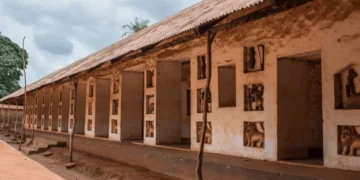
Abomey, southern Benin

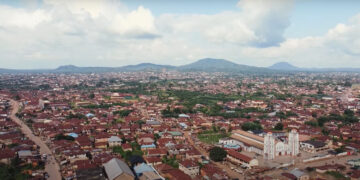
Ifẹ̀, an ancient city in south-western Nigeria

In contrast to many western countries, where there has been a shift towards streaming and podcasts, traditional radio continues to be widely embraced in Africa. Because of poor literacy levels and uneven access to the internet and technological infrastructure, old-fashioned radio remains a reliable and inclusive medium.

This year’s celebration of the 100-plus years of radio offers us an opportunity, as African media scholars, to reflect on the historical significance, cultural relevance, political power and social impact of the medium on the continent. We home in on examples from the regions we’ve studied to demonstrate this rich history.

Early years

The story of radio in Africa starts with its introduction to serve colonial interests. Cameroonian scholar Francis Nyamnjoh argues that as soon as it had established itself as a mass medium in the 1920s,

European states were quick to realise the part radio could play in realising their desire to swallow up weaker cultures around the globe.

Historians note that it also allowed Europeans in the colonies to connect to home, their culture and their languages.

In the early 1920s amateur radio enthusiasts had already begun tinkering with the technology. The first official broadcast seems to have been on 18 December 1923 in Johannesburg, South Africa.

In east Africa, radio was first introduced in Kenya in 1927 and in west Africa to Sierra Leone in 1934.

UK media scholar Graham Mytton writes that the arrival of radio in west Africa’s British colonies – The Gambia, Sierra Leone, Gold Coast (now Ghana) and Nigeria – marked a turning point.

Until then radio had been broadcast by wireless transmission. When it was introduced in Sierra Leone, Ghana (1935) and Nigeria (1936), it was “via wired services – subscribers had loudspeakers (linked by wire to the radio station) installed in their homes to receive the service … these were created with native African listeners in mind”.

Then, in 1936, the British colonial administration decided to develop radio broadcasting throughout its African colonies.

Propaganda

Colonial powers such as the UK and France upped their radio transmission efforts after the outbreak of the second world war in 1939. The 1940s were marked by the introduction of indigenous language broadcasts by colonial powers wanting to influence public opinion and garner support for their war effort. While the British broadcast to Africa in some African languages, France broadcast only in French.

This laid the groundwork for future developments. After the war, the British officially adopted a policy of extending broadcasting services across most of its African colonies.

In Kenya, for example, the first broadcast service for Africans began in 1953, transmitting in local languages during the state of emergency declared in 1952 to suppress the Mau Mau uprising.

Academics have argued that despite being designed mainly for propaganda, radio in Africa

was always far more multifaceted and slippery than was intended by colonial powers.

It also offered the “ability to create new and sometimes unruly publics”.

Resistance radio

The 1950s saw the expansion and transformation of radio in Africa. Radio stations across British, French and Belgian colonies rapidly increased as people under colonial rule increased their efforts to achieve independence.

In the mid-1950s the oldest liberation station in Africa, Radio Freedom, was established as an underground station in Zambia by South Africa’s resistance movement. It would air its first formal broadcast in 1963.

In Angola, radio expanded with the outbreak of war in 1961 between liberation movements and the Portuguese colonial state.

Liberation movements in neighbouring countries used radio for war reporting amid colonial censorship. For their part, colonial state radio fostered the emergence of local artists’ music as part of their colonial propaganda.

Independence and state control

From the late 1940s to the early 1960s the number of radio-receiving sets increased fivefold, from 90 sets per thousand people in Africa to 450.

In some respects the 1960s was a golden era for African radio. A wave of independence movements birthed new nations as radio technology was becoming more affordable.

Many newly independent countries established national broadcasting services, like The Gambia in 1965. This expanded the reach of radio and the opportunity to embrace local languages, music and cultural programming. In Nigeria, the Broadcasting Corporation expanded to cover the whole country.

But some newly independent countries that had inherited state-controlled broadcasting systems also censored content deemed critical or threatening, restricting freedom of expression.

With independence in Angola in 1975, for example, the new leaders saw radio as a tool for nation building, but tightened their grip after a coup attempt in 1977.

In many African countries, Angola included, post-colonial state control of radio continues. Zimbabwe’s radio sector, for example, is thriving. But state control remains strong, with biased licensing for national radio and restrictive laws for community radio stations.

The Mauritius Broadcasting Corporation was established in 1964 and still operates as a state broadcaster. Despite funding through public licence fees and advertising, it’s perceived to promote government agendas.

Radio has also been used to promote nefarious political ends. The 1994 genocide in Rwanda stands as a painful example. The infamous Radio Télévision Libre des Mille Collines disseminated hate speech and incited violence against the Tutsi minority.

Private commercial stations

Over the last 40 years many African countries have liberalised their economies and their media regulations, issuing commercial and community radio licences.

In Ghana, for example, radio primarily served elite interests until the 1990s, when private ownership diversified the industry. By 2022, Ghana boasted 513 radio stations, ranging across public, commercial, community, campus and foreign broadcasts.

An essential development has been the emergence of indigenous language radio. This has produced culturally resonant content and prioritised community issues. But challenges persist. Some stations are affiliated with political or business interests and increased attacks on journalists pose risks to media freedom and diversity.

In recent decades, Kenya’s radio landscape has transformed to over 200 stations. Private commercial stations now dominate, broadcasting in local languages.

In Mauritius, airwaves were liberalised in 2002, introducing private stations. Talk shows, especially in the Mauritian Creole language, have revolutionised radio. Private radio has expanded to digital platforms, engaging audiences through live streams and social media, creating both competition and sensationalist coverage.

Radio now

Digital convergence is reshaping radio consumption, blurring audience patterns.

This isn’t happening uniformly across the continent. Digital platforms face challenges, such as the digital divide and economic inequality.

Radio’s influence is likely to endure, with podcasts complementing rather than replacing traditional broadcasts. A 2022 survey across 34 African countries found radio was “overwhelmingly the most common source for news”. This is a testament to its enduring influence and unique ability to connect with diverse audiences – even a century after its introduction.

ـــــــــــــــــــــــــــــــ
*Associate professor, University of the Western Cape

*Senior Lecturer in Media and Communication, University of Mauritius

*Senior lecturer in Philosophy and Media Studies, University of Nairobi

*Associate Professor of History, Indiana University

*Associate Professor in Language and Communication Studies, University of Media, Arts and Communication, Ghana Institute of Journalism

*Lecturer in Journalism, University of Namibia

Source: The Conversation
Tags: African colonialismAfrican independenceAfrican mediaAfrican radioDigital divideMedia historyPodcastsPost-colonial AfricaRadio historySouth African podcastsWorld Radio Day

Related Posts

Robben Island, South Africa
Historical Readings

Robben Island, South Africa

October 14, 2025
Mount Kilimanjaro, Tanzania
East Africa

Mount Kilimanjaro, Tanzania

October 14, 2025
Kumbi Saleh, the capital of the ancient Ghana Empire
Historical Readings

Kumbi Saleh, the capital of the ancient Ghana Empire

October 13, 2025
Kano, an ancient city in northern Nigeria
Historical Readings

Kano, an ancient city in northern Nigeria

October 12, 2025
Agadez, historic city in Niger
Historical Readings

Agadez, historic city in Niger

October 8, 2025
Olduvai Gorge, a significant paleoanthropological site in Tanzania
East Africa

Olduvai Gorge, a significant paleoanthropological site in Tanzania

October 6, 2025

Search Qiraat Africa

No Result
View All Result

Follow on Twitter

Follow @africanqiraat

Trending

Idi Amin Dada (1928 – 2003): Military officer and former President of Uganda

Idi Amin Dada (1928 – 2003): Military officer and former President of Uganda

November 8, 2025
Infographic: Kidnapping in Nigeria – Facts and Figures

Infographic: Kidnapping in Nigeria – Facts and Figures

May 22, 2024
Larabanga Mosque, an architectural and historical masterpiece in Ghana

Larabanga Mosque, an architectural and historical masterpiece in Ghana

May 15, 2025
Security chief detained in South Sudan

Security chief detained in South Sudan

December 3, 2025
Global power shifts are playing out in the Red Sea region: why this is where the rules are changing

Global power shifts are playing out in the Red Sea region: why this is where the rules are changing

November 26, 2025
The Great Mosque of Djenne, Mali

The Great Mosque of Djenne, Mali

March 25, 2025

Facebook

Sections

  • About Us
  • Privacy Policy
  • Opinion
  • Infographics
  • News
  • Analysis
  • Figures
  • Culture & Literature
  • Follow Ups
  • Historical Readings
  • Interview
  • Studies


© Copyright Qiraat Africa. Developed by Bunnaj Media .

No Result
View All Result
  • News
  • Analysis & Report
  • Studies
  • Opinion
  • Interview
  • Culture & Literature
  • Figures
  • Follow-ups
  • Historical Readings
  • Regions

© 2021 Copyright Qiraat Africa.