


Publisher: Qira’at Afriqiyah Magazine
Issue: 65, July 2025
ISSN: 2634-131X
Year : 21
Pages: 68-83
Author: Dr. Gihan Abdel Salam
Download pdf
Abstract:

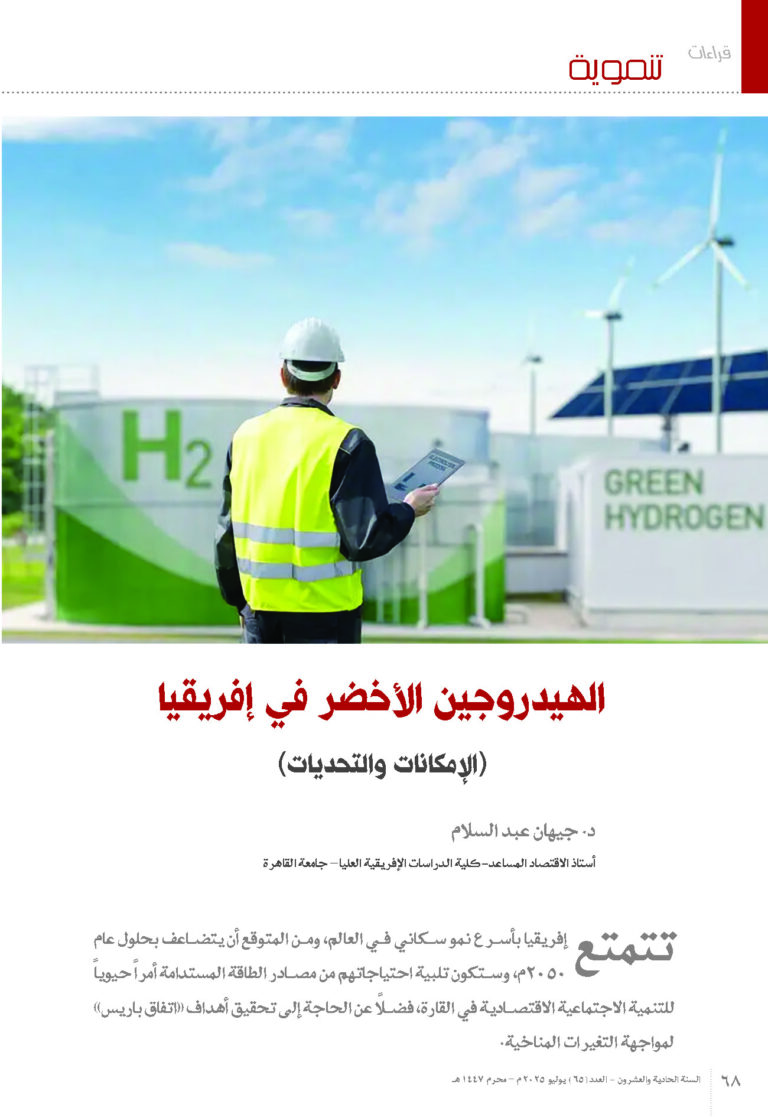
The study analyzes the production potential of green hydrogen in Africa, focusing on the economic advantages and opportunities resulting from enhancing its production across the continent, as well as the existing challenges that must be addressed in order to support the effective utilization of this clean energy source.

The study concludes that green hydrogen represents an unprecedented strategic opportunity for African countries to support their transition toward a low-carbon economy and achieve sustainable development. With abundant renewable energy sources such as solar and wind, Africa holds immense potential to produce green hydrogen at competitive costs, enabling it to gradually become a global hub for green hydrogen production and opening wide prospects for economic growth and enhanced energy independence.

Despite existing challenges-particularly weak regulatory frameworks, policy instability, and insufficient financing and infrastructure-there is growing regional and international momentum to support African nations in this direction. This includes initiatives such as the Africa Green Hydrogen Alliance and partnerships with the European Union and Asian countries.

Therefore, harnessing Africa’s green hydrogen potential is a worthy and strategic endeavor, requiring a multi-faceted approach. Africa has a golden opportunity to become a key global player in the green hydrogen economy, but must overcome barriers related to funding, infrastructure, and policymaking. Importantly, this transformation must be just and inclusive, delivering tangible environmental and developmental benefits to the continent’s populations.

The study highlights the urgent need for African countries to formulate and implement strategies to build and upgrade green hydrogen infrastructure, integrate green hydrogen into national energy and sustainable development plans, and set clear timelines for energy transition pathways. Moreover, the establishment of collaborative innovation platforms is vital to promote research and development in sustainable technologies, and to continuously improve the competitiveness of Africa’s clean energy and green hydrogen sectors. There is also an urgent need to identify public and private financing programs to lower the costs of green hydrogen production across the continent.