


Publisher: Qira’at Afriqiyah Magazine
Issue: 67, January 2026
ISSN: 2634-131X
Year : 22
Pages: 90-103
Author: Prof. Sobhy Ramadan Farag Saad – Egypt
DOI: 10.64665/qirat.2026.2206706
Download pdf
Abstract:
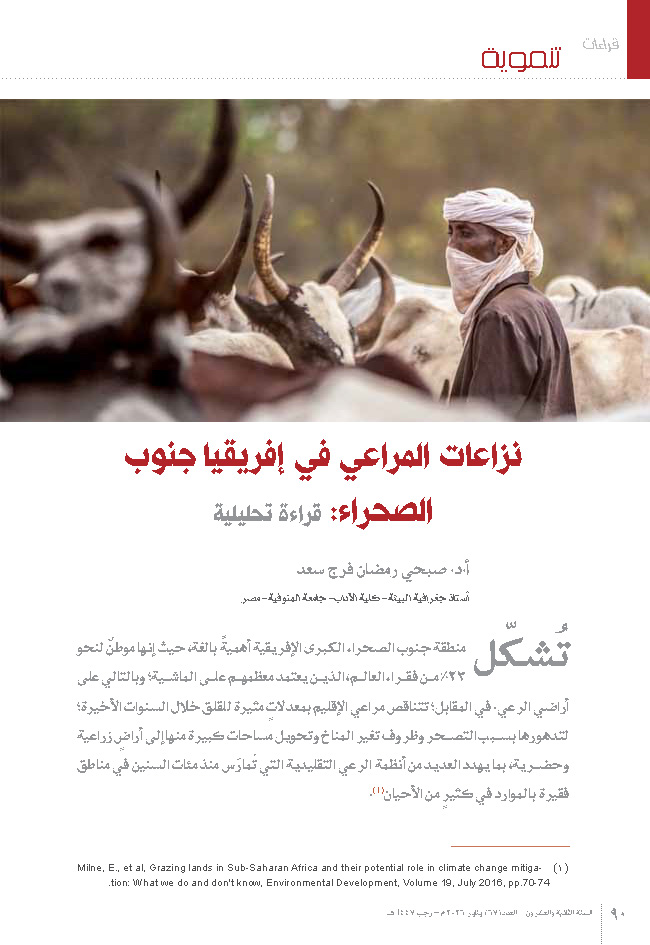
     Approximately 23% of the world›s poor population live in sub-Saharan Africa, most of whom depend on livestock and, consequently, grazing lands. However, the region›s rangelands have been declining at an alarming rate in recent years due to desertification, climate change, and the conversion of large areas into agricultural and urban land. This threatens many traditional grazing systems that have been practiced for centuries. Conflicts over natural resources in Africa revolve around resource use and management, and these conflicts arise when interests and needs clash or when the priorities of certain user groups are disregarded. Recent years have witnessed an increase in the intensity of these conflicts, which, if left unaddressed, can escalate into violence, leading to environmental degradation, disrupting development projects, and undermining livelihoods. This article addresses several key questions: first, the extent to which climate change and geopolitical and social factors contribute to the outbreak and escalation of conflicts related to grazing; second, the spatial dimensions and dynamics of conflict hotspots in the region and the factors influencing them; and third, strategies for rangeland rehabilitation and restoration, as well as mechanisms for mitigating related conflicts. The article recommended maintaining the health and productivity of rangelands as the main approach to reducing related conflicts, implementing drought risk management practices, developing mechanisms for managing natural resources in grazing areas and resolving conflicts, and promoting sustainable pastoral livelihoods.