


Publisher: Qira’at Afriqiyah Magazine
Issue: 45, July 2020
ISSN: 2634-131X
Year : 16
Pages: 124-131
Author: Zinab mostafa roweha
Download pdf
Abstract:

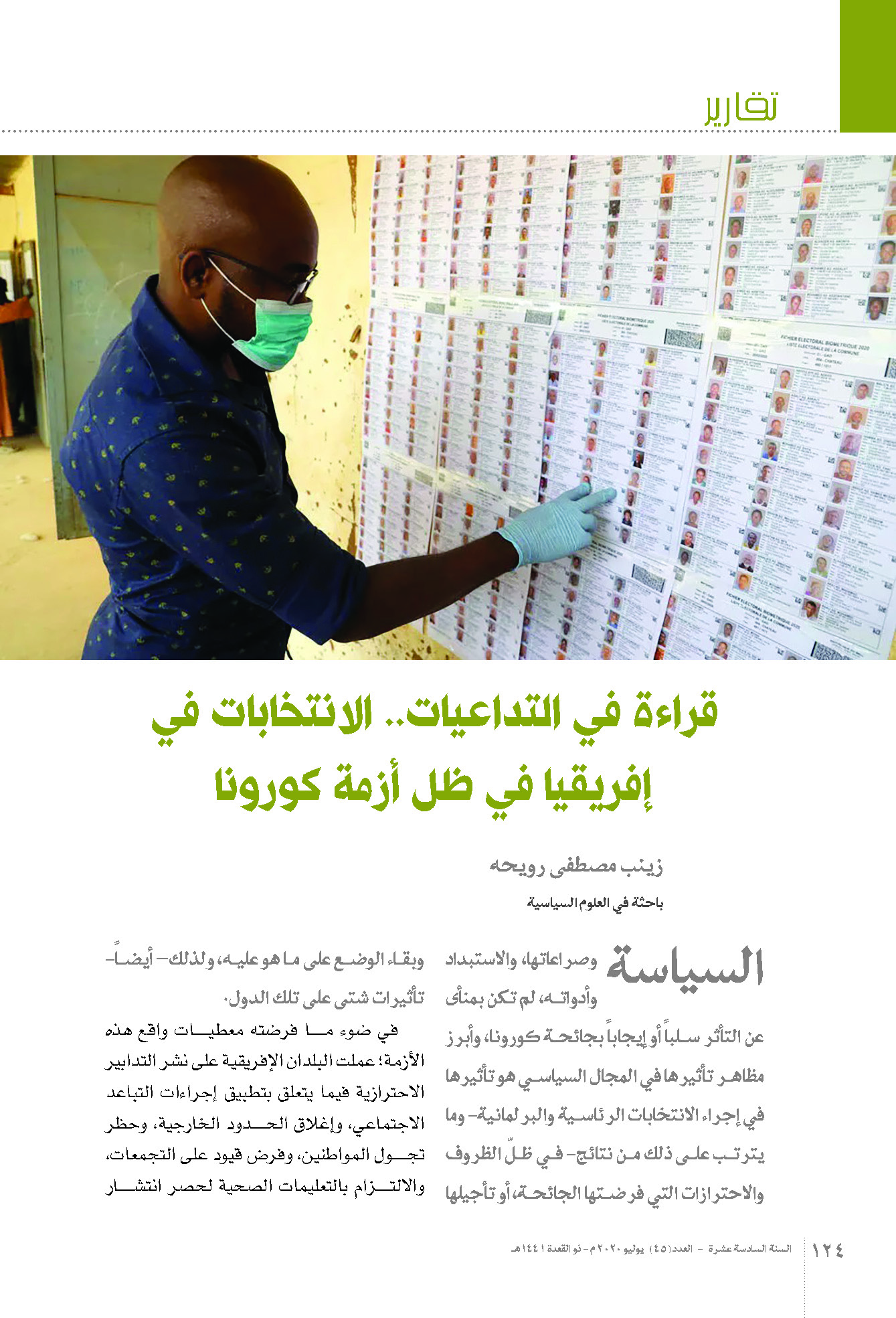
The Coronavirus pandemic is directly affecting democratic processes around Africa, as the applied precautionary measures due to the crisis have a dynamic impact on the continuation of the electoral process; these measures obstructed electoral activities, such as election campaigns and gatherings around candidates and voters as well.

Accordingly, a number of countries postponed their elections in order to avoid public gatherings, which led some countries into constitutional crises—such as Ethiopia—while encouraging tensions between the ruling elite and the ruled as well. On the other side, some countries insisted that elections must be held on time, although the percentage of political participation was nearly intangible, as some presidents manipulated the crisis in order to gain more control and authority, such as the case of Burundi. Additionally, terrorist groups aimed to spread violence and intimidation, which has affected the democratic atmosphere and the possibility for citizens to go out to participate in elections, as happened in Mali.

Some political forces used the pandemic to show the failure of governments to address the effects of the crisis on the economic, healthcare, and other sectors. Elections are scheduled to take place in some countries only after abiding by some health measures, such as the presidential elections in Malawi in June, the Senate elections in Liberia in October, and the legislative and presidential elections in Niger in December.

In this context, the impact of the Coronavirus crisis on elections is clearly visible, affecting political development efforts and democratic mechanisms as well. Finally, the crisis sets new challenges in front of governments in Africa, which require possible non-traditional alternatives—such as increasing the role of digitalization—in order to adapt to this pandemic and to any possible future crises.